1940s Maps of Philadelphia, Pennsylvania
Explore 16 historic maps of Philadelphia from the 1940s. These maps offer a rare glimpse into what life looked like during the 1940s — showing old roads, neighborhoods, homes, and landmarks that have changed or disappeared over time.
Whether you're researching your family's past, planning a metal detecting trip, or studying how Philadelphia's landscape evolved across the 1940s, these high-resolution maps are a powerful tool for exploring the history of this region.
- Focus on a specific era: All maps on this page are from the 1940s, giving you a focused view of this time period.
- See what’s changed: Compare century-old streets, trails, and buildings to today's modern landscape using overlays and satellite layers.
- Research with precision: Use these maps for genealogy, historical research, land use analysis, or educational projects.
- View, download, or print: Maps are fully viewable online in high resolution, and can be downloaded or printed for your own records.
Start exploring Philadelphia's history through authentic maps from the 1940s. This is your window into the past.
Philadelphia, PA maps
(16)- 1942 Map of Norristown
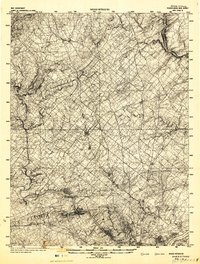 1942 Norristown1942 Print · USGSSoutheastern Pennsylvania at the onset of World War II shows a landscape of busy industrial river towns and expanding rail suburbs. Genealogists and historians can trace the early transit networks connecting Norristown, Doylestown, and the riverfront at New Hope.
 - 1942 Map of Camden
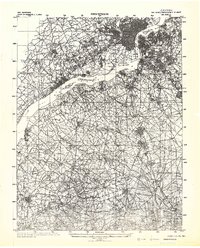 1942 Camden1942 Print · USGSThe Philadelphia and Camden metropolitan corridor is captured here at the height of the Second World War. Genealogists and historians can trace rail networks like the Reading R.R. and locate communities from Swedesboro to Merchantville.
 - 1942 Map of Burlington
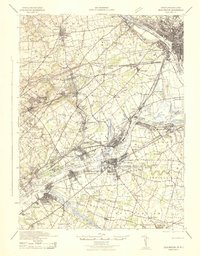 1942 Burlington1942 Print · USGSThe Delaware River valley thrived at the start of the 1940s as a hub of heavy rail and river commerce. Genealogists and local historians can trace family-named sites and old transit points like Dunks Ferry, Borton Landing, and Neshaminy Falls.
 - 1942 Map of Lansdowne
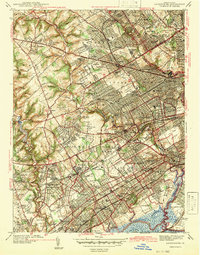 1942 Lansdowne1942 Print · USGSDelaware County townships thrive just before the mid-century, showing a landscape of dense residential growth and institutional landmarks. Genealogists can trace family sites near Holy Cross Cemetery or old rail hubs like Morton Sta and Lansdowne Sta.
 - 1943 Map of Philadelphia
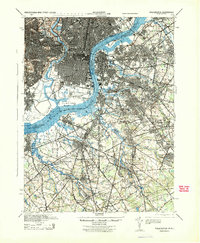 1943 Philadelphia1943 Print · USGSPhiladelphia and Camden are shown at their wartime peak, anchored by the industrial activity of the Delaware River waterfront. Genealogists and historians can trace rail-connected neighborhoods and landmarks like the U. S. Navy Yard, Fort Mifflin, and the Alms House.
 - 1943 Map of Norristown
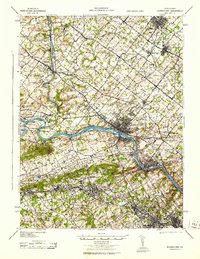 1943 Norristown1943 Print · USGSMontgomery County in the early 1940s is a thriving network of rail-side industrial hubs and established borough centers. Genealogists and local historians can trace the development of Norristown and Lansdale or locate landmarks like the Eastern State Penitentiary.
 - 1944 Map of Langhorne, 1947 Print
 1944 Langhorne1947 Print · USGSBucks County's suburban and industrial landscape comes into focus during the mid-1940s, showing a transition from rural farmland to settled boroughs. Genealogists can trace family connections through sites like George School, St Andrews Ch, and the many rail stops along the Reading Company line.
 - 1944 Map of Newark, 1971 Print
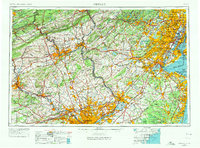 1944 Newark1971 Print · USGSThe industrial corridor from Philadelphia to New York was in a period of massive transition during the mid-forties. Genealogists and researchers can trace the rail lines of the Lehigh Valley RR, locate military installations like Picatinny Arsenal, and explore the early sprawl near Levittown.5 unique versions available
 - 1946 Map of Lansdowne
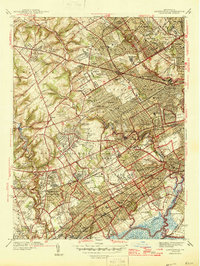 1946 Lansdowne1946 Print · USGSDelaware County enters the post-war era as a thriving network of rail-connected suburbs and institutional landmarks. Genealogists can trace family plots across Arlington Cemetery or locate old community hubs like Leipers Ch and Swarthmore College.2 unique versions available
 - 1946 Map of Wilmington, 1948 Print
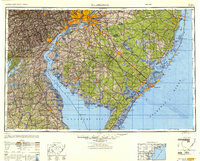 1946 Wilmington1948 Print · USGSThe Delaware Valley and Jersey Shore emerge in this mid-century portrait of a region defined by river commerce and seaside growth. Genealogists and historians can trace the rail networks of the Pennsylvania Railroad, locate early airfields like Dover Airpark, and find river defenses at Fort Delaware.2 unique versions available
 - 1947 Map of Langhorne
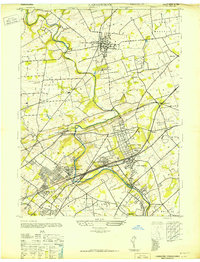 1947 Langhorne1947 Print · USGSBucks County's suburban and industrial evolution is captured here in the years following the war. Researchers can trace the path of the Trenton Cut-Off, locate historic institutions like George School, or find the Silver Star Airport near Glenlake.
 - 1947 Map of Beverly
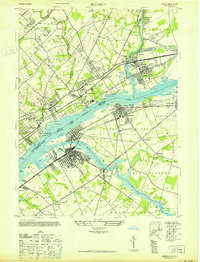 1947 Beverly1947 Print · USGSThe Delaware River corridor was a hub of transit and industry in the late forties, connecting Pennsylvania and New Jersey via the Pennsylvania RR. Researchers can trace the footprints of institutional sites like the Philadelphia State Hospital or the St Elizabeth Convent.
 - 1949 Map of Newark
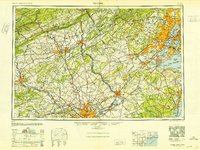 1949 Newark1949 Print · USGSThe industrial corridor between Philadelphia and New York comes alive in this post-war survey. Genealogists and historians can trace the massive rail networks of the Reading Railroad and locate major installations like Fort Dix or Picatinny Arsenal.2 unique versions available
 - 1949 Map of Camden, 1953 Print
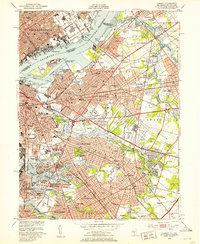 1949 Camden1953 Print · USGSPost-war New Jersey and Pennsylvania are captured here at the height of their industrial and suburban expansion. Genealogists can locate family plots in Harleigh Cem or Locustwood Cemetery while tracing the vanished Central Airport.3 unique versions available
 - 1949 Map of Philadelphia, 1953 Print
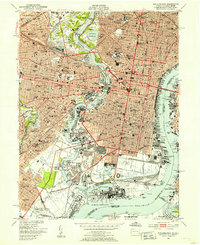 1949 Philadelphia1953 Print · USGSPhiladelphia at the close of the 1940s reveals a bustling industrial powerhouse and deeply rooted residential neighborhoods. Researchers can trace the extensive rail lines of the READING RR, locate historic landmarks like Independence Hall, or explore the sprawling US NAVAL RESERVATION and FAIRMOUNT PARK.2 unique versions available
 - 1949 Map of Woodbury, 1954 Print
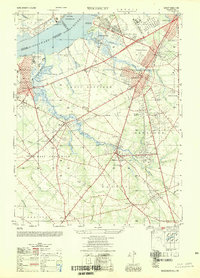 1949 Woodbury1954 Print · USGSGloucester County during the post-war era shows a landscape transitioning from the industrial riverfront of the Delaware River to growing inland communities. Researchers can trace historical sites like the Hog Island Shipyard (Abandoned), Red Bank Battlefield, and the rail corridors of the Reading Seashore Lines.2 unique versions available
End of results
Showing maps 1-16 of 16
Top cities near Philadelphia
- Upper Darby historical maps
- Camden historical maps
- Cherry Hill Township historical maps
- Bensalem Township historical maps
- Abington Township historical maps
- Washington Township historical maps
See more
Top neighborhoods of Philadelphia
- Center City historical maps
- South Philadelphia historical maps
- Far Northeast Philadelphia historical maps
- Port Richmond historical maps
- Port Richmond Polish Neighborhood historical maps
- Richmond historical maps
See more
Frequently asked questions
- What are the different types of historical maps available for Philadelphia?
- What is the oldest map of Philadelphia?
- Where can I purchase historical maps of Philadelphia for my home or office?
- Where can I download high-res historical maps of Philadelphia?
- Are there historical topographic maps available for Philadelphia?
- Is there historical aerial imagery available for Philadelphia?
- Where are historical maps of Philadelphia sourced from?