Old Maps of Milford Township, Pennsylvania for Academic Research
Study the evolution of Milford Township with 40 high-resolution historic maps. Whether you're teaching, researching, or modeling changes in land use, these maps provide essential visual documentation of urban, environmental, and geographic change.
- Analyze long-term change: Track patterns in development, transportation, and natural features.
- Ideal for environmental or urban studies: Support academic projects with primary historical map data.
- Use in the classroom or lab: Educators and researchers rely on these maps to bring historical context to life.
These maps are a powerful tool for teaching, research, and visualizing how Milford Township has changed over the decades.
Milford Township, PA maps
(40)- 1913 Map of Somerset, 1961 Print
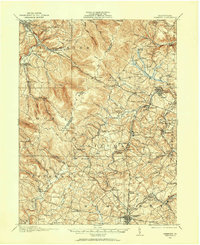 1913 Somerset1961 Print · USGSSomerset County was a rugged crossroads of rail and mountain ridges in the decade before the First World War. Local historians can trace the Pittsburgh and Philadelphia Road and find vanished local landmarks like Rectors Mill, the Quemahoning Tunnel, and Sipesville Station.
 - 1915 Map of Somerset
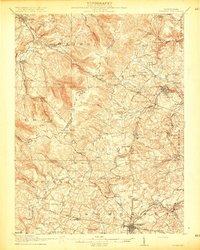 1915 Somerset1915 Print · USGSSomerset and the surrounding Laurel Ridge region are captured here during the peak of the early twentieth-century coal boom. Genealogists and historians can trace family-named sites and industrial landmarks including Husband Mine, Rectors Mill, and the Quemahoning Tunnel.6 unique versions available
 - 1921 Map of Meyersdale
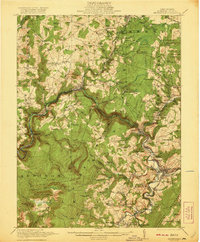 1921 Meyersdale1921 Print · USGSSomerset County's industrial and mountain landscape comes to life in the early 1920s as coal mining and railroads dominate the Casselman River valley. Genealogists can trace family roots through dozens of local sites like Sanners Church, Shaw Mines, and the Ganguey School.3 unique versions available
 - 1939 Map of Meyersdale, 1955 Print
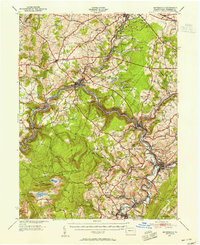 1939 Meyersdale1955 Print · USGSSomerset County is captured here in the late 1930s, showing a landscape defined by the winding Casselman River and its coal-bearing valleys. Local historians can trace the reach of the Baltimore and Ohio Railroad past dozens of rural landmarks like Comptons Mill and Mt Davis.2 unique versions available
 - 1944 Map of Somerset
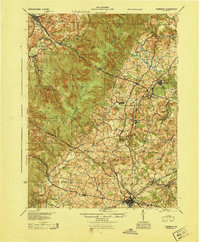 1944 Somerset1944 Print · USGSThe Laurel Highlands during the early years of the Pennsylvania Turnpike are captured here, showing the transition from old mountain roads to modern highways. Genealogists can trace family names at Rector Mill, Rhoads Field, and dozens of local schools like Knepper Sch.
 - 1944 Map of Meyersdale, 1945 Print
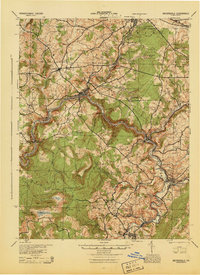 1944 Meyersdale1945 Print · USGSSomerset County’s rugged coal and timber country is frozen in time during the mid-1940s, showing a landscape defined by the Casselman River and its busy rail lines. Genealogists can locate dozens of named rural landmarks like Plank Road Sch, Mt Zion Ch, and the Beachley Mine.
 - 1948 Map of Cumberland
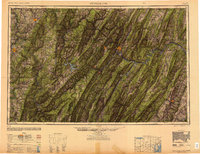 1948 Cumberland1948 Print · USGSMid-century Appalachia and the Shenandoah Valley are shown in detail, documenting the industrial and transportation hubs of the tri-state area. Genealogists can trace family roots through settlements like Double Tollgate and Bunker Hill or along the Baltimore & Ohio RR.3 unique versions available
 - 1952 Map of Cumberland
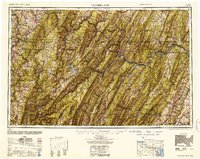 1952 Cumberland1952 Print · USGSThe Potomac Highlands and the Shenandoah Valley are revealed in this early 1950s survey of the Appalachian interior. Researchers can trace the river-and-rail corridors connecting Cumberland, Winchester, and the recreational waters of Deep Creek Lake.
 - 1953 Map of Pittsburgh
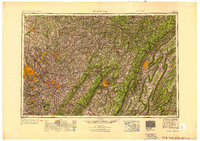 1953 Pittsburgh1953 Print · USGSWestern Pennsylvania's industrial landscape at the start of the fifties shows the steel and rail corridors between Pittsburgh and Altoona. Trace family roots in river towns like Tarentum or follow the Pennsylvania Turnpike across Laurel Hill.
 - 1954 Map of Pittsburgh
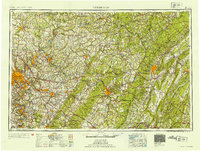 1954 Pittsburgh1954 Print · USGSWestern Pennsylvania in the early fifties remains a powerhouse of heavy industry and vital transit corridors. Genealogists and historians can trace the rail-and-river network connecting Pittsburgh, Johnstown, and Altoona via the Pennsylvania RR and the Lincoln Highway.2 unique versions available
 - 1956 Map of Cumberland, 1966 Print
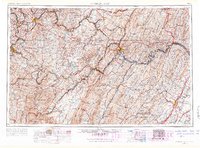 1956 Cumberland1966 Print · USGSThe tri-state Highlands in the mid-1950s show a landscape shaped by coal, timber, and the massive presence of the Baltimore & Ohio RR. Researchers can trace the industrial corridor from Cumberland through the Allegheny Mountains to mountain retreats like Deep Creek Lake.6 unique versions available
 - 1957 Map of Cumberland
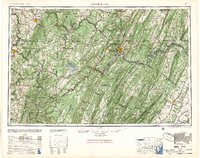 1957 Cumberland1957 Print · USGSThe Potomac River valley and the ridges of the Allegheny Front define this mid-century landscape at the intersection of Maryland, West Virginia, and Pennsylvania. Trace the steam-era rail lines of the Baltimore and Ohio RR or locate rural landmarks like St Stephens Church and Stony River Dam.
 - 1958 Map of Pittsburgh
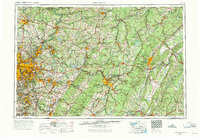 1958 Pittsburgh1958 Print · USGSWestern Pennsylvania in the late fifties shows an industrial heartland defined by the confluence of the Allegheny River and Monongahela River. Researchers can trace the sprawling rail networks of the Pennsylvania RR and find established towns like Butler, Latrobe, and Windber.5 unique versions available
 - 1959 Map of Pittsburgh
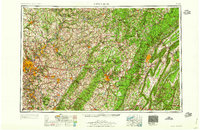 1959 Pittsburgh1959 Print · USGSWestern Pennsylvania in the late fifties is captured here at the height of its industrial era. Genealogists and historians can trace the riverfront growth of Pittsburgh, the rail works at Altoona, and the mountain gaps of Laurel Hill.
 - 1961 Map of Cumberland
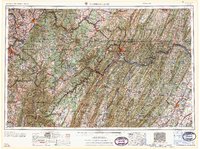 1961 Cumberland1961 Print · USGSThe tri-state highlands of Maryland, West Virginia, and Pennsylvania are shown in the mid-twentieth century as a complex landscape of ridges and river valleys. Researchers can trace the winding Potomac River and find old rail-and-river towns like Cumberland, Keyser, and Morgantown.
 - 1962 Map of Cumberland
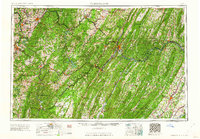 1962 Cumberland1962 Print · USGSThe central Appalachians meet at the height of the mid-century industrial era, showing the rugged topography between Morgantown and Winchester. Genealogists can trace family lands near Fort Necessity or along the vital Baltimore & Ohio RR corridors.
 - 1964 Map of Pittsburgh
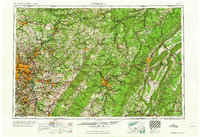 1964 Pittsburgh1964 Print · USGSWestern Pennsylvania in the late fifties and early sixties shows a landscape of powerful river industries and expanding highways. Genealogists and historians can trace the rail corridors of the Pennsylvania RR through industrial hubs like Johnstown, Altoona, and Nanty Glo.
 - 1967 Map of Bakersville, 1971 Print
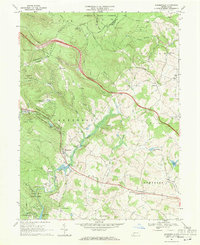 1967 Bakersville1971 Print · USGSSomerset County saw significant development in the 1960s as recreation and transit expanded across the ridgeline. Trace the growth of Bakersville and Lavansville alongside the path of the Pennsylvania Turnpike and the Plateau De Mount Ski Area.5 unique versions available
 - 1968 Map of Rockwood, 1971 Print
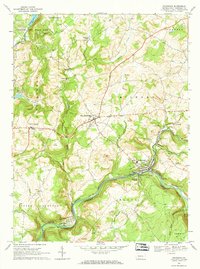 1968 Rockwood1971 Print · USGSThe Casselman River valley in the late sixties is defined by its dual identity as a rail corridor and a coal-mining district. Researchers can locate family landmarks like Middle Creek Cem and Mt Union Ch or trace the busy rail lines through Rockwood.5 unique versions available
 - 1968 Map of Murdock, 1972 Print
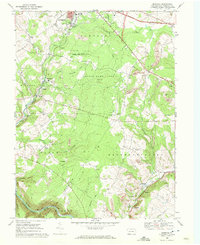 1968 Murdock1972 Print · USGSSomerset County is shown in the late 1960s as a landscape of intensive coal mining and quiet rural hamlets. Genealogists and researchers can trace the rail lines of the Baltimore and Ohio and find local landmarks like St Johns Cem and the Stober school.3 unique versions available
 - 1977 Map of Murdock, 1979 Print
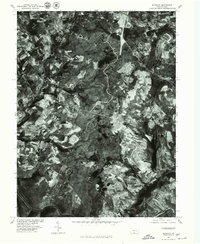 1977 Murdock1979 Print · USGSSomerset County in the late seventies is captured in this orthophoto study, showcasing the rural landscape and mining activity of the era. Researchers can trace land use patterns around Somerset and the smaller hamlets of Beachdale and Murdock.
 - 1977 Map of Rockwood, 1979 Print
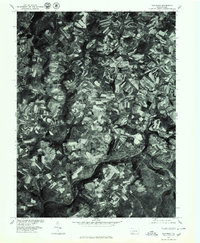 1977 Rockwood1979 Print · USGSSomerset County agriculture and riverfront life are captured here in the late seventies as the region maintained its traditional rural character. Trace the development of Rockwood and New Centerville or locate family property near Trent and Chippewa Lake.
 - 1977 Map of Bakersville, 1979 Print
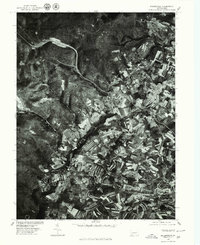 1977 Bakersville1979 Print · USGSSomerset County agriculture and highland forests are captured here in the late seventies. Researchers can trace property lines and field patterns around Bakersville, Lavansville, and the waters of Kooser Lake.
 - 1979 Map of Morgantown, 1983 Print
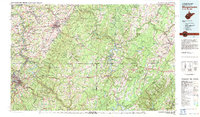 1979 Morgantown1983 Print · USGSThe northern Appalachian borderlands are captured here in the late seventies, showing the tri-state area of West Virginia, Pennsylvania, and Maryland. Genealogists and historians can trace the Mason and Dixon Line through mountain settlements like Markleysburg and across the Youghiogheny River Lake.
 - 1986 Map of Pittsburgh East
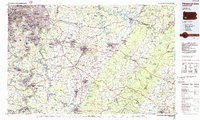 1986 Pittsburgh East1986 Print · USGSWestern Pennsylvania in the mid-eighties shows a landscape defined by industrial rivers and rising mountain ridges. Trace the dense rail networks of CONRAIL and the Pittsburgh and Lake Erie RR connecting historic centers like Monessen, Jeannette, and Connellsville.3 unique versions available
Showing maps 1-25 of 40
Top cities near Milford Township
- Somerset historical maps
- Meyersdale historical maps
- Berlin historical maps
- Milford historical maps
- Boswell historical maps
- Rockwood historical maps
See more
Top neighborhoods of Milford Township
Frequently asked questions
- What are the different types of historical maps available for Milford Township?
- What is the oldest map of Milford Township?
- Where can I purchase historical maps of Milford Township for my home or office?
- Where can I download high-res historical maps of Milford Township?
- Are there historical topographic maps available for Milford Township?
- Is there historical aerial imagery available for Milford Township?
- Where are historical maps of Milford Township sourced from?