Old Maps of Rush Township, Pennsylvania for Academic Research
Study the evolution of Rush Township with 53 high-resolution historic maps. Whether you're teaching, researching, or modeling changes in land use, these maps provide essential visual documentation of urban, environmental, and geographic change.
- Analyze long-term change: Track patterns in development, transportation, and natural features.
- Ideal for environmental or urban studies: Support academic projects with primary historical map data.
- Use in the classroom or lab: Educators and researchers rely on these maps to bring historical context to life.
These maps are a powerful tool for teaching, research, and visualizing how Rush Township has changed over the decades.
Rush Township, PA maps
(53)- 1943 Map of Montrose, 1957 Print
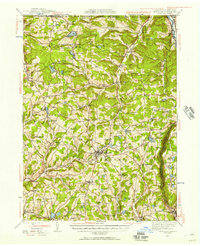 1943 Montrose1957 Print · USGSSusquehanna County at the height of the mid-century railroad era shows a landscape of upland farms and valley rail junctions. Researchers can locate long-standing family landmarks and rural hubs like South Montrose, the Lehigh Valley line, and Prospect Hill Cem.3 unique versions available
 - 1943 Map of Le Raysville, 1960 Print
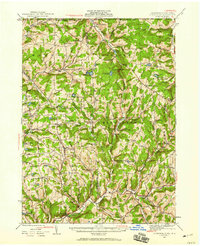 1943 Le Raysville1960 Print · USGSNortheastern Pennsylvania hill country is captured here during the mid-forties as it straddled the border of Bradford and Susquehanna counties. Genealogists can trace family names and small-town roots through Little Meadows, Le Raysville, and numerous country burial sites like the Centerville Cem.2 unique versions available
 - 1945 Map of Montrose
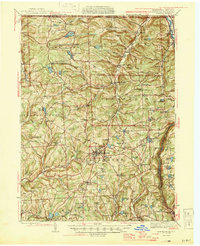 1945 Montrose1945 Print · USGSSusquehanna County is shown in the mid-1940s as a landscape of rural schoolhouses and established rail corridors. Genealogists and historians can locate family landmarks such as Prospect Hill Cem, tracing the paths between Montrose and the mills at Snows Mill.2 unique versions available
 - 1945 Map of Le Raysville
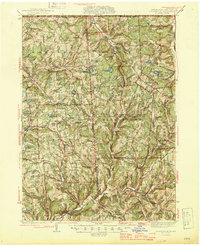 1945 Le Raysville1945 Print · USGSThe borderlands of Susquehanna and Bradford counties are captured here in the mid-1940s, showing a landscape of small farming hamlets and upland ridges. Genealogists can trace family roots through numerous remote burial sites and schools like Fowler Hill Cem or Logan Hill Sch.2 unique versions available
 - 1945 Map of Meshoppen, 1952 Print
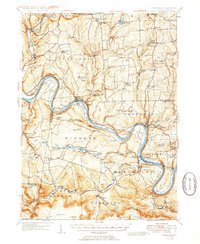 1945 Meshoppen1952 Print · USGSNortheastern Pennsylvania hill country and the winding Susquehanna River are captured here in the years following the war. Researchers can trace the legacy of small farming and rail communities through landmarks like Skinners Eddy, Mehoopany Sta, and Golden Hill Sch.4 unique versions available
 - 1945 Map of Auburn Center, 1956 Print
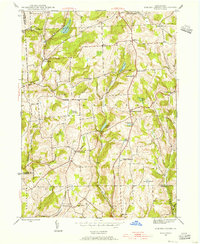 1945 Auburn Center1956 Print · USGSSusquehanna County farming communities are captured here in the mid-1940s, showing a landscape of small hamlets and family-named hills. Researchers can locate specific homesteads near Auburn Center, Boles Cem., and several rural churches like Shannon Hill Ch.6 unique versions available
 - 1946 Map of Tunkhannock, 1952 Print
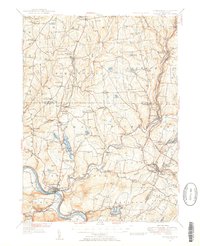 1946 Tunkhannock1952 Print · USGSThe northern Susquehanna River valley and the Wyoming County highlands are captured here in the mid-1940s. Genealogists and historians can trace the rail-connected settlements of Nicholson and Springville or locate family landmarks like Bunnell Cem and Castle Sch.3 unique versions available
 - 1946 Map of Springville, 1971 Print
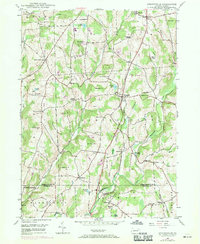 1946 Springville1971 Print · USGSSusquehanna and Wyoming counties appear here in the mid-1940s, showcasing a rural landscape tied together by the Lehigh Valley railroad. Genealogists can locate family landmarks like Wallace Hill Sch, Lynn Sta, and the Bunnell Cem.2 unique versions available
 - 1947 Map of Auburn Center
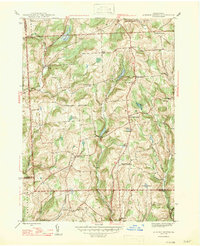 1947 Auburn Center1947 Print · USGSSusquehanna County in the late 1940s is a landscape of high ridges and rural crossroads communities. Genealogists and local historians can trace family locations near Boles Cem. or investigate old community centers like Retta, Rushboro, and South Auburn.2 unique versions available
 - 1948 Map of Springville
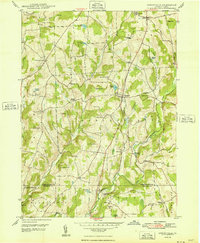 1948 Springville1948 Print · USGSSusquehanna County remains a landscape of independent crossroads and family farms in the years following the war. Genealogists can trace rural life through landmarks like Springville, the Wallace Hill Sch, and rail stops at Dimock Sta and Lynn Sta.2 unique versions available
 - 1950 Map of Scranton, 1952 Print
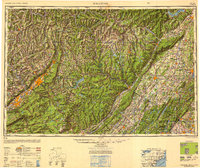 1950 Scranton1952 Print · USGSMid-century Northeast Pennsylvania and the Hudson Valley come alive in this survey of the tri-state region. Genealogists and historians can trace the dense rail networks of the Erie RR and DL&W RR between industrial hubs like Scranton and Wilkes-Barre.
 - 1953 Map of Scranton
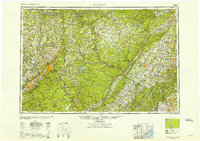 1953 Scranton1953 Print · USGSNortheastern Pennsylvania and the Catskills are shown in great detail during the early fifties, a time when rail lines and river valleys dictated the region's growth. Genealogists and historians can trace the industrial hearts of Scranton and Wilkes-Barre or locate remote landmarks like High Point and Lake Wallenpaupack.
 - 1954 Map of Williamsport
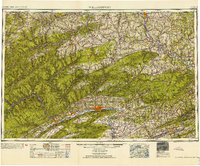 1954 Williamsport1954 Print · USGSNorth-central Pennsylvania in the mid-fifties is defined by the winding West Branch Susquehanna River and its industrial valley. Local historians can trace the massive Susquehanna Ordnance Depot and the extensive rail networks of the Pennsylvania Railroad.
 - 1959 Map of Scranton
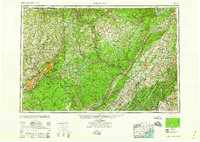 1959 Scranton1959 Print · USGSThe northern coalfields and the Hudson Valley meet in this mid-century survey of the Pennsylvania and New York borderlands. Genealogists and historians can trace the intricate rail networks of the Erie Railroad and the vast waters of Lake Wallenpaupack.2 unique versions available
 - 1960 Map of Williamsport
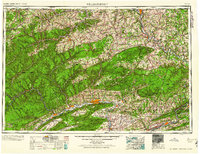 1960 Williamsport1960 Print · USGSNorth-central Pennsylvania in the mid-twentieth century was a vital corridor of rail and river industry stretching from the New York line to the coal regions. Genealogists can trace the rail networks of the Pennsylvania RR and Lehigh Valley RR connecting towns like Williamsport, Towanda, and Lock Haven.
 - 1962 Map of Williamsport, 1966 Print
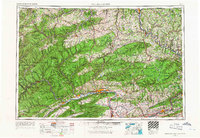 1962 Williamsport1966 Print · USGSNorth-central Pennsylvania was a landscape of industrial river hubs and vast state woodlands in the early sixties. Researchers can trace the path of the Pennsylvania Railroad through Williamsport and explore the remote reaches of Bucktail State Park.5 unique versions available
 - 1962 Map of Scranton, 1977 Print
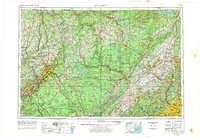 1962 Scranton1977 Print · USGSThe industrial heart of eastern Pennsylvania and the New York Catskills are captured here in the early sixties. Genealogists and historians can trace the dense valley settlements from Scranton to Wilkes-Barre and the rail lines of the Erie Lackawanna Railroad.2 unique versions available
 - 1965 Map of Scranton
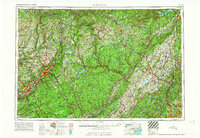 1965 Scranton1965 Print · USGSThe tri-state highlands of Pennsylvania, New York, and New Jersey come alive in the mid-sixties as industry and recreation converge. Trace the intricate rail lines of the Erie Lackawanna RR or locate landmarks like the U S Military Academy.2 unique versions available
 - 1965 Map of Williamsport
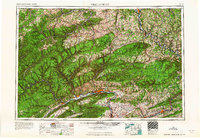 1965 Williamsport1965 Print · USGSNorth-central Pennsylvania in the mid-1960s is defined by the industrial river towns and vast timberlands of the Allegheny Plateau. Researchers can trace historic rail lines like the Erie Lackawanna and Reading as they thread through Williamsport, Lock Haven, and Jersey Shore.
 - 1966 Map of Williamsport
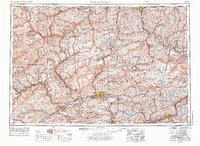 1966 Williamsport1966 Print · USGSThe Susquehanna Valley was a hub of transit and industry in the mid-seventies, where the river's West Branch connected major college towns and timberlands. Researchers can trace historical rail lines like the Reading or locate regional landmarks from Jersey Shore to Ricketts Glen State Park.
 - 1967 Map of Montrose West, 1971 Print
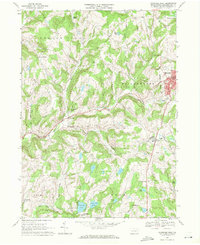 1967 Montrose West1971 Print · USGSSusquehanna County in the late sixties reveals a landscape of upland farms and valley industry centered around Montrose. Researchers can trace family sites near Prospect Hill Cem, follow the Lehigh Valley rail corridor, or locate landmarks like Snows Mill and Zaverton Airfield.
 - 1967 Map of Le Raysville, 1971 Print
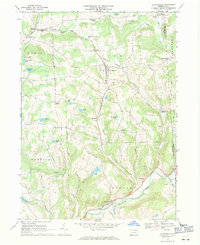 1967 Le Raysville1971 Print · USGSThe rolling uplands of Bradford and Susquehanna counties come to life in this late 1960s survey. Genealogists and researchers can trace family landmarks at Stone House Corner, Centerville Cem, and the village of Le Raysville.2 unique versions available
 - 1967 Map of Lawton, 1971 Print
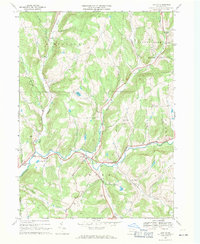 1967 Lawton1971 Print · USGSSusquehanna County in the late sixties reveals a network of small upland settlements and valley farms along the Wyalusing Creek. Researchers can locate historic rural burial grounds like Stedwell Cem and East Rush Cem or trace old property lines near Birchardville.3 unique versions available
 - 1968 Map of Montrose West, 1978 Print
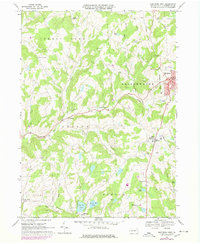 1968 Montrose West1978 Print · USGSSusquehanna County hills and small-town centers appear as they were in the late sixties and seventies. Researchers can trace the Lehigh Valley rail corridor, locate family plots at Prospect Hill Cem, or explore rural hamlets like Fairdale and Snows Mill.
 - 1981 Map of Towanda, 1982 Print
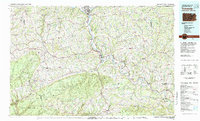 1981 Towanda1982 Print · USGSThe Susquehanna Valley at the turn of the 1980s reveals a region of mountain forests and busy river towns along the New York border. Researchers can trace the legacy of the CONRAIL lines through Sayre or locate remote landmarks like Armenia Mountain and Mt Pisgah State Park.
Showing maps 1-25 of 53
Top cities near Rush Township
- Vestal historical maps
- Owego historical maps
- Kirkwood historical maps
- Conklin historical maps
- Binghamton historical maps
- Bridgewater Township historical maps
See more
Top neighborhoods of Rush Township
Frequently asked questions
- What are the different types of historical maps available for Rush Township?
- What is the oldest map of Rush Township?
- Where can I purchase historical maps of Rush Township for my home or office?
- Where can I download high-res historical maps of Rush Township?
- Are there historical topographic maps available for Rush Township?
- Is there historical aerial imagery available for Rush Township?
- Where are historical maps of Rush Township sourced from?