1900s (20th Century) Maps of Pinegrove Township, Pennsylvania
Explore 15 historic maps of Pinegrove Township from the 1900s (20th Century). These maps offer a rare glimpse into what life looked like during the 1900s — showing old roads, neighborhoods, homes, and landmarks that have changed or disappeared over time.
Whether you're researching your family's past, planning a metal detecting trip, or studying how Pinegrove Township's landscape evolved across the 1900s, these high-resolution maps are a powerful tool for exploring the history of this region.
- Focus on a specific era: All maps on this page are from the 1900s, giving you a focused view of this time period.
- See what’s changed: Compare century-old streets, trails, and buildings to today's modern landscape using overlays and satellite layers.
- Research with precision: Use these maps for genealogy, historical research, land use analysis, or educational projects.
- View, download, or print: Maps are fully viewable online in high resolution, and can be downloaded or printed for your own records.
Start exploring Pinegrove Township's history through authentic maps from the 1900s. This is your window into the past.
Pinegrove Township, PA maps
(15)- 1922 Map of Oil City
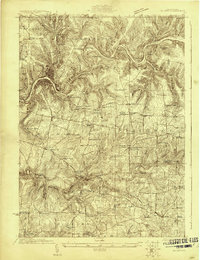 1922 Oil City1922 Print · USGSVenango County's river-driven economy and rural community structure are captured here in the early twenties, showing the intersection of heavy rail and upland farming. Researchers can trace family origins through numerous rural school sites like Rose School and old post offices at Cranberry PO or Davis Corners.2 unique versions available
 - 1922 Map of Tionesta, 1953 Print
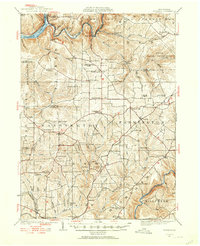 1922 Tionesta1953 Print · USGSNorthwestern Pennsylvania in the early twenties reveals a landscape defined by timber, the Allegheny River, and a dense network of country schools. Researchers can trace the legacy of small communities like Lucinda, Newmansville, and Fryburg alongside early railroad corridors.3 unique versions available
 - 1924 Map of Oil City
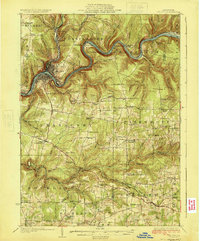 1924 Oil City1924 Print · USGSVenango County's industrial river valleys and rural plateaus are captured here in the early twenties as the oil economy shaped the land. Genealogists can trace family roots through numerous country schools and post offices like Cranberry PO, Monarch Park, and St Marks Church.4 unique versions available
 - 1924 Map of Tionesta
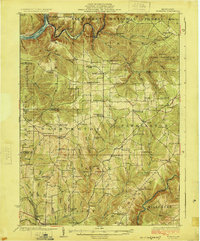 1924 Tionesta1924 Print · USGSThe northern Pennsylvania plateau comes alive in the early 1920s as the Allegheny National Forest was being established. Genealogists can trace hundreds of family-named landmarks and rural schoolhouses like Amsler School and Helen Furnace along the Baltimore and Ohio rail lines.4 unique versions available
 - 1943 Map of Oil City, 1944 Print
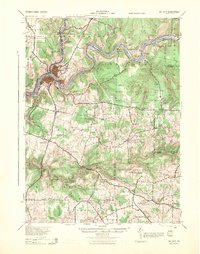 1943 Oil City1944 Print · USGSVenango County oil country is shown in detail during the early 1940s, centered on the industrial hub of Oil City. Genealogists can trace family names through dozens of rural schools like McCalmont Sch and churches such as St Marks Ch or Hoag Hill Ch.
 - 1946 Map of Tionesta
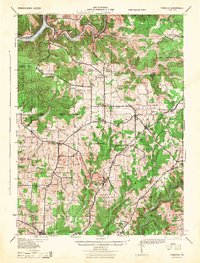 1946 Tionesta1946 Print · USGSClarion and Forest Counties appear here in the 1940s, a period when rural schoolhouses and family-named hamlets still defined the interior ridges. Researchers can trace the Allegheny River and Clarion River or find specific landmarks like the Oil Field and Highland Township High Sch.
 - 1957 Map of Warren, 1964 Print
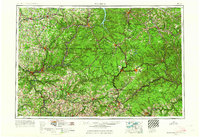 1957 Warren1964 Print · USGSThe northern Pennsylvania oil and timber country comes into focus in the mid-fifties, showing the region before modern highway expansions. Trace the industrial rail networks of the Pennsylvania RR and the early Allegheny River Reservoir near Warren and Oil City.4 unique versions available
 - 1958 Map of Warren
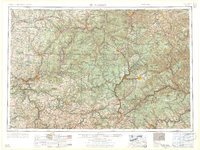 1958 Warren1958 Print · USGSNorthern Pennsylvania’s timber and oil country is captured here during the late fifties, showing the interplay of industrial valleys and vast state forests. Genealogists can trace family connections across the Cornplanter Indian Reservation or through rail hubs like Oil City and Saint Marys.
 - 1959 Map of Warren
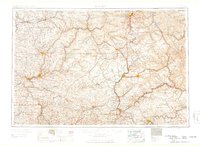 1959 Warren1959 Print · USGSNorthern Pennsylvania's oil and timber country comes alive in this late-fifties study of the forest-clad plateaus. Trace the historic Cornplanter (Indian Reservation), the sprawling Oil Field, and the rail lines of the Pennsylvania RR.2 unique versions available
 - 1963 Map of President
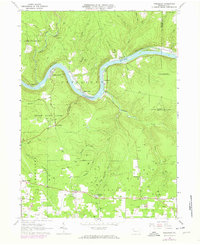 1963 President1963 Print · USGSVenango County's oil heritage and river geography are on full display in the 1960s, showing the intersection of heavy industry and rural life. Researchers can trace family names and old landmarks from the Cornplanter Oil Field to Hampton Station and the McCrea Cem.5 unique versions available
 - 1963 Map of Kossuth, 1965 Print
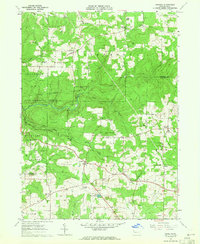 1963 Kossuth1965 Print · USGSThe Venango and Clarion county line comes alive in the early sixties as a region of oil wells, timbered game lands, and traditional rural settlements. Genealogists can trace family names through sites like Fertigs Gospel Tabernacle, Old Dutch Cem, and the village of Nineveh.3 unique versions available
 - 1967 Map of Tionesta, 1971 Print
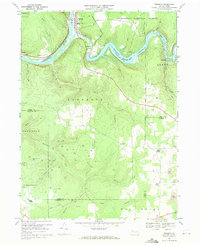 1967 Tionesta1971 Print · USGSThe Allegheny River valley and the Allegheny National Forest meet in this late 1960s study of Forest County. Researchers can trace the industrial footprint of numerous Oil Wells and rural landmarks such as Mt Collins Cem and the Tionesta Dam.2 unique versions available
 - 1967 Map of Fryburg, 1971 Print
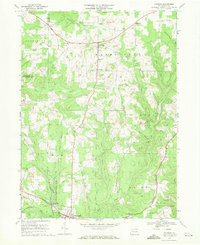 1967 Fryburg1971 Print · USGSClarion County enters the late sixties as a landscape of deep-woods conservation and industrial extraction. Researchers can locate family roots at St Michaels Sch or trace the rail routes of the Baltimore and Ohio through Paint Mills.4 unique versions available
 - 1971 Map of Warren
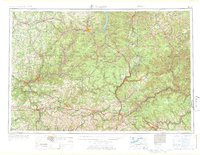 1971 Warren1971 Print · USGSNorth Central Pennsylvania is captured here in the early seventies, showing a landscape defined by industrial centers and massive state forests. Genealogists and historians can trace the rail lines of the Penn Central and Erie Lackawanna connecting towns like Warren, Kane, and Du Bois.
 - 1983 Map of Oil City, 1984 Print
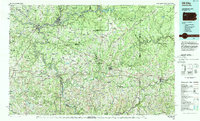 1983 Oil City1984 Print · USGSThe Allegheny and Clarion river valleys are shown in the early eighties as a hub of rail lines and conservation lands. Genealogists can trace family connections in Oil City and Franklin or locate rural sites like the Pennsylvania State Hospital and School and Coal City.
End of results
Showing maps 1-15 of 15
Top cities near Pinegrove Township
- Oil City historical maps
- Cranberry Township historical maps
- Clarion historical maps
- Limestone Township historical maps
- Monroe historical maps
- Cherrytree Township historical maps
See more
Top neighborhoods of Pinegrove Township
- Hampton Station historical maps
- Venus historical maps
- Sawtown historical maps
- Clapp Lease historical maps
- Goodmans Corners historical maps
- Coal Hill historical maps
See more
Frequently asked questions
- What are the different types of historical maps available for Pinegrove Township?
- What is the oldest map of Pinegrove Township?
- Where can I purchase historical maps of Pinegrove Township for my home or office?
- Where can I download high-res historical maps of Pinegrove Township?
- Are there historical topographic maps available for Pinegrove Township?
- Is there historical aerial imagery available for Pinegrove Township?
- Where are historical maps of Pinegrove Township sourced from?