Old Maps of Kaiserville, Washington Township
Explore 15 old maps of Kaiserville, spanning from 1946 to today. These high-resolution historic maps reveal how streets, neighborhoods, landmarks, and natural features evolved over time — perfect for genealogy, metal detecting, research, and local history exploration.
What you can do with these maps:
- See how Kaiserville changed over time: Compare historical maps to modern-day views to trace roads, homesites, rail lines & more.
- View detailed metadata: Each map includes creators, publishers, year, scale, and archive source.
- Overlay maps with satellite & LiDAR: Visualize the past alongside modern tools to explore terrain & human change.
- Trusted historical sources: Maps sourced from the USGS, Library of Congress, and other archives.
- Access maps your way: View online, download high-res files, or order prints for personal or research use.
Start exploring old maps of Kaiserville to uncover forgotten places, hidden landmarks, and the deep history beneath your feet.
Kaiserville, Washington Township maps
(15)- 1946 Map of Tunkhannock, 1952 Print
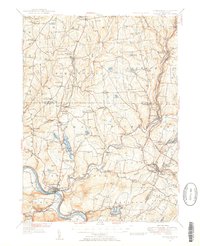 1946 Tunkhannock1952 Print · USGSThe northern Susquehanna River valley and the Wyoming County highlands are captured here in the mid-1940s. Genealogists and historians can trace the rail-connected settlements of Nicholson and Springville or locate family landmarks like Bunnell Cem and Castle Sch.3 unique versions available
 - 1946 Map of Tunkhannock, 1971 Print
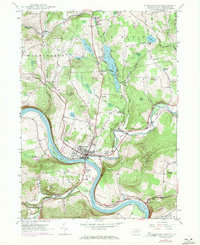 1946 Tunkhannock1971 Print · USGSTunkhannock and the winding Susquehanna River are captured here in the mid-twentieth century as the regional rail and road networks matured. Researchers can locate family sites at Sunnyside Cem, old rural schoolhouses like Castle Sch, and the grounds of St Andrews Camp.3 unique versions available
 - 1948 Map of Tunkhannock
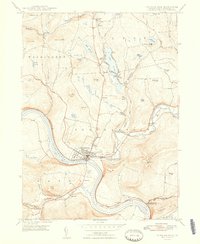 1948 Tunkhannock1948 Print · USGSTunkhannock and the Susquehanna River valley are captured here in the years following World War II, showing a landscape defined by rail and river. Genealogists can trace family names and local landmarks like Osterhout PO, Castle Sch, and Sunnyside Cem.2 unique versions available
 - 1950 Map of Scranton, 1952 Print
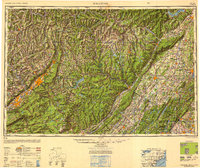 1950 Scranton1952 Print · USGSMid-century Northeast Pennsylvania and the Hudson Valley come alive in this survey of the tri-state region. Genealogists and historians can trace the dense rail networks of the Erie RR and DL&W RR between industrial hubs like Scranton and Wilkes-Barre.
 - 1953 Map of Scranton
 1953 Scranton1953 Print · USGSNortheastern Pennsylvania and the Catskills are shown in great detail during the early fifties, a time when rail lines and river valleys dictated the region's growth. Genealogists and historians can trace the industrial hearts of Scranton and Wilkes-Barre or locate remote landmarks like High Point and Lake Wallenpaupack.
 - 1959 Map of Scranton
 1959 Scranton1959 Print · USGSThe northern coalfields and the Hudson Valley meet in this mid-century survey of the Pennsylvania and New York borderlands. Genealogists and historians can trace the intricate rail networks of the Erie Railroad and the vast waters of Lake Wallenpaupack.2 unique versions available
 - 1962 Map of Scranton, 1977 Print
 1962 Scranton1977 Print · USGSThe industrial heart of eastern Pennsylvania and the New York Catskills are captured here in the early sixties. Genealogists and historians can trace the dense valley settlements from Scranton to Wilkes-Barre and the rail lines of the Erie Lackawanna Railroad.2 unique versions available
 - 1965 Map of Scranton
 1965 Scranton1965 Print · USGSThe tri-state highlands of Pennsylvania, New York, and New Jersey come alive in the mid-sixties as industry and recreation converge. Trace the intricate rail lines of the Erie Lackawanna RR or locate landmarks like the U S Military Academy.2 unique versions available
 - 1986 Map of Honesdale
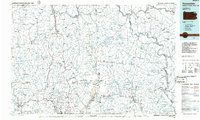 1986 Honesdale1986 Print · USGSNortheastern Pennsylvania and the New York borderlands appear here in the mid-1980s, during a period of transition for the region's industrial river valleys. Genealogists can trace family connections across the Moosic Mountains between the coal towns of Carbondale and the canal-era heritage of Honesdale.2 unique versions available
 - 2000 Map of Tunkhannock, 2001 Print
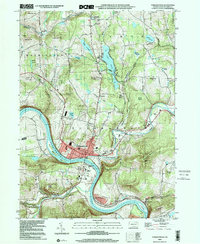 2000 Tunkhannock2001 Print · USGSTunkhannock and the Susquehanna River valley are captured here at the turn of the millennium, showing a blend of borough life and mountain terrain. Genealogists and local historians can locate family landmarks like Eatonville Sch, Sunnyside Cem, and Lake Carey.
 - 2010 Map of Tunkhannock, 2010 Print
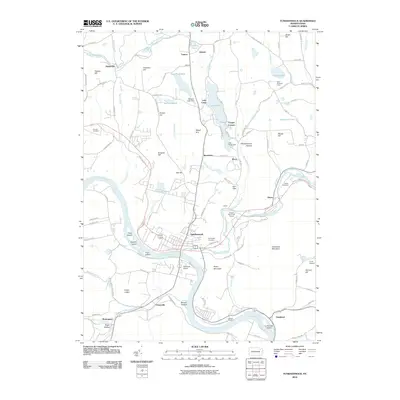 2010 Tunkhannock2010 Print · USGSThe riverfront borough of Tunkhannock and its surrounding Wyoming County townships are shown here in the early twenty-first century. Researchers can trace land patterns near Eatonville, find local burial sites like Sunnyside Cemetery, and locate the Skyhaven Airport.
 - 2013 Map of Tunkhannock, 2013 Print
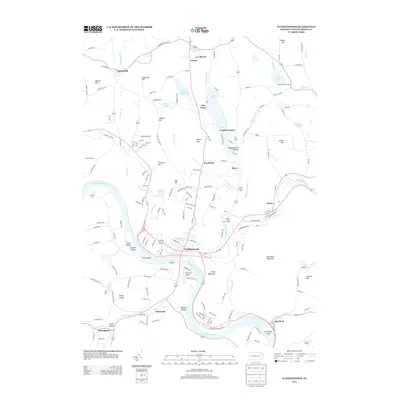 2013 Tunkhannock2013 Print · USGSTunkhannock and the winding Susquehanna River are captured here in the early twenty-first century. Researchers can trace local landmarks like Skyhaven Airport, established lakeside properties at Lake Carey, and the distinct topography of Benson Hollow and Osterhout Mountain.
 - 2016 Map of Tunkhannock, 2016 Print
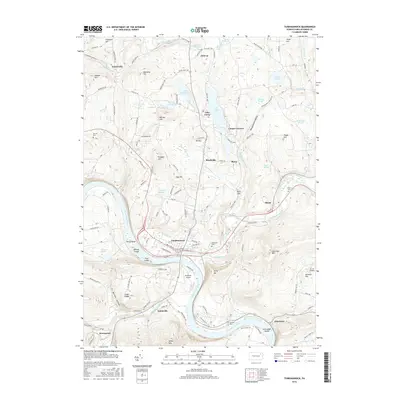 2016 Tunkhannock2016 Print · USGSThe Susquehanna River valley and Tunkhannock Creek confluence are documented here in the mid-2010s. Researchers can trace local lineage through Sunnyside Cem and Prevost Cem or locate old crossings at Eatonville and Dixon.
 - 2019 Map of Tunkhannock, 2019 Print
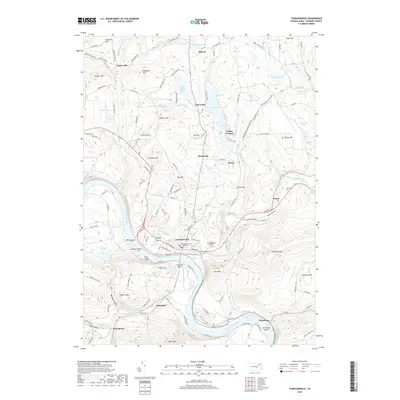 2019 Tunkhannock2019 Print · USGSThe river valley at Tunkhannock is captured here as it appeared in 2019, serving as the seat of Wyoming County. Researchers can locate the Wyoming County Courthouse, trace the shores of Lake Carey, and find family sites at Sunnyside Cem or the rural hamlet of Eatonville.
 - 2023 Map of Tunkhannock, 2023 Print
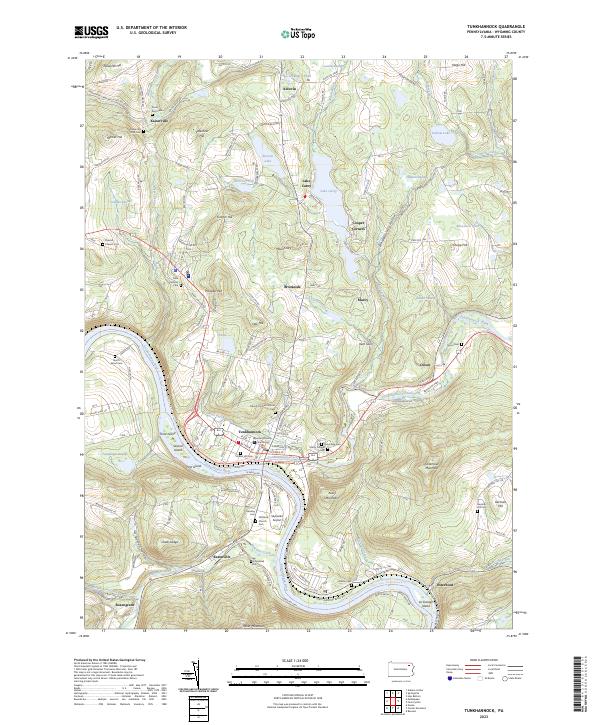 2023 Tunkhannock2023 Print · USGSWyoming County in the early twenty-first century reveals a landscape shaped by the Susquehanna River and its many islands. Researchers can trace local lineage through Gravel Hill Cem, visit the Wyoming County Courthouse, or explore the shores of Lake Carey.
End of results
Showing maps 1-15 of 15
Top cities near Kaiserville
- Dallas Township historical maps
- Bridgewater Township historical maps
- Falls Township historical maps
- Lenox Township historical maps
- Tunkhannock historical maps
- Springville Township historical maps
See more
Frequently asked questions
- What are the different types of historical maps available for Kaiserville?
- What is the oldest map of Kaiserville?
- Where can I purchase historical maps of Kaiserville for my home or office?
- Where can I download high-res historical maps of Kaiserville?
- Are there historical topographic maps available for Kaiserville?
- Is there historical aerial imagery available for Kaiserville?
- Where are historical maps of Kaiserville sourced from?