Old Maps of Mount Zion, South Carolina for Academic Research
Study the evolution of Mount Zion with 17 high-resolution historic maps. Whether you're teaching, researching, or modeling changes in land use, these maps provide essential visual documentation of urban, environmental, and geographic change.
- Analyze long-term change: Track patterns in development, transportation, and natural features.
- Ideal for environmental or urban studies: Support academic projects with primary historical map data.
- Use in the classroom or lab: Educators and researchers rely on these maps to bring historical context to life.
These maps are a powerful tool for teaching, research, and visualizing how Mount Zion has changed over the decades.
Mount Zion, SC maps
(17)- 1920 Map of St. George
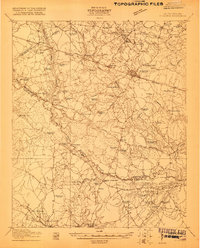 1920 St. George1920 Print · USGSCoastal plain life in the 1920s centered on the Edisto River and the small railroad towns that bridged the area's vast swamps. Researchers can locate numerous vanished country landmarks, from St James Cemetery to the Cattle Creek School and Independence School.
 - 1921 Map of St. George
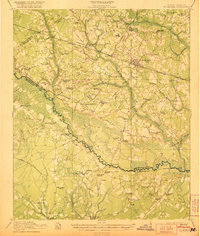 1921 St. George1921 Print · USGSThe Edisto River valley in the early 1920s was a landscape of small farming hamlets and vital rail connections. Genealogists can trace family roots through numerous sites like Indian Field Campgrounds, St James Cemetery, and the Heaton School.4 unique versions available
 - 1943 Map of Orangeburg
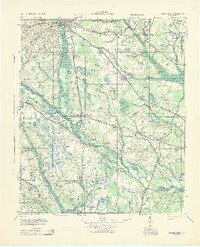 1943 Orangeburg1943 Print · USGSCoastal plain settlements and river forks define the South Carolina lowcountry during the early war years. Genealogists can trace family landmarks like Bochette Cem, Hunters Chapel Zion Ch, and unique sites like the Indian Field Camp Grounds.
 - 1944 Map of St. George
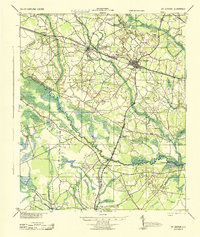 1944 St. George1944 Print · USGSMid-century Dorchester County is anchored here by the railroad junction at St George and the winding Edisto River. Genealogists can trace hundreds of family sites, from the Indian Field Camp Grounds to James Cem and Cattle Creek Sch.
 - 1954 Map of Augusta
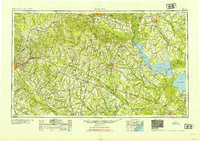 1954 Augusta1954 Print · USGSThe Savannah River valley and South Carolina Midlands are captured here during a period of post-war growth. Researchers can trace the rail-and-river economy through the Southern RR corridor and locate historic settlements like Aiken, Orangeburg, and Sumter.
 - 1957 Map of Augusta, 1966 Print
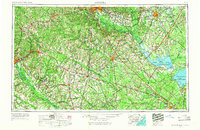 1957 Augusta1966 Print · USGSThe Savannah River and Santee basins are captured here during a period of massive military and industrial expansion in the late fifties. Genealogists can trace family footprints across Four Hole Swamp or near the Savannah River Plant.3 unique versions available
 - 1958 Map of Augusta
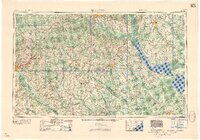 1958 Augusta1958 Print · USGSThe borderlands between Georgia and South Carolina come alive in the 1950s, showing the early footprint of the Savannah River Plant. Genealogists and historians can trace rail-dependent towns and rural landmarks from Orangeburg to the Fort Jackson Military Reservation.
 - 1961 Map of Augusta
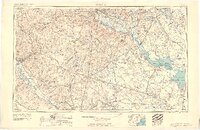 1961 Augusta1961 Print · USGSThe South Carolina lowcountry and CSRA appear here in the early sixties, during a period of massive military and industrial growth. Researchers can trace the development of the Savannah River Plant or locate legacy landmarks like Nelson Ferry and Magnolia Cemetery.2 unique versions available
 - 1962 Map of Augusta
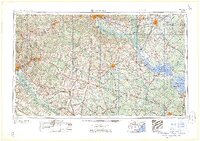 1962 Augusta1962 Print · USGSThe South Carolina and Georgia borderlands are seen here in the early sixties, showing the rise of the Savannah River Plant and the expansion of Fort Jackson. Researchers can trace old rail lines like the Southern Railway and find landmarks such as St. Pauls Church or the Santee Canal.
 - 1982 Map of St. George, 1983 Print
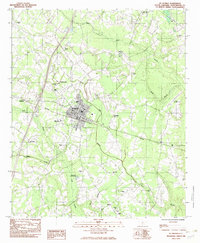 1982 St. George1983 Print · USGSDorchester County's landscape in the early eighties is captured here, centered on the historic rail town of St George. Genealogists can trace the locations of family landmarks like Good Hope Cem, Dukes Cem, and the notable Indian Field Campground.
 - 1985 Map of Saint George, 1986 Print
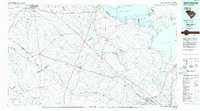 1985 Saint George1986 Print · USGSThe South Carolina Lowcountry in the mid-eighties shows a landscape defined by the great reservoirs and the meandering Edisto River. Researchers can trace the rail corridors of the Southern Railway and find rural settlements like Harleyville, Smoaks, and Grover.
 - 1990 Map of Saint George
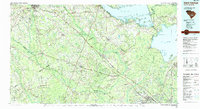 1990 Saint George1990 Print · USGSThe South Carolina Lowcountry in the early nineties reveals a complex network of river systems and massive reservoirs. Genealogists and local historians can trace the development of inland settlements like St George and Branchville or explore the wetlands of Four Hole Swamp.
 - 2011 Map of Saint George, 2011 Print
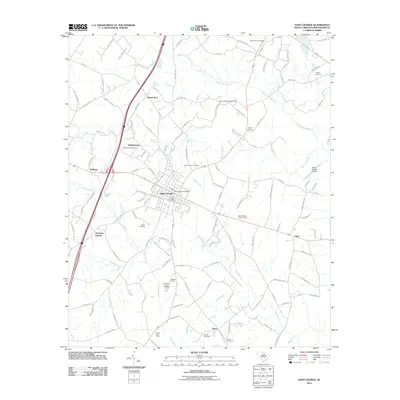 2011 Saint George2011 Print · USGSDorchester County at the turn of the decade reveals a landscape where small-town life meets a network of lowland swamps and family landmarks. Genealogists can trace local roots at Saint George Cemetery, Dukes Cemetery, or the historic Indian Field Campground.
 - 2014 Map of Saint George, 2014 Print
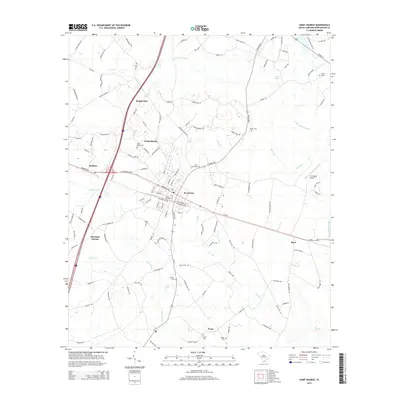 2014 Saint George2014 Print · USGSDorchester County at the start of the twenty-first century shows a landscape where modern infrastructure meets deep-rooted community history. Trace local lineages and old homesteads through sites like Good Hope Cem, Mount Zion, and Walters Cem.
 - 2017 Map of Saint George, 2017 Print
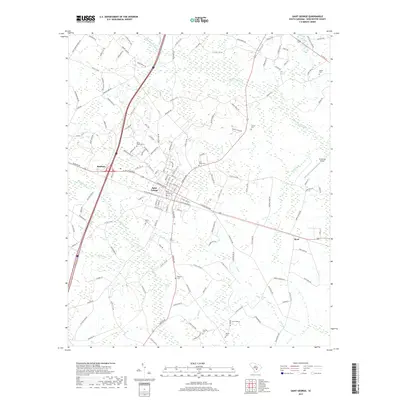 2017 Saint George2017 Print · USGSDorchester County's rural landscape comes to life in this recent study of the area surrounding the town of Saint George. Researchers can trace family history through a high density of local burial sites including Saint George Cem, Dukes Cem, and Harper Cem.
 - 2020 Map of Saint George, 2020 Print
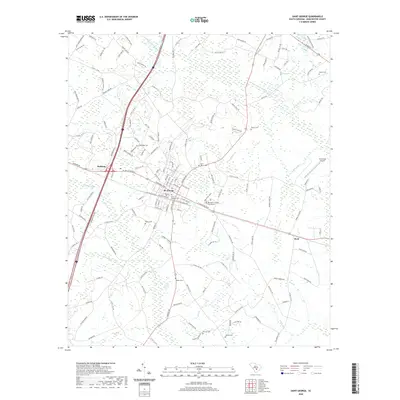 2020 Saint George2020 Print · USGSDorchester County, South Carolina, appears as a junction of transit and tradition in this recent survey. Local historians can trace the community layout of St. George and locate family burial sites like Saint George Cem and Good Hope Cem.
 - 2024 Map of Saint George, 2024 Print
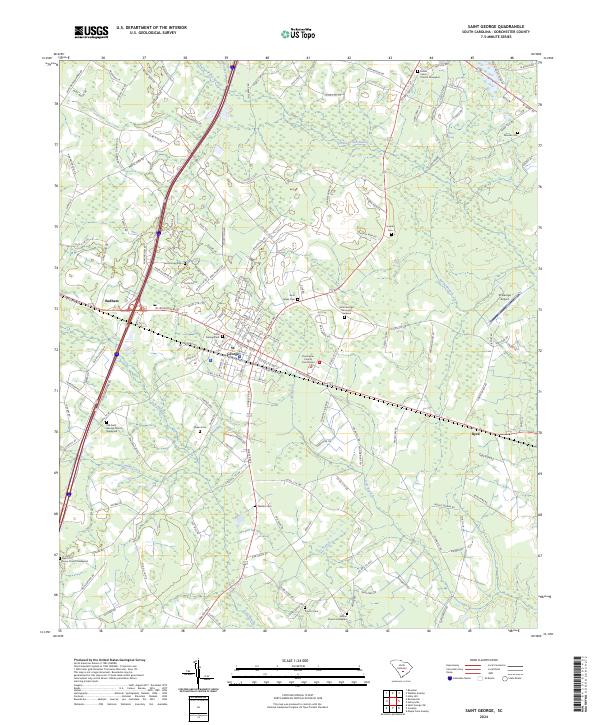 2024 Saint George2024 Print · USGSDorchester County’s coastal plain comes into focus in this contemporary survey of the area around the county seat. Genealogists can trace family footprints across numerous sites like Indian Field Church Graveyard, Moorer Cem, and the settlement of Badham.
End of results
Showing maps 1-17 of 17
Top cities near Mount Zion
- Holly Hill historical maps
- Bowman historical maps
- Branchville historical maps
- Harleyville historical maps
- Reevesville historical maps
- Vance historical maps
See more
Frequently asked questions
- What are the different types of historical maps available for Mount Zion?
- What is the oldest map of Mount Zion?
- Where can I purchase historical maps of Mount Zion for my home or office?
- Where can I download high-res historical maps of Mount Zion?
- Are there historical topographic maps available for Mount Zion?
- Is there historical aerial imagery available for Mount Zion?
- Where are historical maps of Mount Zion sourced from?