Old Maps of Poplar Spring, South Carolina
Explore 17 old maps of Poplar Spring, spanning from 1920 to today. These high-resolution historic maps reveal how streets, neighborhoods, landmarks, and natural features evolved over time — perfect for genealogy, metal detecting, research, and local history exploration.
What you can do with these maps:
- See how Poplar Spring changed over time: Compare historical maps to modern-day views to trace roads, homesites, rail lines & more.
- View detailed metadata: Each map includes creators, publishers, year, scale, and archive source.
- Overlay maps with satellite & LiDAR: Visualize the past alongside modern tools to explore terrain & human change.
- Trusted historical sources: Maps sourced from the USGS, Library of Congress, and other archives.
- Access maps your way: View online, download high-res files, or order prints for personal or research use.
Start exploring old maps of Poplar Spring to uncover forgotten places, hidden landmarks, and the deep history beneath your feet.
Poplar Spring, SC maps
(17)- 1920 Map of Orangeburg
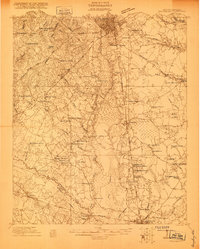 1920 Orangeburg1920 Print · USGSOrangeburg and the Edisto River valley are captured here at the start of the 1920s, revealing a landscape of small agricultural communities and railroad sidings. Genealogists can locate family landmarks like Bryants Academy, Snake Swamp School, and Cattle Creek Church.
 - 1921 Map of Orangeburg, 1919 Print
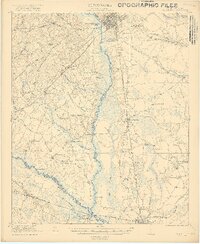 1921 Orangeburg1919 Print · USGSOrangeburg and the Edisto River basin are captured here just after the Great War, during a period of established rail commerce and rural education. Genealogists can trace dozens of schools and churches like Bryants Academy, Sardis School, and Bethel Church.3 unique versions available
 - 1943 Map of Orangeburg
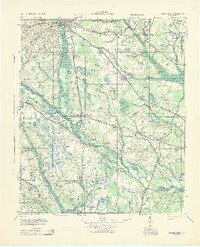 1943 Orangeburg1943 Print · USGSCoastal plain settlements and river forks define the South Carolina lowcountry during the early war years. Genealogists can trace family landmarks like Bochette Cem, Hunters Chapel Zion Ch, and unique sites like the Indian Field Camp Grounds.
 - 1943 Map of Orangeburg
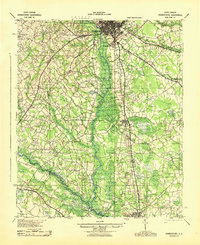 1943 Orangeburg1943 Print · USGSThe Orangeburg area in the early 1940s was a critical hub where the Southern and Atlantic Coast Line railroads intersected the Edisto forks. Genealogists can locate numerous rural landmarks like Bryants Academy, Mt Pisgah Ch, and the County Farm.
 - 1954 Map of Augusta
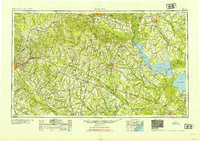 1954 Augusta1954 Print · USGSThe Savannah River valley and South Carolina Midlands are captured here during a period of post-war growth. Researchers can trace the rail-and-river economy through the Southern RR corridor and locate historic settlements like Aiken, Orangeburg, and Sumter.
 - 1957 Map of Augusta, 1966 Print
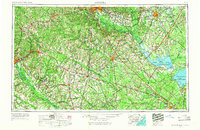 1957 Augusta1966 Print · USGSThe Savannah River and Santee basins are captured here during a period of massive military and industrial expansion in the late fifties. Genealogists can trace family footprints across Four Hole Swamp or near the Savannah River Plant.3 unique versions available
 - 1958 Map of Augusta
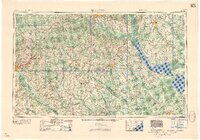 1958 Augusta1958 Print · USGSThe borderlands between Georgia and South Carolina come alive in the 1950s, showing the early footprint of the Savannah River Plant. Genealogists and historians can trace rail-dependent towns and rural landmarks from Orangeburg to the Fort Jackson Military Reservation.
 - 1961 Map of Augusta
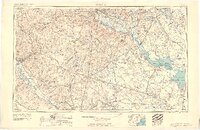 1961 Augusta1961 Print · USGSThe South Carolina lowcountry and CSRA appear here in the early sixties, during a period of massive military and industrial growth. Researchers can trace the development of the Savannah River Plant or locate legacy landmarks like Nelson Ferry and Magnolia Cemetery.2 unique versions available
 - 1962 Map of Augusta
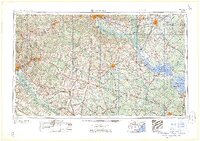 1962 Augusta1962 Print · USGSThe South Carolina and Georgia borderlands are seen here in the early sixties, showing the rise of the Savannah River Plant and the expansion of Fort Jackson. Researchers can trace old rail lines like the Southern Railway and find landmarks such as St. Pauls Church or the Santee Canal.
 - 1979 Map of Cordova
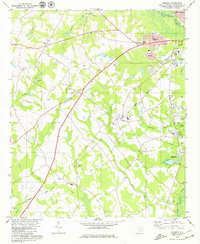 1979 Cordova1979 Print · USGSThe rural stretches of Orangeburg County are captured here in the late seventies as the town of Cordova developed along the Seaboard Coast Line. Researchers can locate numerous country landmarks like Wesley Grove Ch, the Orangeburg Nat Fish Hatchery, and Simons Siding.2 unique versions available
 - 1985 Map of Saint George, 1986 Print
 1985 Saint George1986 Print · USGSThe South Carolina Lowcountry in the mid-eighties shows a landscape defined by the great reservoirs and the meandering Edisto River. Researchers can trace the rail corridors of the Southern Railway and find rural settlements like Harleyville, Smoaks, and Grover.
 - 1990 Map of Saint George
 1990 Saint George1990 Print · USGSThe South Carolina Lowcountry in the early nineties reveals a complex network of river systems and massive reservoirs. Genealogists and local historians can trace the development of inland settlements like St George and Branchville or explore the wetlands of Four Hole Swamp.
 - 2011 Map of Cordova, 2011 Print
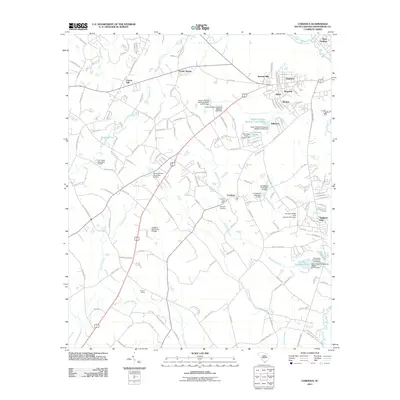 2011 Cordova2011 Print · USGSThe rural landscapes and wetland communities south of Orangeburg are captured here during the early twenty-first century. Genealogists and local researchers can trace family lands near Ebenezer Cemetery, Simons Siding, and the Cordova Post Office.
 - 2014 Map of Cordova, 2014 Print
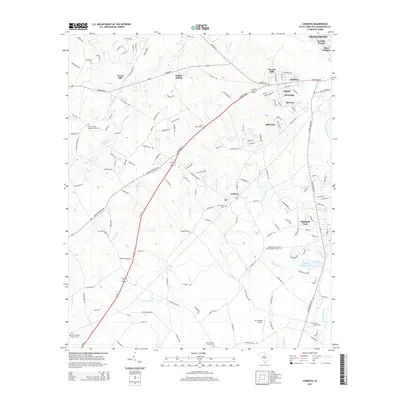 2014 Cordova2014 Print · USGSOrangeburg County's rural communities and expansive wetlands are mapped here in the years following the turn of the century. Researchers can trace local heritage through numerous sacred sites like the Zion Church Cem and family landmarks near Cordova and Gravel Hill.
 - 2017 Map of Cordova, 2017 Print
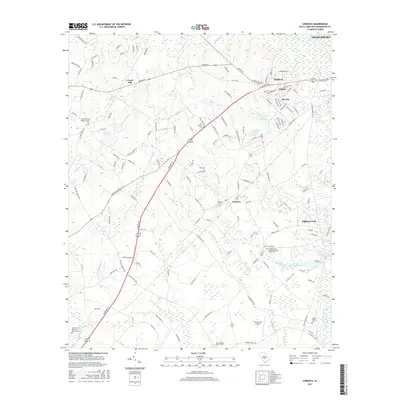 2017 Cordova2017 Print · USGSOrangeburg County's rural character is preserved in the late 2010s, where traditional settlements and family lands meet the sprawling wetlands of the coastal plain. Researchers can trace local lineage through sites like Smoak Family Cem and Zion Church Cem near Cordova.
 - 2020 Map of Cordova, 2020 Print
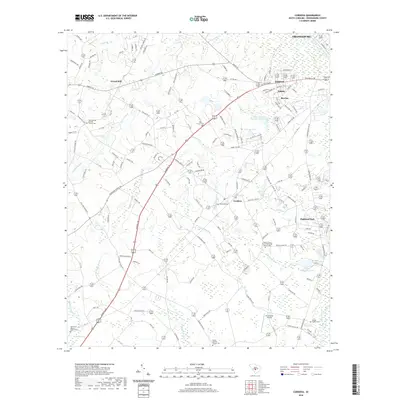 2020 Cordova2020 Print · USGSOrangeburg County in the 2020s remains a landscape of rural communities and intricate swamp systems. Researchers can trace family history through numerous landmarks like Saint George Baptist Church Cem, Highland Park, and the Smoak Family Cem.
 - 2024 Map of Cordova, 2024 Print
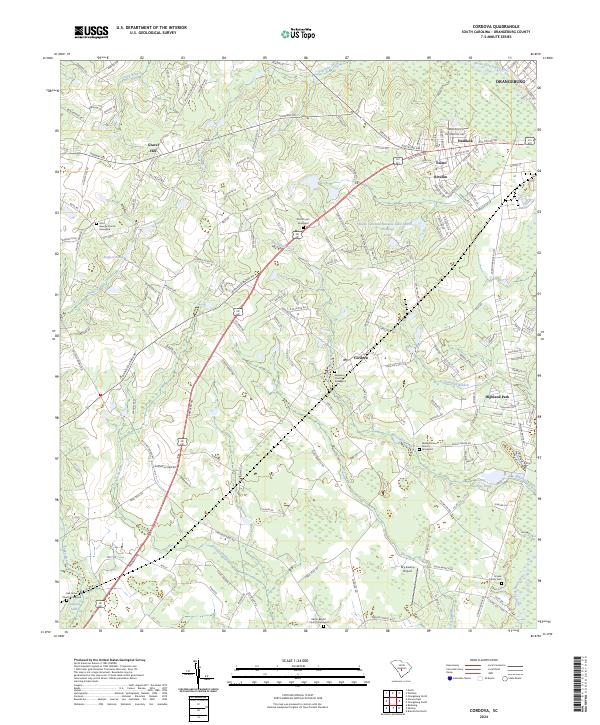 2024 Cordova2024 Print · USGSOrangeburg County's rural landscape comes into focus in this contemporary survey, showing the intricate wetlands surrounding the North Fork Edisto River. Researchers can locate legacy family sites and community landmarks including the Smoak Family Cem and the Orangeburg County National Fish Hatchery.
End of results
Showing maps 1-17 of 17
Top cities near Poplar Spring
- Orangeburg historical maps
- Bamberg historical maps
- Denmark historical maps
- Saint Matthews historical maps
- Branchville historical maps
- Swansea historical maps
See more
Frequently asked questions
- What are the different types of historical maps available for Poplar Spring?
- What is the oldest map of Poplar Spring?
- Where can I purchase historical maps of Poplar Spring for my home or office?
- Where can I download high-res historical maps of Poplar Spring?
- Are there historical topographic maps available for Poplar Spring?
- Is there historical aerial imagery available for Poplar Spring?
- Where are historical maps of Poplar Spring sourced from?