1900s (20th Century) Maps of Jefferson Park, South Carolina
Explore 10 historic maps of Jefferson Park from the 1900s (20th Century). These maps offer a rare glimpse into what life looked like during the 1900s — showing old roads, neighborhoods, homes, and landmarks that have changed or disappeared over time.
Whether you're researching your family's past, planning a metal detecting trip, or studying how Jefferson Park's landscape evolved across the 1900s, these high-resolution maps are a powerful tool for exploring the history of this region.
- Focus on a specific era: All maps on this page are from the 1900s, giving you a focused view of this time period.
- See what’s changed: Compare century-old streets, trails, and buildings to today's modern landscape using overlays and satellite layers.
- Research with precision: Use these maps for genealogy, historical research, land use analysis, or educational projects.
- View, download, or print: Maps are fully viewable online in high resolution, and can be downloaded or printed for your own records.
Start exploring Jefferson Park's history through authentic maps from the 1900s. This is your window into the past.
Jefferson Park, SC maps
(10)- 1946 Map of Sumter
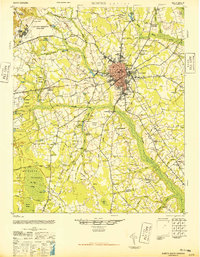 1946 Sumter1946 Print · USGSSumter and its surrounding lowlands were at a peak of rail and aviation development just after the war. Researchers can trace dozens of rural landmarks, from Pocalla Springs and Swan Lake to the sprawling Shaw Field.
 - 1954 Map of Augusta
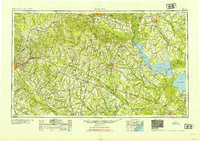 1954 Augusta1954 Print · USGSThe Savannah River valley and South Carolina Midlands are captured here during a period of post-war growth. Researchers can trace the rail-and-river economy through the Southern RR corridor and locate historic settlements like Aiken, Orangeburg, and Sumter.
 - 1957 Map of Sumter East, 1958 Print
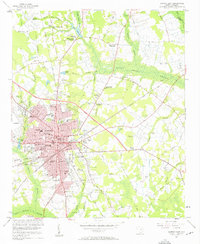 1957 Sumter East1958 Print · USGSSumter was entering a phase of suburban expansion and infrastructure modernization in the late fifties. Genealogists and local historians can trace family names across Rocky Bluff Crossroads, numerous small cemeteries like White-Dick Cem, and landmarks such as MORRIS COLLEGE.3 unique versions available
 - 1957 Map of Sumter, 1959 Print
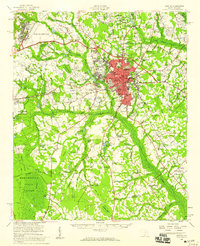 1957 Sumter1959 Print · USGSSumter at the close of the fifties is a bustling military and educational hub, marked by the expansion of Shaw Air Force Base. Genealogists and local historians can trace rural family churches like Bold Pilgrim Ch and old transport routes including Old Ferry Road.2 unique versions available
 - 1957 Map of Augusta, 1966 Print
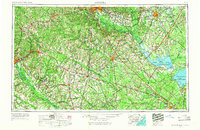 1957 Augusta1966 Print · USGSThe Savannah River and Santee basins are captured here during a period of massive military and industrial expansion in the late fifties. Genealogists can trace family footprints across Four Hole Swamp or near the Savannah River Plant.3 unique versions available
 - 1958 Map of Augusta
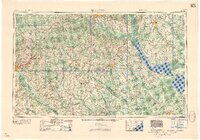 1958 Augusta1958 Print · USGSThe borderlands between Georgia and South Carolina come alive in the 1950s, showing the early footprint of the Savannah River Plant. Genealogists and historians can trace rail-dependent towns and rural landmarks from Orangeburg to the Fort Jackson Military Reservation.
 - 1961 Map of Augusta
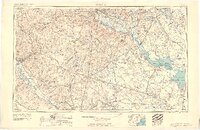 1961 Augusta1961 Print · USGSThe South Carolina lowcountry and CSRA appear here in the early sixties, during a period of massive military and industrial growth. Researchers can trace the development of the Savannah River Plant or locate legacy landmarks like Nelson Ferry and Magnolia Cemetery.2 unique versions available
 - 1962 Map of Augusta
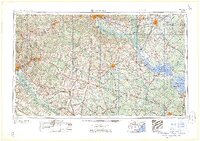 1962 Augusta1962 Print · USGSThe South Carolina and Georgia borderlands are seen here in the early sixties, showing the rise of the Savannah River Plant and the expansion of Fort Jackson. Researchers can trace old rail lines like the Southern Railway and find landmarks such as St. Pauls Church or the Santee Canal.
 - 1986 Map of Sumter
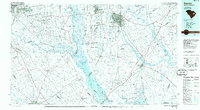 1986 Sumter1986 Print · USGSMid-South Carolina in the mid-eighties reveals a landscape of massive river bottomlands and significant military installations. Genealogists and historians can trace the rural networks around Fort Motte, Lone Star, and Sardinia alongside Lake Marion.
 - 1990 Map of Sumter
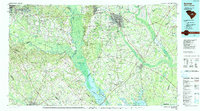 1990 Sumter1990 Print · USGSCentral South Carolina's river systems and military landscapes are captured here during the late twentieth century. Genealogists and historians can trace the growth of Sumter or locate rural communities such as Wedgefield and Kingville near the Congaree River.
End of results
Showing maps 1-10 of 10
Top cities near Jefferson Park
Frequently asked questions
- What are the different types of historical maps available for Jefferson Park?
- What is the oldest map of Jefferson Park?
- Where can I purchase historical maps of Jefferson Park for my home or office?
- Where can I download high-res historical maps of Jefferson Park?
- Are there historical topographic maps available for Jefferson Park?
- Is there historical aerial imagery available for Jefferson Park?
- Where are historical maps of Jefferson Park sourced from?