1900s (20th Century) Maps of Whistler Gulch, South Dakota
Explore 6 historic maps of Whistler Gulch from the 1900s (20th Century). These maps offer a rare glimpse into what life looked like during the 1900s — showing old roads, neighborhoods, homes, and landmarks that have changed or disappeared over time.
Whether you're researching your family's past, planning a metal detecting trip, or studying how Whistler Gulch's landscape evolved across the 1900s, these high-resolution maps are a powerful tool for exploring the history of this region.
- Focus on a specific era: All maps on this page are from the 1900s, giving you a focused view of this time period.
- See what’s changed: Compare century-old streets, trails, and buildings to today's modern landscape using overlays and satellite layers.
- Research with precision: Use these maps for genealogy, historical research, land use analysis, or educational projects.
- View, download, or print: Maps are fully viewable online in high resolution, and can be downloaded or printed for your own records.
Start exploring Whistler Gulch's history through authentic maps from the 1900s. This is your window into the past.
Whistler Gulch, SD maps
(6)- 1901 Map of Deadwood
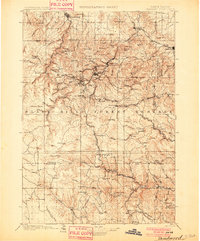 1901 Deadwood1901 Print · USGSThe Black Hills gold mining region and the bustling camps of Lawrence County are captured here just before the modern era. Genealogists and historians can trace the early rail networks of the Burlington and Missouri River Railroad through remote outposts like Bulldog Ranch and Rochford.2 unique versions available
 - 1915 Map of Sturgis
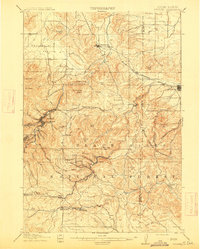 1915 Sturgis1915 Print · USGSThe Black Hills were a hub of mining and military activity in the early twentieth century. Researchers can trace the rail lines of the Chicago and Northwestern and locate specialized sites like the Golden Crest Mine and the Fort Meade Military Reservation.2 unique versions available
 - 1916 Map of Deadwood
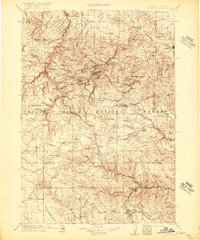 1916 Deadwood1916 Print · USGSThe Black Hills mining district at the peak of its early industrial era shows a dense network of rail and timber camps. Researchers can trace the narrow-gauge C B & Q RR lines to the Queen Bee Mine and the Fort Meade Military Reservation.3 unique versions available
 - 1953 Map of Rapid City, 1964 Print
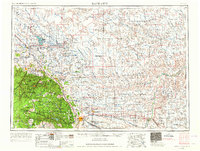 1953 Rapid City1964 Print · USGSWestern South Dakota's transition from the Black Hills to the open prairie is captured here during the mid-fifties. Researchers can trace the development of Ellsworth Air Force Base alongside historic landmarks like Bear Butte and the Lower Alkali School.3 unique versions available
 - 1957 Map of Rapid City
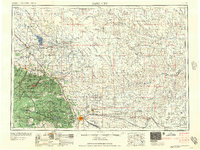 1957 Rapid City1957 Print · USGSWestern South Dakota in the mid-fifties reveals a landscape of high-altitude forests and growing military installations. Researchers can trace the development of Ellsworth Air Force Base, locate the Theodore Roosevelt Monument, and find rural landmarks like Lower Alkali School.
 - 1961 Map of Deadwood South, 1963 Print
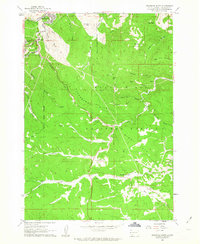 1961 Deadwood South1963 Print · USGSThe Black Hills gold country comes into sharp focus during the early 1960s, showing the intersection of mining history and modern recreation. Trace family ties and land use near Deadwood, the Chicago Burlington and Quincy rails, and the mining camp at Galena.5 unique versions available
End of results
Showing maps 1-6 of 6
Top cities near Whistler Gulch
- Spearfish historical maps
- Sturgis historical maps
- Lead historical maps
- North Spearfish historical maps
- Deadwood historical maps
- Whitewood historical maps
See more
Frequently asked questions
- What are the different types of historical maps available for Whistler Gulch?
- What is the oldest map of Whistler Gulch?
- Where can I purchase historical maps of Whistler Gulch for my home or office?
- Where can I download high-res historical maps of Whistler Gulch?
- Are there historical topographic maps available for Whistler Gulch?
- Is there historical aerial imagery available for Whistler Gulch?
- Where are historical maps of Whistler Gulch sourced from?