1950s Maps of Campbell County, Tennessee
Explore 21 historic maps of Campbell County from the 1950s. These maps offer a rare glimpse into what life looked like during the 1950s — showing old roads, neighborhoods, homes, and landmarks that have changed or disappeared over time.
Whether you're researching your family's past, planning a metal detecting trip, or studying how Campbell County's landscape evolved across the 1950s, these high-resolution maps are a powerful tool for exploring the history of this region.
- Focus on a specific era: All maps on this page are from the 1950s, giving you a focused view of this time period.
- See what’s changed: Compare century-old streets, trails, and buildings to today's modern landscape using overlays and satellite layers.
- Research with precision: Use these maps for genealogy, historical research, land use analysis, or educational projects.
- View, download, or print: Maps are fully viewable online in high resolution, and can be downloaded or printed for your own records.
Start exploring Campbell County's history through authentic maps from the 1950s. This is your window into the past.
Campbell County, TN maps
(21)- 1952 Map of Demory
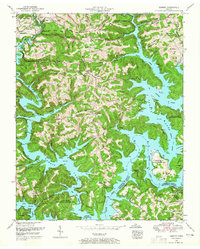 1952 Demory1952 Print · USGSThe confluence of the Clinch and Powell Rivers in Campbell County is shown here following the creation of Norris Lake. Genealogists and local historians can locate dozens of family burial grounds and rural institutions like the Baker Forge Memorial Cemetery, Grantsboro Cemetery, and Demory Church.4 unique versions available
 - 1952 Map of Jacksboro, 1954 Print
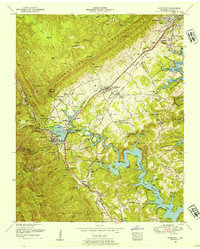 1952 Jacksboro1954 Print · USGSMid-century Campbell County comes to life as coal mining and rail transport meet the expanding waters of Norris Lake. Trace family roots at the Poor Farm Cemetery or locate the High Point Mine and Indian Grave Tunnel near Jacksboro.2 unique versions available
 - 1952 Map of Fork Mountain, 1954 Print
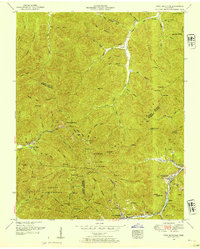 1952 Fork Mountain1954 Print · USGSThe Cumberland Plateau landscape at the start of the fifties reveals a coal-driven economy where mountain hamlets like Mahan Village and Moores Camp line the river valleys. Genealogists can trace family heritage through sites like Beech Grove Church and the Reeves-Daugherty Cemetery.5 unique versions available
 - 1952 Map of Pioneer, 1954 Print
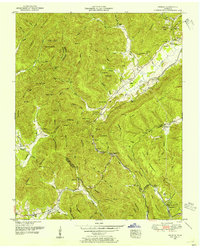 1952 Pioneer1954 Print · USGSUpper East Tennessee's coal and timber country is shown here in the early fifties as the Southern Railway linked mountain gaps and hollows. Genealogists can trace family roots through the Meredith Cemetery and sites like Rockhouse School or New Canaan Church.4 unique versions available
 - 1952 Map of Duncan Flats, 1954 Print
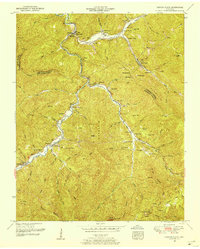 1952 Duncan Flats1954 Print · USGSCoal and timber settlements dot the Appalachian valleys of East Tennessee in the early fifties, following the path of the Tennessee RR. Genealogists can trace family histories through dozens of sites like the Lively Cemetery, Stony Fork School, and Clinchmore.5 unique versions available
 - 1952 Map of La Follette, 1954 Print
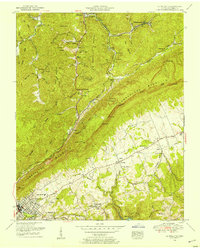 1952 La Follette1954 Print · USGSEastern Tennessee coal country is captured here in the early fifties, showing the industrial pulse of La Follette and the surrounding hollows. Researchers can trace family history through sites like Fincastle, Glade Springs Church, and the Rutherford Cemetery.3 unique versions available
 - 1952 Map of Ivydell, 1954 Print
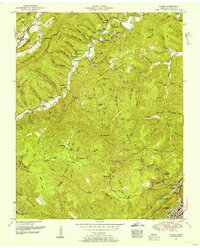 1952 Ivydell1954 Print · USGSThe Cumberland Mountains of Tennessee are shown in the early 1950s, revealing a landscape defined by deep gaps and family-named ridges. Researchers can trace ancestral connections through several local burying grounds, including Walden Cemetery, or locate the site of Flat Rock School and New Mammoth Cave.2 unique versions available
 - 1952 Map of Well Spring, 1955 Print
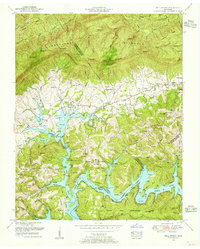 1952 Well Spring1955 Print · USGSLife along the Powell River in the early fifties is preserved here, as rural communities adjusted to the presence of Norris Lake. Genealogists can trace family names through dozens of sites like Well Spring Cemetery, Cawood School, and Hayes Cemetery.4 unique versions available
 - 1952 Map of White Hollow, 1955 Print
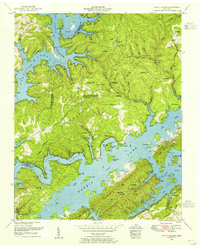 1952 White Hollow1955 Print · USGSSurrounding the intricate fingers of Norris Lake in the early 1950s, this area shows a landscape transformed by water and conservation. Researchers can trace dozens of family-named landmarks and cemeteries like Lays Cemetery and New Mossy Spring Cemetery near Lindamood.4 unique versions available
 - 1952 Map of Norris, 1955 Print
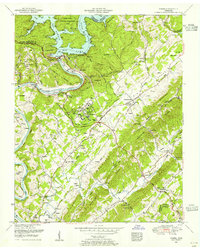 1952 Norris1955 Print · USGSEast Tennessee during the early fifties reveals a landscape shaped by the TVA and deep-rooted rural communities. Family historians can locate dozens of burial grounds and local landmarks like Norris Dam, Sinking Springs Church, and Andersonville.3 unique versions available
 - 1952 Map of Lake City, 1955 Print
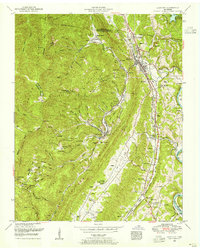 1952 Lake City1955 Print · USGSAnderson County's coal mining heartland is captured in the early fifties, showing the rail-dependent landscape of Lake City and Briceville. Genealogists can locate family names at Leach Cemetery and Wallace Cemetery, or trace local roots through landmarks like Rush Strong School.2 unique versions available
 - 1952 Map of Block, 1973 Print
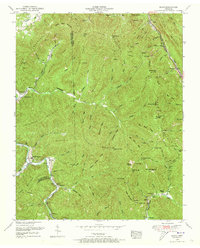 1952 Block1973 Print · USGSThe border of Scott and Campbell counties comes alive in the early fifties as the coal and rail industries navigate these deep Tennessee hollows. Researchers can trace the Southern rail line through Smoky Junction or locate the Upper Round Rock School and Antioch Church.5 unique versions available
 - 1953 Map of Jellico West, 1954 Print
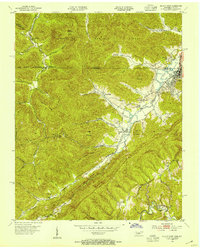 1953 Jellico West1954 Print · USGSThe Tennessee-Kentucky borderlands in the early fifties show a landscape shaped by coal and rail through the narrow valleys of the Cumberland. Trace the path of the Southern Railway past the Standard Mine and find family sites like the Black Oak Cem or the Zion Hill Sch & Ch.2 unique versions available
 - 1953 Map of Eagan, 1955 Print
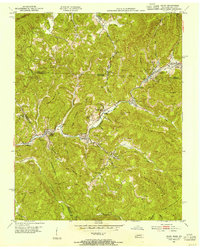 1953 Eagan1955 Print · USGSThe Tennessee-Kentucky border was a bustling coal-mining corridor in the early fifties, defined by rail-dependent valley towns and mountain ridge extractions. Genealogists and historians can trace family locations near Buffalo Sch, Partin Cem, and the mining communities of Eagan and Pruden.3 unique versions available
 - 1953 Map of Jellico East, 1955 Print
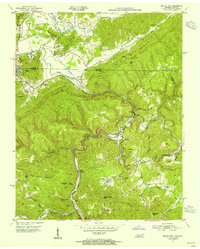 1953 Jellico East1955 Print · USGSThe Tennessee-Kentucky border comes alive in the early fifties, showing the mountain rail corridor before modern development. Genealogists can trace family roots at Bolton Cem or follow the old tracks through Morley and White Oak to find former schools like Ewing Sch.2 unique versions available
 - 1953 Map of Ketchen, 1955 Print
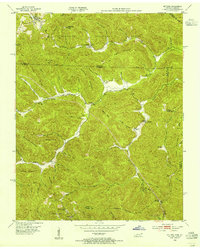 1953 Ketchen1955 Print · USGSThe Tennessee-Kentucky border comes alive in the early fifties, showing a remote landscape of ridge-top schools and creek-side settlements. Genealogists can trace family roots at Blankenship Cem, Hayes Creek Sch, or the small community of Ketchen.2 unique versions available
 - 1954 Map of Norma, 1955 Print
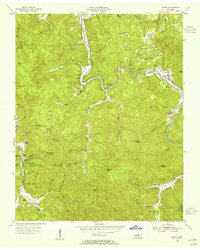 1954 Norma1955 Print · USGSScott County in the mid-fifties is a landscape of coal mining and timber production centered on the New River. Researchers can trace the rail-to-river economy at Brimstone Siding and find family heritage at Rector Cem or the Smoky Creek Ch.4 unique versions available
 - 1955 Map of Johnson City
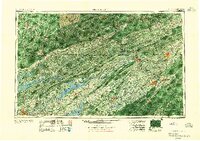 1955 Johnson City1955 Print · USGSEast Tennessee and the bordering highlands of Virginia and Kentucky appear here during the post-war industrial boom. You can trace the complex network of mountain ridges and new TVA lakes, from Johnson City to the coalfields near Middlesboro and Lynch.
 - 1956 Map of Corbin, 1966 Print
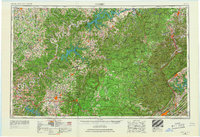 1956 Corbin1966 Print · USGSThe Kentucky and Tennessee borderlands are captured here in the mid-fifties, showing the region's shift toward modern interstate travel and reservoir development. Genealogists and historians can trace old community lines near Albany and Monticello or locate early rail junctions along the Southern and Tennessee Central lines.3 unique versions available
 - 1957 Map of Johnson City, 1966 Print
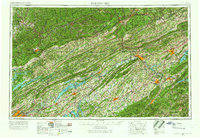 1957 Johnson City1966 Print · USGSUpper East Tennessee and Southwest Virginia are shown here during the mid-sixties transition of the Appalachians. Researchers can trace the industrial rail hubs of Kingsport, the sprawling waters of Cherokee Lake, and the historic Cumberland Gap.
 - 1958 Map of Corbin
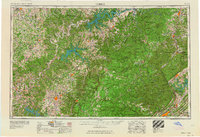 1958 Corbin1958 Print · USGSThe Upper Cumberland borderlands appear in the late 1950s as massive reservoirs and early atomic-era growth reshape the region. Trace family roots and vanished landmarks near Lake Cumberland, Oak Ridge, and the Cumberland National Forest.
End of results
Showing maps 1-21 of 21
Top cities of Campbell County
- La Follette historical maps
- Jacksboro historical maps
- Caryville historical maps
- Jellico historical maps
Frequently asked questions
- What are the different types of historical maps available for Campbell County?
- What is the oldest map of Campbell County?
- Where can I purchase historical maps of Campbell County for my home or office?
- Where can I download high-res historical maps of Campbell County?
- Are there historical topographic maps available for Campbell County?
- Is there historical aerial imagery available for Campbell County?
- Where are historical maps of Campbell County sourced from?