1900s (20th Century) Maps of Raven Hill, Tennessee
Explore 9 historic maps of Raven Hill from the 1900s (20th Century). These maps offer a rare glimpse into what life looked like during the 1900s — showing old roads, neighborhoods, homes, and landmarks that have changed or disappeared over time.
Whether you're researching your family's past, planning a metal detecting trip, or studying how Raven Hill's landscape evolved across the 1900s, these high-resolution maps are a powerful tool for exploring the history of this region.
- Focus on a specific era: All maps on this page are from the 1900s, giving you a focused view of this time period.
- See what’s changed: Compare century-old streets, trails, and buildings to today's modern landscape using overlays and satellite layers.
- Research with precision: Use these maps for genealogy, historical research, land use analysis, or educational projects.
- View, download, or print: Maps are fully viewable online in high resolution, and can be downloaded or printed for your own records.
Start exploring Raven Hill's history through authentic maps from the 1900s. This is your window into the past.
Raven Hill, TN maps
(9)- 1935 Map of Tate Springs
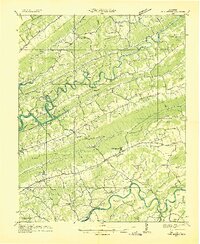 1935 Tate Springs1935 Print · USGSThe river valleys of Grainger County are captured here in the mid-1930s as the Tennessee Valley Authority began planning the reservoir. Trace family history through local landmarks like Lawson Mill, Swan Island Ferry, and the community at Tate Springs.
 - 1935 Map of Howard Quarter
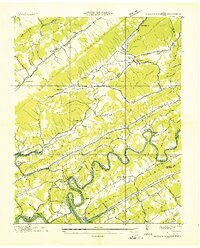 1935 Howard Quarter1935 Print · USGSClaiborne and Hancock counties are captured here in the mid-1930s as the Tennessee Valley Authority began its work on the Clinch River. Genealogists can trace family landmarks like Turner Cem, St Elmo Ch, and the site of CCC Camp No 27.
 - 1942 Map of Howard Quarter, 1957 Print
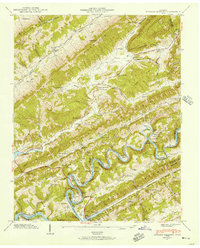 1942 Howard Quarter1957 Print · USGSThe borderlands of Claiborne and Hancock counties are shown here in the early 1940s as the Norris Reservoir transformed the winding Clinch River. Genealogists can trace family landmarks and rural life at Howard Quarter, Seal Chapel, and Mallicoat Cem.2 unique versions available
 - 1943 Map of Howard Quarter, 1946 Print
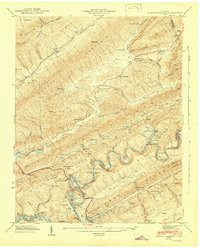 1943 Howard Quarter1946 Print · USGSMid-century Claiborne and Grainger Counties are defined here by the winding Clinch River and the early influence of the Norris Reservoir. Researchers can trace ancestral sites like Pearson Cem and old community hubs including Howard Quarter Sch and Seal Chapel.2 unique versions available
 - 1955 Map of Johnson City
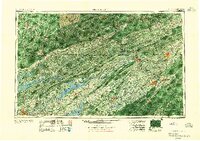 1955 Johnson City1955 Print · USGSEast Tennessee and the bordering highlands of Virginia and Kentucky appear here during the post-war industrial boom. You can trace the complex network of mountain ridges and new TVA lakes, from Johnson City to the coalfields near Middlesboro and Lynch.
 - 1957 Map of Johnson City, 1966 Print
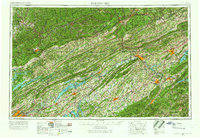 1957 Johnson City1966 Print · USGSUpper East Tennessee and Southwest Virginia are shown here during the mid-sixties transition of the Appalachians. Researchers can trace the industrial rail hubs of Kingsport, the sprawling waters of Cherokee Lake, and the historic Cumberland Gap.
 - 1960 Map of Johnson City
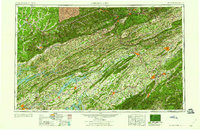 1960 Johnson City1960 Print · USGSUpper East Tennessee and the surrounding tri-state area are shown in the mid-fifties during the height of the TVA reservoir era. Trace the industrial rail lines of the Southern and Louisville and Nashville between Kingsport and Johnson City.
 - 1963 Map of Johnson City
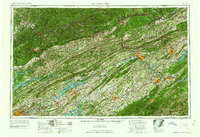 1963 Johnson City1963 Print · USGSThe Tri-Cities and the surrounding Appalachian ridges are shown in detail during the early sixties, highlighting the era's vital rail and river networks. Genealogists and historians can trace the routes of the Clinchfield RR and locate settlements from Rogersville to Elizabethton.
 - 1981 Map of Morristown
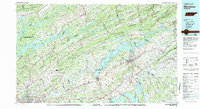 1981 Morristown1981 Print · USGSEast Tennessee's ridge-and-valley corridor is captured here in the early eighties, showing the region's transformation by TVA reservoirs. Genealogists and historians can trace family locations near Alpha Ch, follow the Southern Railway, or locate the Young Mine.
End of results
Showing maps 1-9 of 9
Frequently asked questions
- What are the different types of historical maps available for Raven Hill?
- What is the oldest map of Raven Hill?
- Where can I purchase historical maps of Raven Hill for my home or office?
- Where can I download high-res historical maps of Raven Hill?
- Are there historical topographic maps available for Raven Hill?
- Is there historical aerial imagery available for Raven Hill?
- Where are historical maps of Raven Hill sourced from?