1900s (20th Century) Maps of Cocke County, Tennessee
Explore 58 historic maps of Cocke County from the 1900s (20th Century). These maps offer a rare glimpse into what life looked like during the 1900s — showing old roads, neighborhoods, homes, and landmarks that have changed or disappeared over time.
Whether you're researching your family's past, planning a metal detecting trip, or studying how Cocke County's landscape evolved across the 1900s, these high-resolution maps are a powerful tool for exploring the history of this region.
- Focus on a specific era: All maps on this page are from the 1900s, giving you a focused view of this time period.
- See what’s changed: Compare century-old streets, trails, and buildings to today's modern landscape using overlays and satellite layers.
- Research with precision: Use these maps for genealogy, historical research, land use analysis, or educational projects.
- View, download, or print: Maps are fully viewable online in high resolution, and can be downloaded or printed for your own records.
Start exploring Cocke County's history through authentic maps from the 1900s. This is your window into the past.
Cocke County, TN maps
(58)- 1901 Map of Asheville
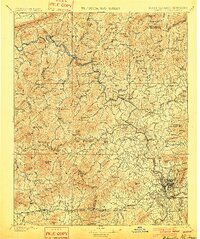 1901 Asheville1901 Print · USGSWestern North Carolina at the turn of the century shows a mountain landscape adapting to the arrival of major railroads. Genealogists and historians can trace family-named peaks and early communities like Mars Hill, Hot Springs, and the estates at Biltmore.9 unique versions available
 - 1904 Map of Greeneville
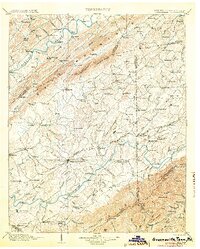 1904 Greeneville1904 Print · USGSEast Tennessee at the turn of the century reveals a land of ridge-valley farms and early educational centers. Genealogists can trace family roots through historic settlements like Surgoinsville, early institutions like Washington College, and landmarks such as Bashors Mill.4 unique versions available
 - 1912 Map of Mt Guyot
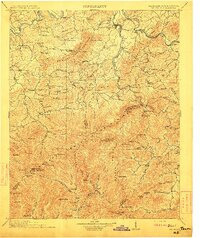 1912 Mt Guyot1912 Print · USGSThe Tennessee and North Carolina borderlands come into focus in the early twentieth century, prior to the creation of the Great Smoky Mountains National Park. Trace ancestral locations like Cataloochee and Smokemont or follow the Southern RR to Newport.5 unique versions available
 - 1935 Map of Newport
 1935 Newport1935 Print · USGSIn the mid-1930s, this area of East Tennessee was a landscape of river-valley towns and mountain communities. Genealogists and historians can trace family locations through numerous rural landmarks like Rosenwald Sch, Jenkins Mill, and Bethel Ch.
 - 1935 Map of White Pine
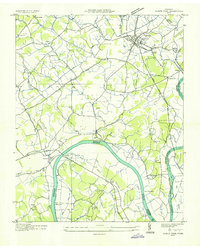 1935 White Pine1935 Print · USGSThe Jefferson County countryside around White Pine is shown here in the mid-1930s as the French Broad River valley hummed with rural industry. Researchers can trace family-named landmarks like Anderson Mill, Hawkins Chapel, and Westminster Cem.
 - 1935 Map of Hartford
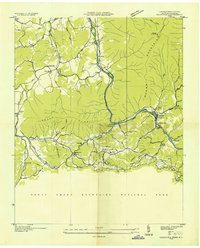 1935 Hartford1935 Print · USGSCocke County’s river valleys and mountain peaks are captured here in the mid-1930s as the national park took shape. Researchers can trace the river-economy through HARTFORD and Naillon Sta or locate family sites like Padgett Mill and Catons Grove.
 - 1935 Map of English Mountain
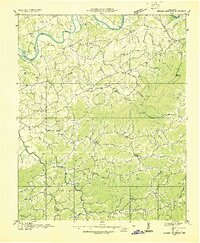 1935 English Mountain1935 Print · USGSSevier County and the foothills of the Smokies are seen here during the mid-thirties as the national park was taking shape. Genealogists can trace family roots through scores of rural institutions like Smoky Mtn Academy, Pittman Center, and the Crockettville Sch.
 - 1935 Map of Parrottsville
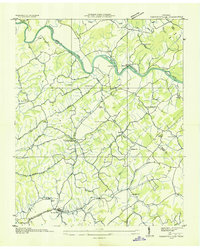 1935 Parrottsville1935 Print · USGSThe Nolichucky River valley in the mid-1930s reveals a dense rural fabric of Greene and Cocke counties before modern development. Genealogists can trace family landmarks like Baysinger Hollow alongside community centers such as Parrottsville, Reaves Mill, and Salem Ch.
 - 1935 Map of Paint Rock
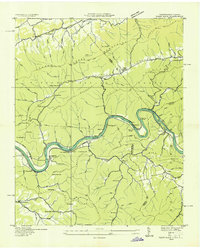 1935 Paint Rock1935 Print · USGSThe French Broad River corridor at the Tennessee-North Carolina border comes to life in this mid-1930s survey. Genealogists and local historians can trace family locations near Paint Rock and Harmony Grove or find old community centers like Wolf Creek Sch and Mt Olive Ch.
 - 1935 Map of Neddy Mountain
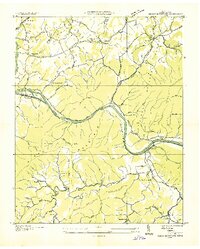 1935 Neddy Mountain1935 Print · USGSThe French Broad River valley in the mid-1930s reveals a mountain landscape transitioning under new infrastructure. Genealogists can locate family landmarks like Faubion Cem, Long Creek Mill, and rural schoolhouses such as Reid Hill Sch.
 - 1935 Map of Clevenger
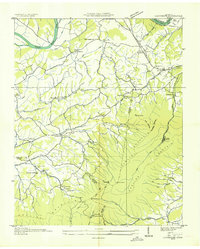 1935 Clevenger1935 Print · USGSJefferson and Cocke Counties are shown in the mid-1930s, featuring the rural communities nestled against the slopes of English Mountain. Genealogists and historians can locate family landmarks like Bridges Ch, trace the site of CCC Camp No 1467, or find the old Blowing Cave Mill.
 - 1935 Map of Springvale
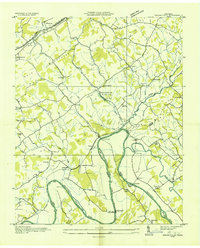 1935 Springvale1935 Print · USGSIn the mid-thirties, the Nolichucky River valley supported a vibrant network of rural communities at the junction of three Tennessee counties. Genealogists and historians can trace family locations through numerous landmarks like Bethesda Ch, Silver City, and river crossings such as Inman Ford.
 - 1935 Map of Cedar Creek
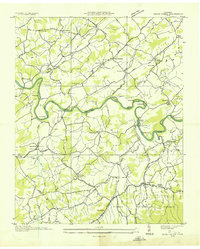 1935 Cedar Creek1935 Print · USGSMid-1930s Greene County life centers on the river and rural crossroads in this Tennessee Valley Authority study. Genealogists can locate family landmarks like Walter Crossroads, Whittenburg Ch, and the numerous islands of the Nolichucky River.
 - 1935 Map of Jones Cove
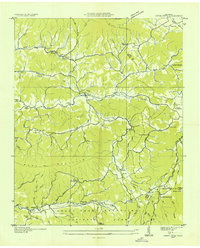 1935 Jones Cove1935 Print · USGSSevier County mountain life in the mid-thirties is documented here as the national park boundary was being established. Researchers can locate the Mitchell Wilson Mill, the CCC Camp No 423, and numerous rural schools like Sunset Gap Sch.
 - 1935 Map of Rankin
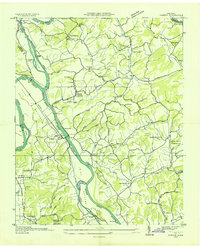 1935 Rankin1935 Print · USGSIn the mid-1930s, the river valleys of East Tennessee were still defined by small farming communities and country schools. Genealogists can trace family footprints at Atchleys Mill, Rorex Chapel, and the community of Rankin along the Southern railroad.
 - 1935 Map of Dandridge
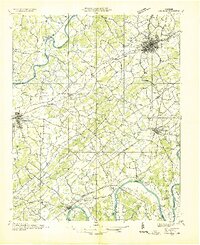 1935 Dandridge1935 Print · USGSEast Tennessee in the mid-1930s is mapped here in great detail as the region's river valleys prepared for the impacts of the Tennessee Valley Authority. Researchers can trace ancestral locations through dozens of landmarks like Martha Sunderland Cem, Panther Creek Mill, and Roe Ch.
 - 1935 Map of Small
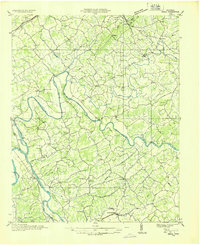 1935 Small1935 Print · USGSEast Tennessee river life in the mid-1930s centered on the fertile valley between the Bays Mountains and the French Broad River. Researchers can trace ancestral locations at Mohawk, Parrottsville, and dozens of rural sites like Alshieys Mill or Bethesda Ch.
 - 1935 Map of Lemon Gap
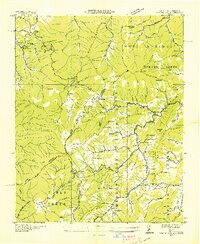 1935 Lemon Gap1935 Print · USGSThe high ridges of the Madison County borderlands are shown in the mid-1930s as a network of gap settlements and mountain schools. Genealogists and hikers can trace the Appalachian Trail past early landmarks like the Joe PO. and Ebbs Mill.
 - 1936 Map of Waterville
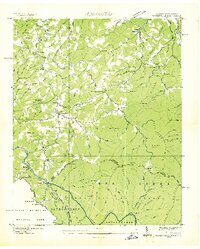 1936 Waterville1936 Print · USGSThe Tennessee and North Carolina borderlands are captured here in the mid-1930s as hydropower and conservation efforts reshaped the mountains. Researchers can trace early industry and family history through the Power Plant at Waterville, the Appalachian Trail, and community sites like Cogdill Chapel.
 - 1939 Map of Cedar Creek
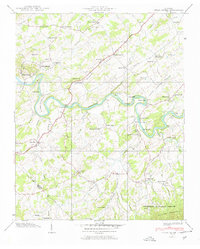 1939 Cedar Creek1939 Print · USGSGreene County was a patchwork of small-scale farms and river crossings in the late thirties. Genealogists and researchers can trace family-named landmarks like Luttrell Spring, Meadow Creek Mill, and schools such as Bright Hope Sch.5 unique versions available
 - 1939 Map of White Pine
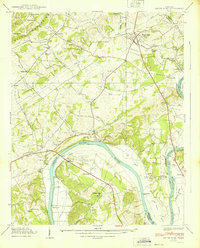 1939 White Pine1939 Print · USGSJefferson and Cocke Counties thrive along the river in the late thirties, just as modern highway travel was beginning to reshape the valley. Genealogists can trace family roots through numerous sites like Westminster Cem, Anderson Mill, and the community of Swannsylvania.2 unique versions available
 - 1939 Map of Rankin
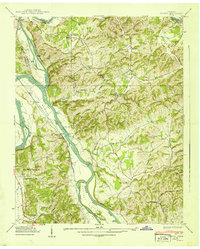 1939 Rankin1939 Print · USGSCocke County and its neighbors are captured here just before mid-century changes, showing the river-driven life along the French Broad River. Researchers can locate family landmarks like Atchley Mill, Solomon Ferry, and Redwine Cem.2 unique versions available
 - 1939 Map of Springvale
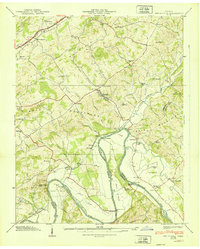 1939 Springvale1939 Print · USGSHamblen and Cocke counties meet along the Nolichucky River during the late thirties, when rural life centered on river fords and small mountain gaps. Genealogists can locate family landmarks like Bethesda Ch, the Creek Store, and Scoot Mill.2 unique versions available
 - 1939 Map of Clevenger, 1954 Print
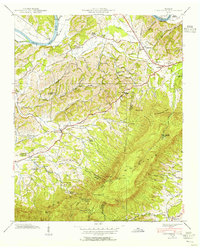 1939 Clevenger1954 Print · USGSJefferson and Cocke counties meet along the French Broad River in the late thirties, just as the local highway network was expanding. Genealogists can trace early homesteads and landmarks like Blowing Cave Mill, Bird Crossroads, and the Bogard Ch Rainwater Sch.
 - 1939 Map of Parrottsville, 1957 Print
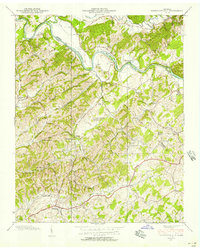 1939 Parrottsville1957 Print · USGSEast Tennessee life in the late thirties is captured here as a network of ridge-and-valley settlements across the NOLICHUCKY RIVER. Researchers can trace family history through a wealth of rural landmarks like Brookside Mill, the OTTINGER CEM, and the Ottinger Shelton Chapel.4 unique versions available
Showing maps 1-25 of 58
Top cities of Cocke County
Frequently asked questions
- What are the different types of historical maps available for Cocke County?
- What is the oldest map of Cocke County?
- Where can I purchase historical maps of Cocke County for my home or office?
- Where can I download high-res historical maps of Cocke County?
- Are there historical topographic maps available for Cocke County?
- Is there historical aerial imagery available for Cocke County?
- Where are historical maps of Cocke County sourced from?