Old Maps of Buffalo Springs, Tennessee for Academic Research
Study the evolution of Buffalo Springs with 17 high-resolution historic maps. Whether you're teaching, researching, or modeling changes in land use, these maps provide essential visual documentation of urban, environmental, and geographic change.
- Analyze long-term change: Track patterns in development, transportation, and natural features.
- Ideal for environmental or urban studies: Support academic projects with primary historical map data.
- Use in the classroom or lab: Educators and researchers rely on these maps to bring historical context to life.
These maps are a powerful tool for teaching, research, and visualizing how Buffalo Springs has changed over the decades.
Buffalo Springs, TN maps
(17)- 1897 Map of Maynardville
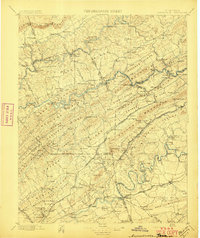 1897 Maynardville1897 Print · USGSEast Tennessee in the late nineteenth century was a landscape of high ridges and vital river fords. Genealogists and historians can trace old homesteads and transit hubs like Nances Ferry, the Lead Mine at New Prospect, and Massongills Mill.
 - 1900 Map of Maynardville
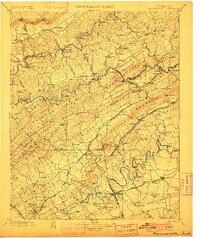 1900 Maynardville1900 Print · USGSEast Tennessee was a world of river fords and mountain gaps at the turn of the century, dominated by the winding Clinch and Powell rivers. Genealogists can trace family roots through specific landmarks like Massongills Mill, Church Grove, and Sharps Chapel.4 unique versions available
 - 1935 Map of Straw Plains
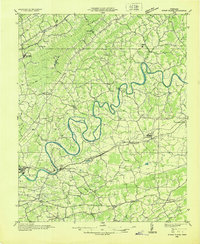 1935 Straw Plains1935 Print · USGSEast Tennessee life in the mid-1930s is centered on the winding Holston River and the bustling Southern railroad corridor. Researchers can trace family roots at Hickle Cem, find the site of Massengale Mill, or locate Indian Cave.
 - 1935 Map of Joppa
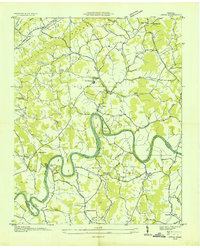 1935 Joppa1935 Print · USGSThe rural Holston River valley comes to life in the mid-1930s, showing a landscape defined by family-named stores and river crossings. Genealogists and historians can trace local life through sites like Indian Cave Ferry, Haworth Cem, and CCC Camp No 8.
 - 1938 Map of Joppa, 1954 Print
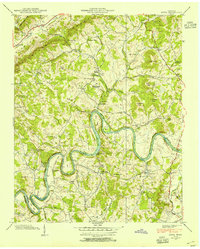 1938 Joppa1954 Print · USGSGrainger and Jefferson counties are captured here in the late 1930s, as the winding HOLSTON RIVER dictates the rhythm of rural life. Researchers can locate family roots at HAWORTH CEM, visit New Corinth Ch, or trace the legacy of CCC Camp No 8.
 - 1939 Map of Joppa
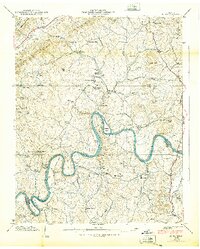 1939 Joppa1939 Print · USGSGrainger and Jefferson counties come alive in the late 1930s as the river economy and conservation projects shape the landscape. Researchers can trace family homesteads near Massengill Mill, visit the grounds of CCC Camp No 8, or locate the site of Indian Cave.
 - 1955 Map of Johnson City
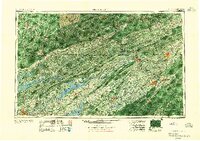 1955 Johnson City1955 Print · USGSEast Tennessee and the bordering highlands of Virginia and Kentucky appear here during the post-war industrial boom. You can trace the complex network of mountain ridges and new TVA lakes, from Johnson City to the coalfields near Middlesboro and Lynch.
 - 1957 Map of Johnson City, 1966 Print
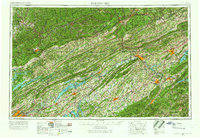 1957 Johnson City1966 Print · USGSUpper East Tennessee and Southwest Virginia are shown here during the mid-sixties transition of the Appalachians. Researchers can trace the industrial rail hubs of Kingsport, the sprawling waters of Cherokee Lake, and the historic Cumberland Gap.
 - 1960 Map of Johnson City
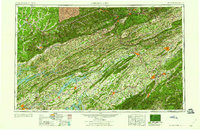 1960 Johnson City1960 Print · USGSUpper East Tennessee and the surrounding tri-state area are shown in the mid-fifties during the height of the TVA reservoir era. Trace the industrial rail lines of the Southern and Louisville and Nashville between Kingsport and Johnson City.
 - 1961 Map of Joppa, 1962 Print
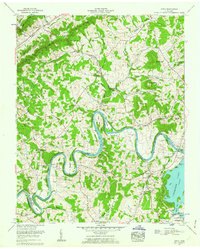 1961 Joppa1962 Print · USGSGrainger and Jefferson counties in the early sixties reveal a landscape of deep river bends and established family homesteads. Researchers can trace ancestral sites like the Massengill Mill, Fielden Store, and numerous burial sites including Sulphur Spring Cem.3 unique versions available
 - 1963 Map of Johnson City
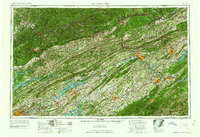 1963 Johnson City1963 Print · USGSThe Tri-Cities and the surrounding Appalachian ridges are shown in detail during the early sixties, highlighting the era's vital rail and river networks. Genealogists and historians can trace the routes of the Clinchfield RR and locate settlements from Rogersville to Elizabethton.
 - 1981 Map of Morristown
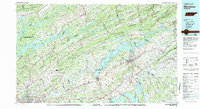 1981 Morristown1981 Print · USGSEast Tennessee's ridge-and-valley corridor is captured here in the early eighties, showing the region's transformation by TVA reservoirs. Genealogists and historians can trace family locations near Alpha Ch, follow the Southern Railway, or locate the Young Mine.
 - 2010 Map of Joppa, 2010 Print
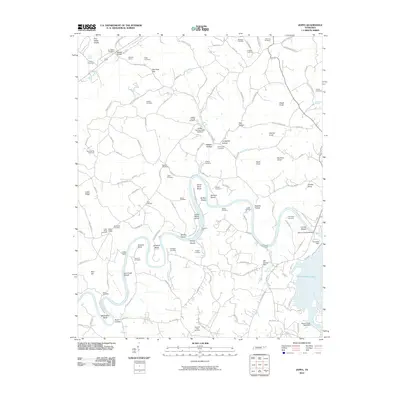 2010 Joppa2010 Print · USGSThe banks of the Holston River and the reaches of Cherokee Lake provide a detailed look at Jefferson County in the early twenty-first century. Genealogists can trace family names through sites like Joppa Cemetery, Trogdons Ford, and Mill Spring Mill.
 - 2013 Map of Joppa, 2013 Print
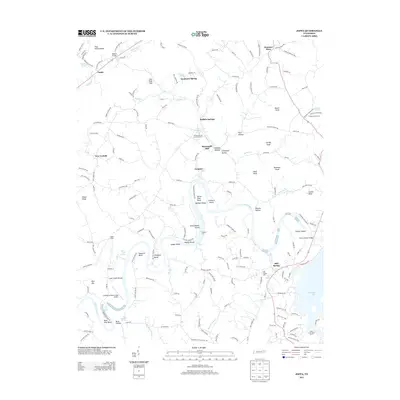 2013 Joppa2013 Print · USGSThe rural valleys and river bends of East Tennessee are captured here just over a decade ago. Genealogists and local historians can trace family landmarks and historical industry at Massengill Mill, Buffalo Springs, and Trogdons Ford.
 - 2016 Map of Joppa, 2016 Print
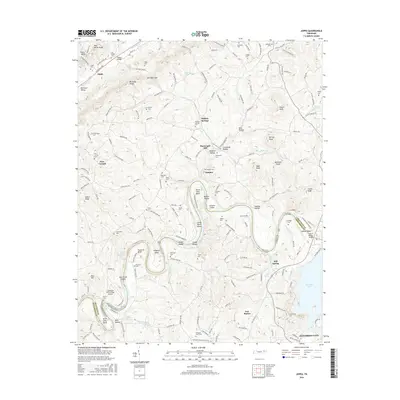 2016 Joppa2016 Print · USGSThe Holston River winding through the Tennessee countryside defines this era of rural settlement and river-bound geography. Genealogists can trace family connections through numerous sites like Buffalo Springs Cem, Massengill Mill, and the quiet community of Joppa.
 - 2019 Map of Joppa, 2019 Print
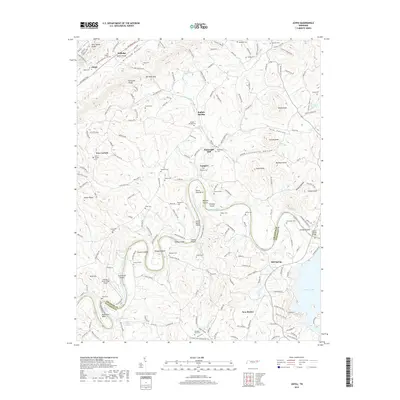 2019 Joppa2019 Print · USGSThe river-and-ridge country of East Tennessee is captured here in the late twenty-tens, showing the complex terrain between the Holston River and Richland Valley. Genealogists can trace family landmarks like Massengill Mill, Jim Walker Cem, and the old crossroads at Buffalo Springs.
 - 2022 Map of Joppa, 2022 Print
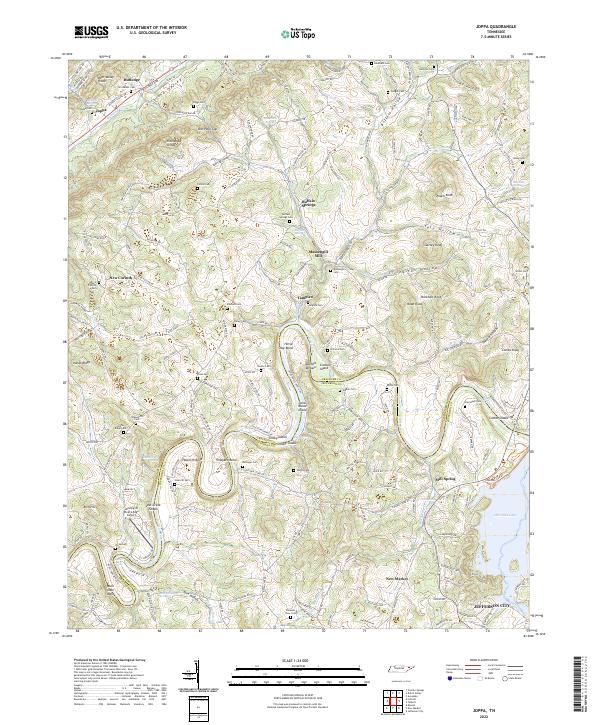 2022 Joppa2022 Print · USGSRichland Valley and the Holston River corridor are captured here during the early twenty-first century. Genealogists and local historians can locate dozens of family-named landmarks and burial sites, including Massengill Mill, Indian Cave, and Good Hope Church.
End of results
Showing maps 1-17 of 17
Top cities near Buffalo Springs
- Knoxville historical maps
- Morristown historical maps
- Sevierville historical maps
- Jefferson City historical maps
- Maynardville historical maps
- Bean Station historical maps
See more
Frequently asked questions
- What are the different types of historical maps available for Buffalo Springs?
- What is the oldest map of Buffalo Springs?
- Where can I purchase historical maps of Buffalo Springs for my home or office?
- Where can I download high-res historical maps of Buffalo Springs?
- Are there historical topographic maps available for Buffalo Springs?
- Is there historical aerial imagery available for Buffalo Springs?
- Where are historical maps of Buffalo Springs sourced from?