Old Maps of Jefferson City, Tennessee
Explore 48 old maps of Jefferson City, spanning from 1883 to today. These high-resolution historic maps reveal how streets, neighborhoods, landmarks, and natural features evolved over time — perfect for genealogy, metal detecting, research, and local history exploration.
What you can do with these maps:
- See how Jefferson City changed over time: Compare historical maps to modern-day views to trace roads, homesites, rail lines & more.
- View detailed metadata: Each map includes creators, publishers, year, scale, and archive source.
- Overlay maps with satellite & LiDAR: Visualize the past alongside modern tools to explore terrain & human change.
- Trusted historical sources: Maps sourced from the USGS, Library of Congress, and other archives.
- Access maps your way: View online, download high-res files, or order prints for personal or research use.
Start exploring old maps of Jefferson City to uncover forgotten places, hidden landmarks, and the deep history beneath your feet.
Jefferson City, TN maps
(48)- 1883 Map of Morristown
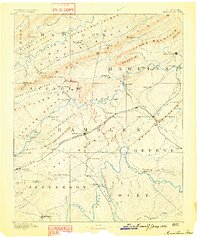 1883 Morristown1883 Print · USGSEast Tennessee in the 1880s is defined by the convergence of mountain ridges and the vital rail corridor through Morristown. Researchers can trace the early industrial landscape of the region through landmarks like Witt's Foundry, Tate's Springs, and the historic Bean's Station.
 - 1893 Map of Morristown
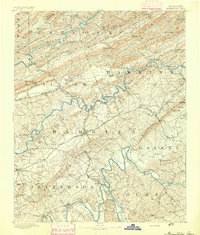 1893 Morristown1893 Print · USGSEast Tennessee in the 1890s was a landscape of deep mountain ridges and vital rail junctions centered around Morristown. Researchers can trace the nineteenth-century river economy through numerous crossings like Cloud Ferry and find early industry at Lotspeachy Mill.
 - 1895 Map of Morristown
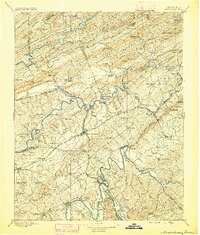 1895 Morristown1895 Print · USGSThe East Tennessee ridge-and-valley country comes alive in the late nineteenth century as a hub of rail and river transit. Trace the routes of old Evans Ferry or locate vanished stops along the Southern R.R. near Morristown and Bull Gap.5 unique versions available
 - 1897 Map of Maynardville
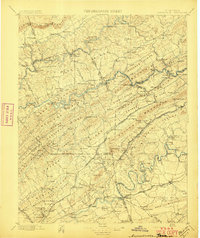 1897 Maynardville1897 Print · USGSEast Tennessee in the late nineteenth century was a landscape of high ridges and vital river fords. Genealogists and historians can trace old homesteads and transit hubs like Nances Ferry, the Lead Mine at New Prospect, and Massongills Mill.
 - 1900 Map of Maynardville
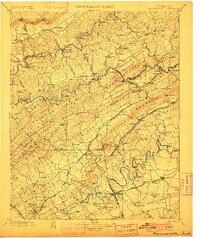 1900 Maynardville1900 Print · USGSEast Tennessee was a world of river fords and mountain gaps at the turn of the century, dominated by the winding Clinch and Powell rivers. Genealogists can trace family roots through specific landmarks like Massongills Mill, Church Grove, and Sharps Chapel.4 unique versions available
 - 1935 Map of Straw Plains
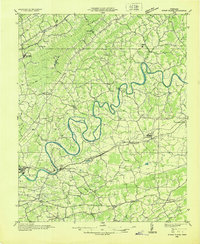 1935 Straw Plains1935 Print · USGSEast Tennessee life in the mid-1930s is centered on the winding Holston River and the bustling Southern railroad corridor. Researchers can trace family roots at Hickle Cem, find the site of Massengale Mill, or locate Indian Cave.
 - 1935 Map of Joppa
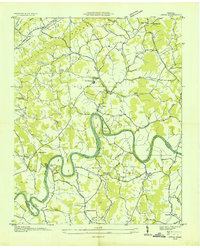 1935 Joppa1935 Print · USGSThe rural Holston River valley comes to life in the mid-1930s, showing a landscape defined by family-named stores and river crossings. Genealogists and historians can trace local life through sites like Indian Cave Ferry, Haworth Cem, and CCC Camp No 8.
 - 1935 Map of New Market
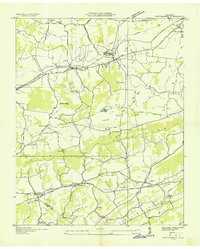 1935 New Market1935 Print · USGSJefferson County was undergoing significant modernization in the mid-1930s as the Tennessee Valley Authority mapped its growing infrastructure. Researchers can trace old family sites and industrial history through Dinwoody Mill, the SOUTHERN rail stops at Friends Station, and the Shrader Chapel Sch.
 - 1935 Map of Jefferson City
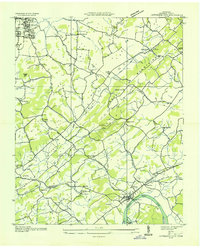 1935 Jefferson City1935 Print · USGSJefferson County in the mid-1930s shows a landscape of river-valley farming and mountain ridges before major Tennessee Valley Authority changes. Genealogists can trace family landmarks like Wesley Chapel, Grants Chapel, and the Cedar Ridge Sch along the French Broad River.
 - 1935 Map of Talbott
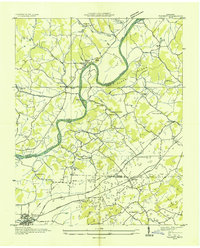 1935 Talbott1935 Print · USGSThe rural river valley at the borders of Hamblen and Jefferson counties comes to life in this mid-1930s survey. Genealogists can locate family landmarks like the Martha Sunderland Cem, Wilson Cager Sch, and old river sites like Collins Ford.
 - 1935 Map of Dandridge
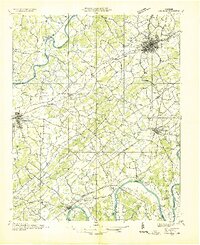 1935 Dandridge1935 Print · USGSEast Tennessee in the mid-1930s is mapped here in great detail as the region's river valleys prepared for the impacts of the Tennessee Valley Authority. Researchers can trace ancestral locations through dozens of landmarks like Martha Sunderland Cem, Panther Creek Mill, and Roe Ch.
 - 1938 Map of Joppa, 1954 Print
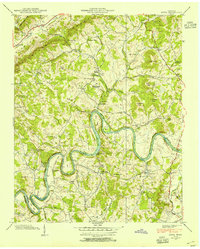 1938 Joppa1954 Print · USGSGrainger and Jefferson counties are captured here in the late 1930s, as the winding HOLSTON RIVER dictates the rhythm of rural life. Researchers can locate family roots at HAWORTH CEM, visit New Corinth Ch, or trace the legacy of CCC Camp No 8.
 - 1938 Map of Talbott, 1954 Print
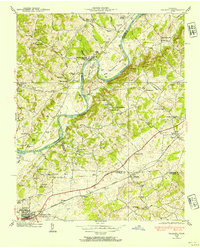 1938 Talbott1954 Print · USGSEast Tennessee in the late thirties shows a landscape of river-bend farms and small rail towns along the Southern line. Genealogists and historians can trace family locations near Old Hull Mill, Kidwell Sch, or the C C C Camp at the edge of town.
 - 1939 Map of Joppa
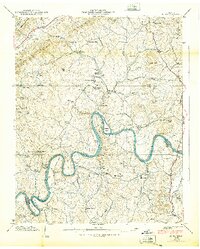 1939 Joppa1939 Print · USGSGrainger and Jefferson counties come alive in the late 1930s as the river economy and conservation projects shape the landscape. Researchers can trace family homesteads near Massengill Mill, visit the grounds of CCC Camp No 8, or locate the site of Indian Cave.
 - 1939 Map of Jefferson City
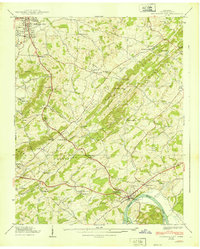 1939 Jefferson City1939 Print · USGSJefferson County in the late thirties is a landscape of ridge-and-valley farming and early industry along the French Broad River. Genealogists can trace family footprints at Hebron Cem, Hunnicutt Mill, and rural schools like Greenhill Sch.2 unique versions available
 - 1939 Map of New Market, 1956 Print
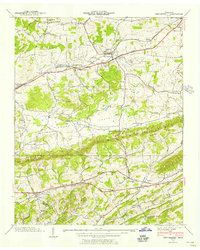 1939 New Market1956 Print · USGSJefferson County was an active landscape of zinc mining and valley farming just before the mid-century. Researchers can trace ancestral locations like Nances Grove, family-run landmarks like French Mill, and local burial sites including Westview Cem.
 - 1940 Map of Talbott
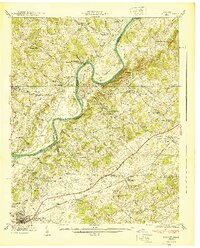 1940 Talbott1940 Print · USGSIn the Tennessee Valley just before the 1940s, this area shows a landscape shaped by the Holston River and the Southern railroad. Genealogists can locate family-named landmarks like Kidwell Ridge Ch, Lawrence Mill, and the Sunderland Cem.
 - 1940 Map of New Market
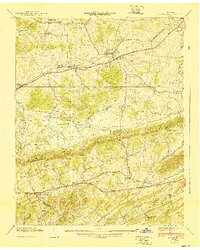 1940 New Market1940 Print · USGSJefferson County's rural and industrial landscape is captured here in the years before the war, centered on the New Market rail corridor. Genealogists and historians can locate family landmarks like Dinwoody Mill, trace the SOUTHERN railroad line, and find old burial grounds such as Caldwell Cem.2 unique versions available
 - 1955 Map of Johnson City
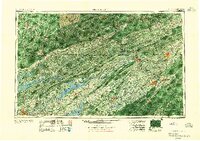 1955 Johnson City1955 Print · USGSEast Tennessee and the bordering highlands of Virginia and Kentucky appear here during the post-war industrial boom. You can trace the complex network of mountain ridges and new TVA lakes, from Johnson City to the coalfields near Middlesboro and Lynch.
 - 1957 Map of Johnson City, 1966 Print
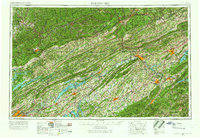 1957 Johnson City1966 Print · USGSUpper East Tennessee and Southwest Virginia are shown here during the mid-sixties transition of the Appalachians. Researchers can trace the industrial rail hubs of Kingsport, the sprawling waters of Cherokee Lake, and the historic Cumberland Gap.
 - 1960 Map of Johnson City
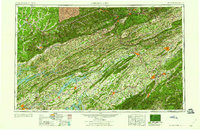 1960 Johnson City1960 Print · USGSUpper East Tennessee and the surrounding tri-state area are shown in the mid-fifties during the height of the TVA reservoir era. Trace the industrial rail lines of the Southern and Louisville and Nashville between Kingsport and Johnson City.
 - 1960 Map of Talbott, 1963 Print
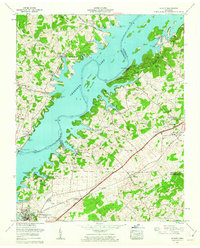 1960 Talbott1963 Print · USGSEast Tennessee's landscape is shown in the early sixties as the sprawling waters of Cherokee Lake reshaped the tri-county area. Genealogists can locate family names at Bacon Cem or trace the rural routes connecting Talbott and Alpha.
 - 1961 Map of Joppa, 1962 Print
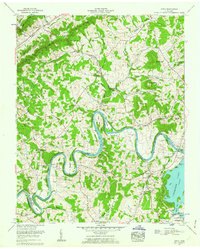 1961 Joppa1962 Print · USGSGrainger and Jefferson counties in the early sixties reveal a landscape of deep river bends and established family homesteads. Researchers can trace ancestral sites like the Massengill Mill, Fielden Store, and numerous burial sites including Sulphur Spring Cem.3 unique versions available
 - 1961 Map of New Market, 1963 Print
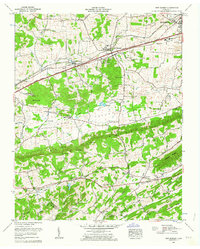 1961 New Market1963 Print · USGSJefferson County in the early sixties was a landscape of deep-rooted settlements and active industry. Genealogists can locate family landmarks such as French Mill, Wooten Chapel, and numerous cemeteries including Loy Memorial Cem and Piedmont Cem.3 unique versions available
 - 1961 Map of Jefferson City, 1963 Print
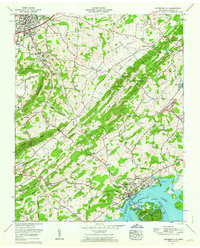 1961 Jefferson City1963 Print · USGSJefferson and Dandridge are captured here in the early sixties as industrial mining and the rising waters of Douglas Lake reshape the valley. Genealogists can trace family names at Hebron Cem and Wesley Chapel, or locate the Hunnicutt Mill and Coy Mine.3 unique versions available
Showing maps 1-25 of 48
Top cities near Jefferson City
- Knoxville historical maps
- Morristown historical maps
- Sevierville historical maps
- Newport historical maps
- Bean Station historical maps
- Dandridge historical maps
See more
Top neighborhoods of Jefferson City
- Keister historical maps
- Flat Gap historical maps
- Rock Town historical maps
- Gravelly Hill historical maps
- Jefferson City Industrial Park historical maps
- Greene Meadows historical maps
Frequently asked questions
- What are the different types of historical maps available for Jefferson City?
- What is the oldest map of Jefferson City?
- Where can I purchase historical maps of Jefferson City for my home or office?
- Where can I download high-res historical maps of Jefferson City?
- Are there historical topographic maps available for Jefferson City?
- Is there historical aerial imagery available for Jefferson City?
- Where are historical maps of Jefferson City sourced from?