Old Maps of Mary Chapel, Tennessee for Hiking & Exploration
Hike through history with 18 historic maps of Mary Chapel. Explore old trails, ghost towns, and forgotten backroads — perfect for outdoor adventurers and local explorers.
- Rediscover forgotten places: Map out old mining camps, roads, and footpaths that no longer exist on modern maps.
- Layer with modern tools: Combine with LiDAR or satellite views to plan hikes through historical terrain.
- Made for exploration: Popular among hikers, overlanders, and local history lovers.
Use these maps to find adventure and explore the hidden past of Mary Chapel.
Mary Chapel, TN maps
(18)- 1883 Map of Morristown
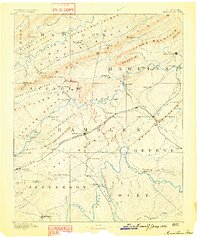 1883 Morristown1883 Print · USGSEast Tennessee in the 1880s is defined by the convergence of mountain ridges and the vital rail corridor through Morristown. Researchers can trace the early industrial landscape of the region through landmarks like Witt's Foundry, Tate's Springs, and the historic Bean's Station.
 - 1893 Map of Morristown
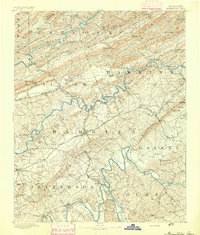 1893 Morristown1893 Print · USGSEast Tennessee in the 1890s was a landscape of deep mountain ridges and vital rail junctions centered around Morristown. Researchers can trace the nineteenth-century river economy through numerous crossings like Cloud Ferry and find early industry at Lotspeachy Mill.
 - 1895 Map of Morristown
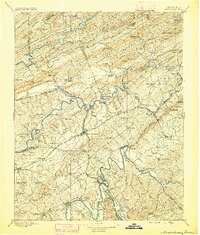 1895 Morristown1895 Print · USGSThe East Tennessee ridge-and-valley country comes alive in the late nineteenth century as a hub of rail and river transit. Trace the routes of old Evans Ferry or locate vanished stops along the Southern R.R. near Morristown and Bull Gap.5 unique versions available
 - 1935 Map of Tate Springs
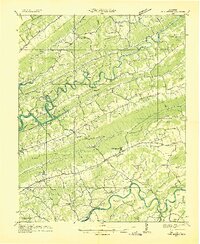 1935 Tate Springs1935 Print · USGSThe river valleys of Grainger County are captured here in the mid-1930s as the Tennessee Valley Authority began planning the reservoir. Trace family history through local landmarks like Lawson Mill, Swan Island Ferry, and the community at Tate Springs.
 - 1935 Map of Bean Station
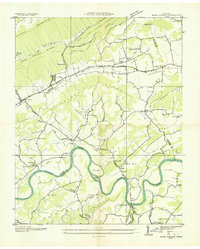 1935 Bean Station1935 Print · USGSBean Station and the Holston River valley are captured in the mid-1930s, showing the region's rural character before modern development. Genealogists can locate family landmarks like the Caldwell Cem, Mullins Sch, and the Barnard Ch.
 - 1938 Map of Bean Station, 1954 Print
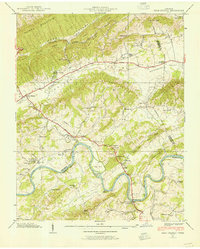 1938 Bean Station1954 Print · USGSUpper East Tennessee's ridges and river valleys are captured here in the late thirties, documenting the vital transit hub at Bean Station. Trace the legacy of rural communities through sites like Tate Springs, Kirkham Sch, and the Holston Bridge.2 unique versions available
 - 1939 Map of Bean Station
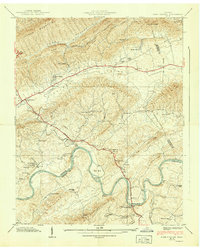 1939 Bean Station1939 Print · USGSEast Tennessee at the end of the Depression era reveals a landscape of ridge-top schools and river-bottom farms along the Holston River. Genealogists and local historians can trace family roots through sites like Caldwell Cem, Macedonia Sch, and Tate Springs.2 unique versions available
 - 1955 Map of Johnson City
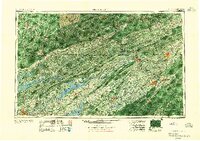 1955 Johnson City1955 Print · USGSEast Tennessee and the bordering highlands of Virginia and Kentucky appear here during the post-war industrial boom. You can trace the complex network of mountain ridges and new TVA lakes, from Johnson City to the coalfields near Middlesboro and Lynch.
 - 1957 Map of Johnson City, 1966 Print
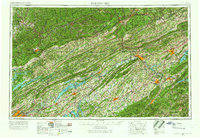 1957 Johnson City1966 Print · USGSUpper East Tennessee and Southwest Virginia are shown here during the mid-sixties transition of the Appalachians. Researchers can trace the industrial rail hubs of Kingsport, the sprawling waters of Cherokee Lake, and the historic Cumberland Gap.
 - 1960 Map of Johnson City
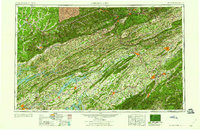 1960 Johnson City1960 Print · USGSUpper East Tennessee and the surrounding tri-state area are shown in the mid-fifties during the height of the TVA reservoir era. Trace the industrial rail lines of the Southern and Louisville and Nashville between Kingsport and Johnson City.
 - 1960 Map of Bean Station, 1962 Print
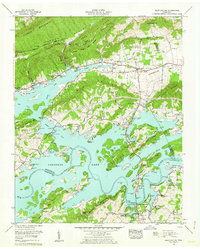 1960 Bean Station1962 Print · USGSBean Station and the surrounding ridges of Grainger County are shown here at a time when the impounded waters of the Holston River had reshaped the local economy. Researchers can locate family landmarks like Barnards Grove Ch Cem or trace the early paths of the Dixie Highway and Lee Highway.3 unique versions available
 - 1963 Map of Johnson City
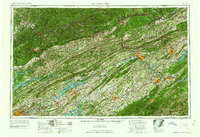 1963 Johnson City1963 Print · USGSThe Tri-Cities and the surrounding Appalachian ridges are shown in detail during the early sixties, highlighting the era's vital rail and river networks. Genealogists and historians can trace the routes of the Clinchfield RR and locate settlements from Rogersville to Elizabethton.
 - 1981 Map of Morristown
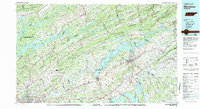 1981 Morristown1981 Print · USGSEast Tennessee's ridge-and-valley corridor is captured here in the early eighties, showing the region's transformation by TVA reservoirs. Genealogists and historians can trace family locations near Alpha Ch, follow the Southern Railway, or locate the Young Mine.
 - 2010 Map of Bean Station, 2010 Print
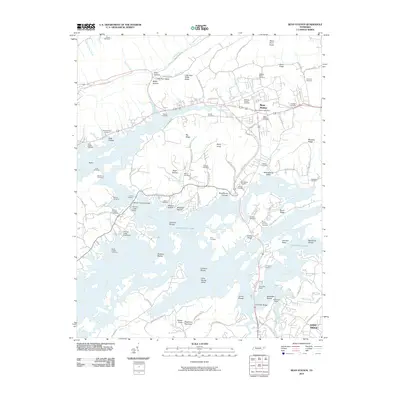 2010 Bean Station2010 Print · USGSBean Station sits at the edge of the rising Cherokee Lake in this 2010 survey of the Tennessee landscape. Genealogists and historians can trace scores of family burial grounds, including the Isenberg Cemetery and Samsel Cemetery, alongside the Holston River.
 - 2013 Map of Bean Station, 2013 Print
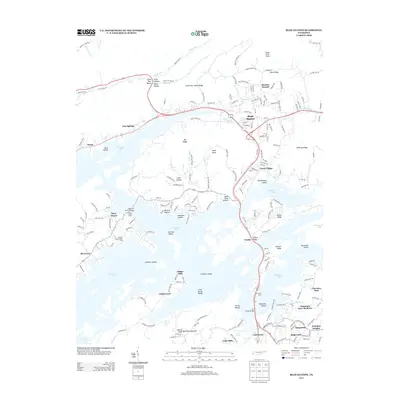 2013 Bean Station2013 Print · USGSBean Station and the surrounding ridges of Grainger and Hamblen Counties are shown here during the early twenty-first century. Researchers can trace lakeside developments like Lakemoore and Timbercrest or locate historic points such as Tate Springs and the William P Harrell Bridge.
 - 2016 Map of Bean Station, 2016 Print
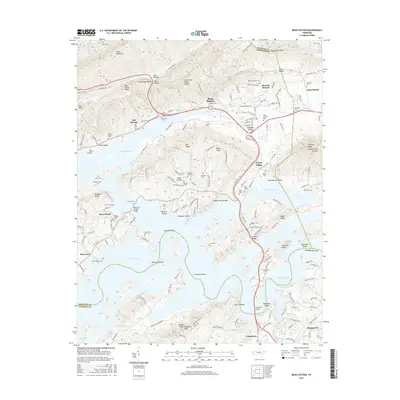 2016 Bean Station2016 Print · USGSHamblen and Grainger Counties are defined by the expansive waters of Cherokee Lake in this mid-2010s survey. Researchers can trace family ties through several local burial grounds, including Bean Station Cem and Harris Cem, or locate landmarks like the William P Harrell Bridge.
 - 2019 Map of Bean Station, 2019 Print
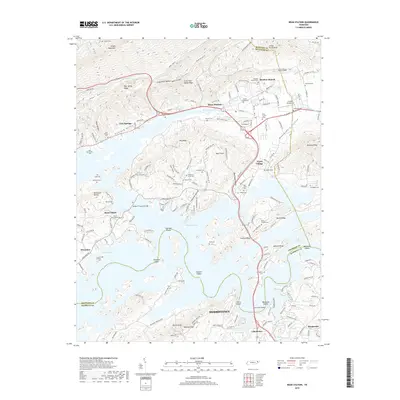 2019 Bean Station2019 Print · USGSThe Grainger and Hamblen county borderlands are shown here in the late 2010s. Researchers can trace family history through dozens of local burial sites like Isenberg Cem or explore the shores of Cherokee Lake near Bean Station.
 - 2023 Map of Bean Station, 2023 Print
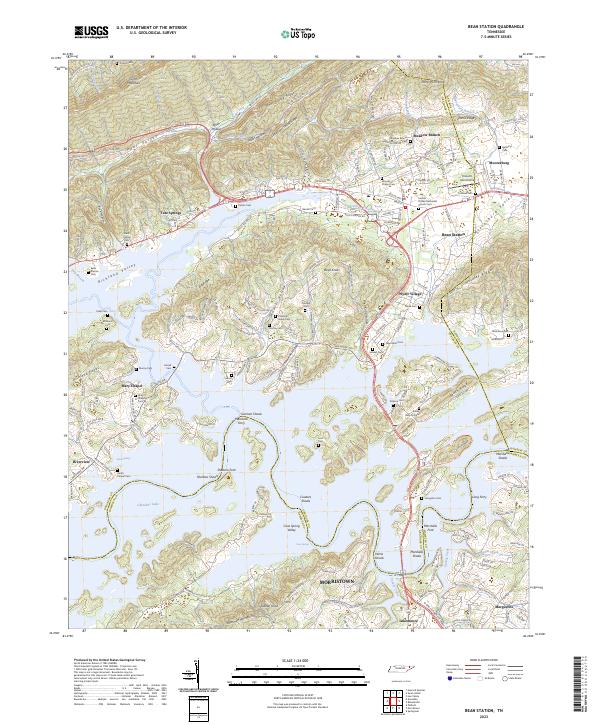 2023 Bean Station2023 Print · USGSThe Clinch Mountain ridges and the waters of Cherokee Lake define this region during its modern era of lakefront growth and rural preservation. Researchers can trace numerous family burial sites and historic river crossings like Marshalls Ferry, Long Ferry, and the Central United Methodist Church Cem.
End of results
Showing maps 1-18 of 18
Top cities near Mary Chapel
- Morristown historical maps
- Jefferson City historical maps
- Bean Station historical maps
- New Tazewell historical maps
- White Pine historical maps
- Tazewell historical maps
See more
Frequently asked questions
- What are the different types of historical maps available for Mary Chapel?
- What is the oldest map of Mary Chapel?
- Where can I purchase historical maps of Mary Chapel for my home or office?
- Where can I download high-res historical maps of Mary Chapel?
- Are there historical topographic maps available for Mary Chapel?
- Is there historical aerial imagery available for Mary Chapel?
- Where are historical maps of Mary Chapel sourced from?