1940s Maps of Hancock County, Tennessee
Explore 11 historic maps of Hancock County from the 1940s. These maps offer a rare glimpse into what life looked like during the 1940s — showing old roads, neighborhoods, homes, and landmarks that have changed or disappeared over time.
Whether you're researching your family's past, planning a metal detecting trip, or studying how Hancock County's landscape evolved across the 1940s, these high-resolution maps are a powerful tool for exploring the history of this region.
- Focus on a specific era: All maps on this page are from the 1940s, giving you a focused view of this time period.
- See what’s changed: Compare century-old streets, trails, and buildings to today's modern landscape using overlays and satellite layers.
- Research with precision: Use these maps for genealogy, historical research, land use analysis, or educational projects.
- View, download, or print: Maps are fully viewable online in high resolution, and can be downloaded or printed for your own records.
Start exploring Hancock County's history through authentic maps from the 1940s. This is your window into the past.
Hancock County, TN maps
(11)- 1940 Map of Lee Valley
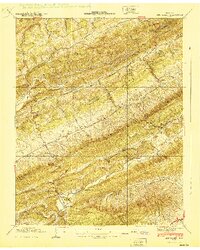 1940 Lee Valley1940 Print · USGSHawkins and Hancock Counties appear here at the start of the 1940s, showing a landscape defined by the ridgelines of Clinch Mountain. Local historians can trace old homesteads and community hubs like Lee Valley, Fairmont Sch, and the Morrell Cem.
 - 1941 Map of Swan Island, 1965 Print
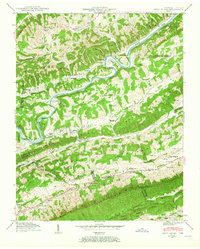 1941 Swan Island1965 Print · USGSHancock County in the early 1940s is captured in this survey of the river-carved ridges along the Clinch River. Researchers can locate dozens of family landmarks, from Lawson Mill and Manning Ferry to the Barnard Cem and Williams Cem.2 unique versions available
 - 1942 Map of Swan Island
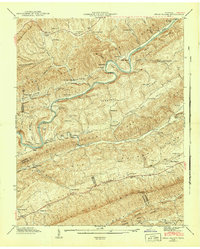 1942 Swan Island1942 Print · USGSThe ridges of East Tennessee meet the winding Clinch River during the early 1940s, a time when ferries and mills still served rural Hancock and Grainger counties. Genealogists can trace family roots through numerous sites like Barnard Cem, Lawson Mill, and Manning Ferry.
 - 1942 Map of Howard Quarter, 1957 Print
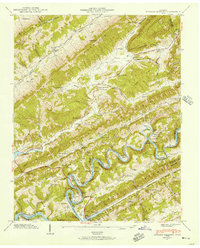 1942 Howard Quarter1957 Print · USGSThe borderlands of Claiborne and Hancock counties are shown here in the early 1940s as the Norris Reservoir transformed the winding Clinch River. Genealogists can trace family landmarks and rural life at Howard Quarter, Seal Chapel, and Mallicoat Cem.2 unique versions available
 - 1943 Map of Howard Quarter, 1946 Print
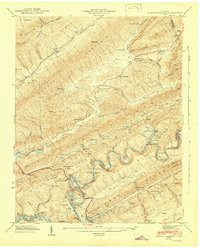 1943 Howard Quarter1946 Print · USGSMid-century Claiborne and Grainger Counties are defined here by the winding Clinch River and the early influence of the Norris Reservoir. Researchers can trace ancestral sites like Pearson Cem and old community hubs including Howard Quarter Sch and Seal Chapel.2 unique versions available
 - 1946 Map of Sneedville, 1958 Print
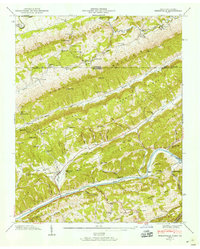 1946 Sneedville1958 Print · USGSHancock County and the Clinch River valley are shown here in the mid-1940s, a time when mountain gaps and river fords still shaped local life. Genealogists can trace family heritage through dozens of named sites like Vanderventer Cem, Thompson Mill, and Vardy Community Sch.3 unique versions available
 - 1946 Map of Back Valley, 1965 Print
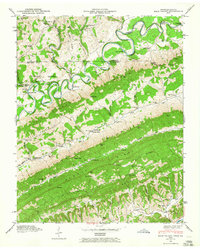 1946 Back Valley1965 Print · USGSHancock County and Lee County residents lived along the ridges and river bends of the Clinch and Powell rivers just after the war. Researchers can trace family sites at the Wolfenbarger Cem, locate the Thompson Mill site, or find old schoolhouses like Sunnyside Sch.2 unique versions available
 - 1946 Map of Colemen Gap, 1970 Print
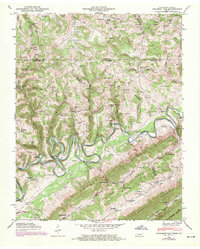 1946 Colemen Gap1970 Print · USGSThe Tennessee-Virginia border near Coleman Gap is defined by the winding Powell River and rural valley life in the mid-1940s. Genealogists can trace family footprints at Yeary Mill, Brooks Ferry, and the many cemeteries like Buchanan Cem or Ritchie Cem.
 - 1947 Map of Sneedville, 1949 Print
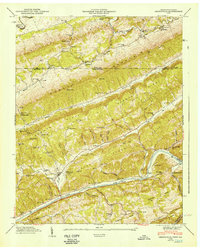 1947 Sneedville1949 Print · USGSHancock County is mapped here in the late 1940s as a landscape of tight-knit river communities and high mountain ridges. Genealogists can trace family names at Vanderventer Cem and Goins Cem or locate rural landmarks like Thompson Mill.
 - 1947 Map of Looneys Gap, 1970 Print
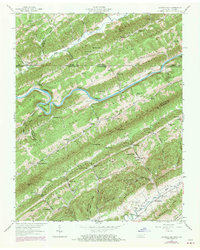 1947 Looneys Gap1970 Print · USGSThe Clinch River valley in the late 1940s and late 1960s reveals a landscape of isolated ridge-and-valley settlements straddling the Virginia and Tennessee border. Researchers can trace ancestral locations at the County Farm, the Wake Forest School, and family plots like Sizemore Cem.
 - 1948 Map of Back Valley, 1949 Print
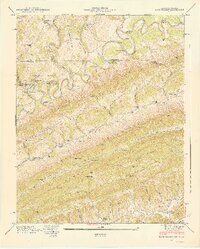 1948 Back Valley1949 Print · USGSThe Tennessee-Virginia borderlands in the late 1940s reveal a community tied to the Powell River and its numerous crossings. Researchers can trace rural life through sites like Thompson Mill, the Wolfenbarger Cem, and the river-crossing at Baldwin Ford.2 unique versions available
End of results
Showing maps 1-11 of 11
Top cities of Hancock County
Frequently asked questions
- What are the different types of historical maps available for Hancock County?
- What is the oldest map of Hancock County?
- Where can I purchase historical maps of Hancock County for my home or office?
- Where can I download high-res historical maps of Hancock County?
- Are there historical topographic maps available for Hancock County?
- Is there historical aerial imagery available for Hancock County?
- Where are historical maps of Hancock County sourced from?