Old Maps of Duck Creek, Tennessee
Explore 17 old maps of Duck Creek, spanning from 1883 to today. These high-resolution historic maps reveal how streets, neighborhoods, landmarks, and natural features evolved over time — perfect for genealogy, metal detecting, research, and local history exploration.
What you can do with these maps:
- See how Duck Creek changed over time: Compare historical maps to modern-day views to trace roads, homesites, rail lines & more.
- View detailed metadata: Each map includes creators, publishers, year, scale, and archive source.
- Overlay maps with satellite & LiDAR: Visualize the past alongside modern tools to explore terrain & human change.
- Trusted historical sources: Maps sourced from the USGS, Library of Congress, and other archives.
- Access maps your way: View online, download high-res files, or order prints for personal or research use.
Start exploring old maps of Duck Creek to uncover forgotten places, hidden landmarks, and the deep history beneath your feet.
Duck Creek, TN maps
(17)- 1883 Map of Morristown
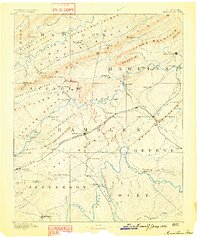 1883 Morristown1883 Print · USGSEast Tennessee in the 1880s is defined by the convergence of mountain ridges and the vital rail corridor through Morristown. Researchers can trace the early industrial landscape of the region through landmarks like Witt's Foundry, Tate's Springs, and the historic Bean's Station.
 - 1893 Map of Morristown
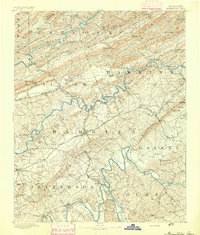 1893 Morristown1893 Print · USGSEast Tennessee in the 1890s was a landscape of deep mountain ridges and vital rail junctions centered around Morristown. Researchers can trace the nineteenth-century river economy through numerous crossings like Cloud Ferry and find early industry at Lotspeachy Mill.
 - 1895 Map of Morristown
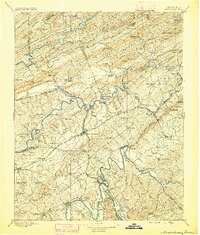 1895 Morristown1895 Print · USGSThe East Tennessee ridge-and-valley country comes alive in the late nineteenth century as a hub of rail and river transit. Trace the routes of old Evans Ferry or locate vanished stops along the Southern R.R. near Morristown and Bull Gap.5 unique versions available
 - 1935 Map of Rogersville
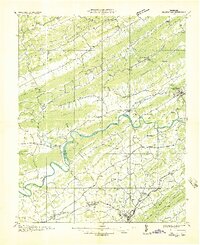 1935 Rogersville1935 Print · USGSHawkins and Greene Counties come alive in the mid-1930s, showing a landscape of ridge-top schools and river-bottom farms. Genealogists can trace family footprints near Pressmans Home, Bulls Gap, and local centers like Macedonia Ch.
 - 1935 Map of Lee Valley
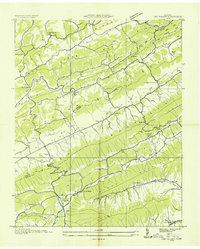 1935 Lee Valley1935 Print · USGSThe Clinch Mountain ridges of Hancock and Hawkins counties come into focus during the mid-thirties, showing a landscape defined by mountain gaps and valley farming. Genealogists can locate family landmarks like Murrell Town, Trents, and Gills Chapel tucked among the steep slopes.
 - 1939 Map of Lee Valley, 1956 Print
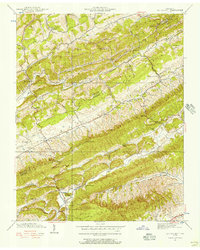 1939 Lee Valley1956 Print · USGSHawkins and Hancock Counties are shown here just before the mid-century, where ridges and valleys shaped a landscape of small farmsteads and rural schoolhouses. Researchers can trace family sites like Murrell Cem or find local centers like Lee Valley, Treadway, and Spruce Pine Sch.3 unique versions available
 - 1940 Map of Lee Valley
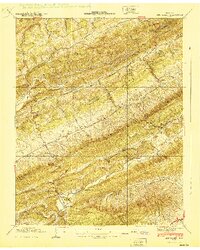 1940 Lee Valley1940 Print · USGSHawkins and Hancock Counties appear here at the start of the 1940s, showing a landscape defined by the ridgelines of Clinch Mountain. Local historians can trace old homesteads and community hubs like Lee Valley, Fairmont Sch, and the Morrell Cem.
 - 1955 Map of Johnson City
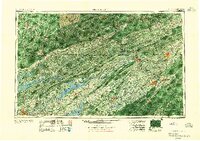 1955 Johnson City1955 Print · USGSEast Tennessee and the bordering highlands of Virginia and Kentucky appear here during the post-war industrial boom. You can trace the complex network of mountain ridges and new TVA lakes, from Johnson City to the coalfields near Middlesboro and Lynch.
 - 1957 Map of Johnson City, 1966 Print
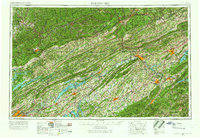 1957 Johnson City1966 Print · USGSUpper East Tennessee and Southwest Virginia are shown here during the mid-sixties transition of the Appalachians. Researchers can trace the industrial rail hubs of Kingsport, the sprawling waters of Cherokee Lake, and the historic Cumberland Gap.
 - 1960 Map of Johnson City
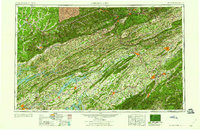 1960 Johnson City1960 Print · USGSUpper East Tennessee and the surrounding tri-state area are shown in the mid-fifties during the height of the TVA reservoir era. Trace the industrial rail lines of the Southern and Louisville and Nashville between Kingsport and Johnson City.
 - 1963 Map of Johnson City
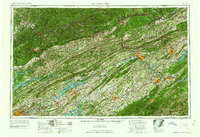 1963 Johnson City1963 Print · USGSThe Tri-Cities and the surrounding Appalachian ridges are shown in detail during the early sixties, highlighting the era's vital rail and river networks. Genealogists and historians can trace the routes of the Clinchfield RR and locate settlements from Rogersville to Elizabethton.
 - 1981 Map of Morristown
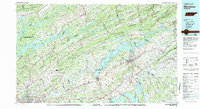 1981 Morristown1981 Print · USGSEast Tennessee's ridge-and-valley corridor is captured here in the early eighties, showing the region's transformation by TVA reservoirs. Genealogists and historians can trace family locations near Alpha Ch, follow the Southern Railway, or locate the Young Mine.
 - 2010 Map of Lee Valley, 2010 Print
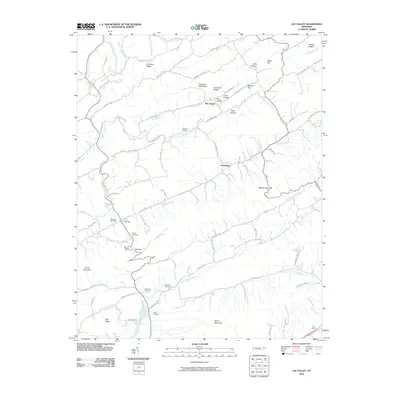 2010 Lee Valley2010 Print · USGSHancock County's rural landscape is captured here in the early twenty-first century, showing the enduring settlement patterns of the Clinch River valley. Genealogists and local historians can locate family landmarks like Murrell Cemetery and the Treadway Post Office.
 - 2013 Map of Lee Valley, 2013 Print
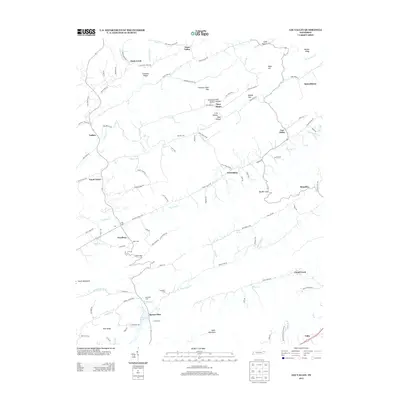 2013 Lee Valley2013 Print · USGSHancock County and the Clinch Mountain foothills are captured here in the early twenty-first century, showcasing a landscape of isolated valleys and ridge-top gaps. Trace local family roots and rural hamlets at Spruce Pine, Treadway, and Murrell Cem.
 - 2016 Map of Lee Valley, 2016 Print
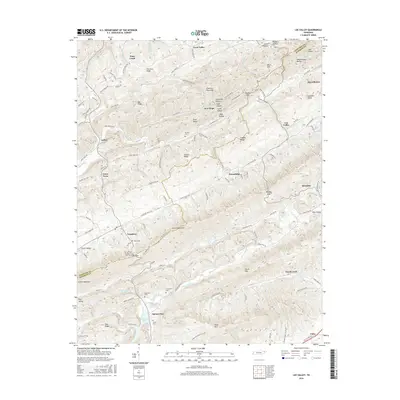 2016 Lee Valley2016 Print · USGSHancock and Hawkins counties appear here in the mid-2010s, showing a landscape shaped by the ridges and hollows of eastern Tennessee. Local historians can trace old family burial sites like McGinnis Cem and Lovett Cem or explore the rural layout of Treadway, Klondike, and Spruce Pine.
 - 2019 Map of Lee Valley, 2019 Print
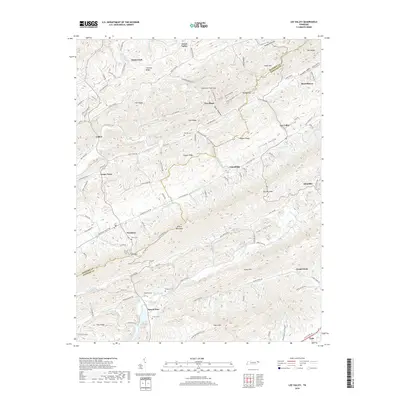 2019 Lee Valley2019 Print · USGSHancock and Hawkins Counties are shown in this contemporary study of East Tennessee's ridge-and-valley landscape. Genealogists can trace family landmarks across the ridges, from Murrell Cem near Lee Valley to Carpenter Cem in the Spruce Pine area.
 - 2022 Map of Lee Valley, 2022 Print
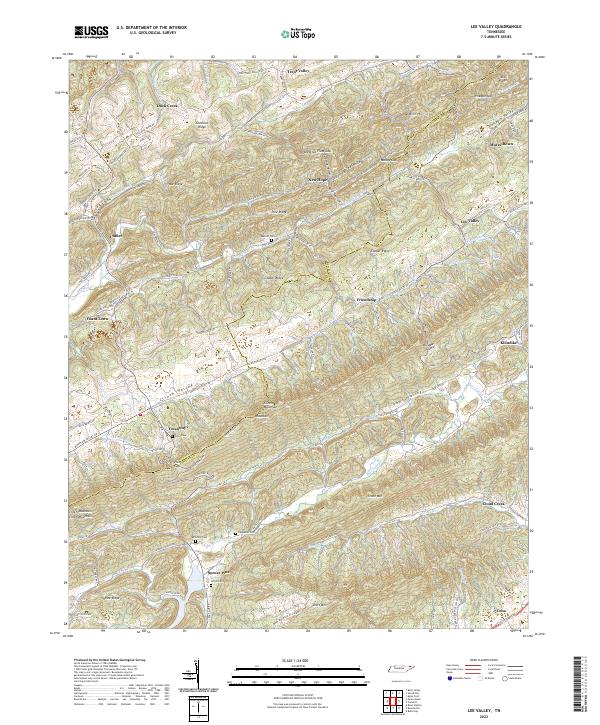 2022 Lee Valley2022 Print · USGSEast Tennessee's high ridges and hollows are captured here in the early twenty-first century as the traditional settlement patterns of Clinch Valley endure. Genealogists can locate family-named sites such as Murrelltown, Yount Town, and the McGinnis Cem near Spruce Pine.
End of results
Showing maps 1-17 of 17
Top cities near Duck Creek
- Morristown historical maps
- Rogersville historical maps
- Bean Station historical maps
- Sneedville historical maps
- Jonesville historical maps
- Mooresburg historical maps
See more
Frequently asked questions
- What are the different types of historical maps available for Duck Creek?
- What is the oldest map of Duck Creek?
- Where can I purchase historical maps of Duck Creek for my home or office?
- Where can I download high-res historical maps of Duck Creek?
- Are there historical topographic maps available for Duck Creek?
- Is there historical aerial imagery available for Duck Creek?
- Where are historical maps of Duck Creek sourced from?