Old Maps of Pursley, Tennessee
Explore 10 old maps of Pursley, spanning from 1936 to today. These high-resolution historic maps reveal how streets, neighborhoods, landmarks, and natural features evolved over time — perfect for genealogy, metal detecting, research, and local history exploration.
What you can do with these maps:
- See how Pursley changed over time: Compare historical maps to modern-day views to trace roads, homesites, rail lines & more.
- View detailed metadata: Each map includes creators, publishers, year, scale, and archive source.
- Overlay maps with satellite & LiDAR: Visualize the past alongside modern tools to explore terrain & human change.
- Trusted historical sources: Maps sourced from the USGS, Library of Congress, and other archives.
- Access maps your way: View online, download high-res files, or order prints for personal or research use.
Start exploring old maps of Pursley to uncover forgotten places, hidden landmarks, and the deep history beneath your feet.
Pursley, TN maps
(10)- 1936 Map of Johnsonville
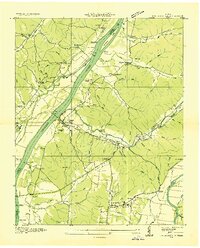 1936 Johnsonville1936 Print · USGSThe Tennessee River corridor in Humphreys County comes alive in the mid-1930s, showing the intersection of rail and river commerce. Genealogists and local historians can trace family sites like Crockett Cem or visit vanished points like Reynoldsburg Landing and Eva Station.
 - 1950 Map of Johnsonville, 1952 Print
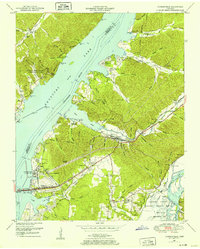 1950 Johnsonville1952 Print · USGSMid-century Tennessee geography is defined here by the creation of Kentucky Lake and the resulting relocation of river communities. Genealogists and historians can trace the transition from Old Johnsonville to New Johnsonville, alongside landmarks like Fairview Sch and Denver.4 unique versions available
 - 1956 Map of Nashville, 1971 Print
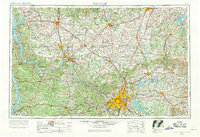 1956 Nashville1971 Print · USGSThe Tennessee-Kentucky borderlands come into focus in the mid-1960s as major reservoir projects transformed the Cumberland and Tennessee river valleys. Researchers can trace the rail networks of the Louisville and Nashville and visit sites like Fort Campbell and Fort Donelson National Military Park.2 unique versions available
 - 1959 Map of Nashville
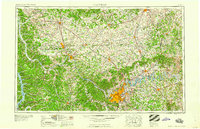 1959 Nashville1959 Print · USGSMiddle Tennessee and Southern Kentucky come into focus during the late fifties, showing the region's transition into a modern transportation and military hub. Researchers can trace the sprawling Fort Campbell Military Reservation or locate historic rail stops along the Tennessee Central Ry and Illinois Central RR.
 - 1985 Map of Dickson
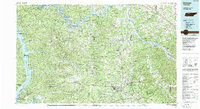 1985 Dickson1985 Print · USGSMid-Tennessee in the mid-1980s was defined by the intersection of the Cumberland and Tennessee rivers and a massive network of wildlife refuges. Researchers can trace the Seaboard System rail lines connecting Waverly, Dickson, and White Bluff, or locate old landmarks near Fort Donelson National Military Park.
 - 2010 Map of Johnsonville, 2010 Print
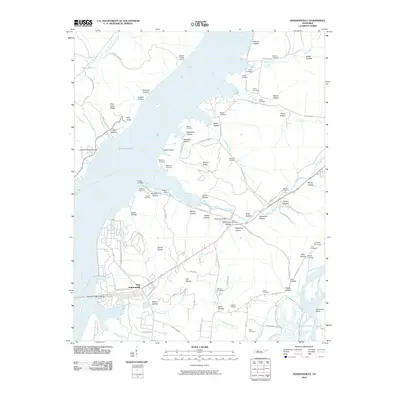 2010 Johnsonville2010 Print · USGSThe Tennessee River valley at Kentucky Lake is seen here in the early twenty-first century, anchored by the settlement of New Johnsonville. Genealogists and local historians can locate numerous family burial sites, including Crockett Cemetery and Napier Cemetery, alongside landmarks like the Denver Post Office.
 - 2013 Map of Johnsonville, 2013 Print
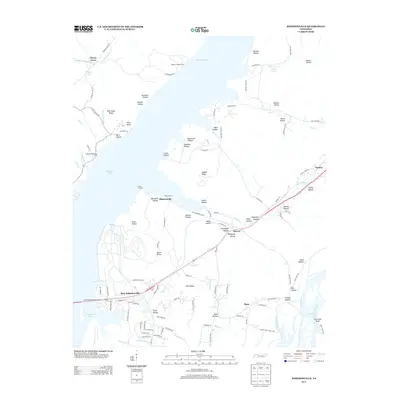 2013 Johnsonville2013 Print · USGSBenton and Humphreys County river life is captured here as the modern era meets traditional Tennessee bottomlands. Genealogists can trace family connections through numerous named landmarks like Spain Hollow, Seven Points, and the riverside Lucas Landing.
 - 2016 Map of Johnsonville, 2016 Print
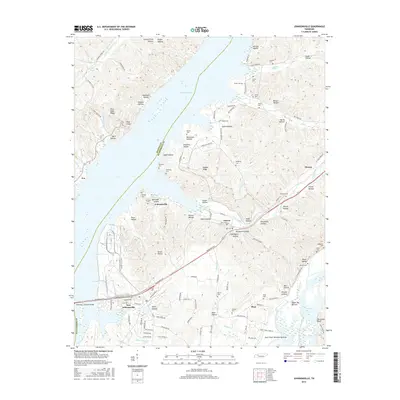 2016 Johnsonville2016 Print · USGSTennessee's river valley comes to life in this mid-2010s survey, showing the relationship between Kentucky Lake and the communities of New Johnsonville and Eva. Genealogists can trace family connections at Crockett Cem, Meredith Cem, and Jackson Cem across the ridge-and-hollow terrain.
 - 2019 Map of Johnsonville, 2019 Print
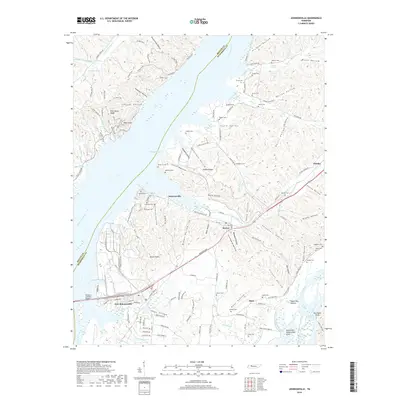 2019 Johnsonville2019 Print · USGSModern Humphreys and Benton Counties meet here along the shores of Kentucky Lake and the Tennessee River. Genealogists and local historians can trace family locations through numerous sites like Napier Cem, Holmes Cem, and the settlement of New Johnsonville.
 - 2022 Map of Johnsonville, 2022 Print
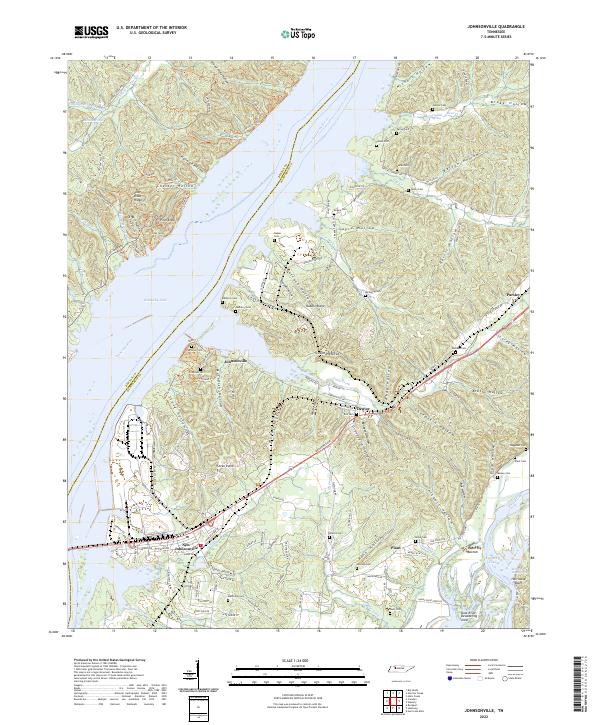 2022 Johnsonville2022 Print · USGSThe Tennessee River and Kentucky Lake shoreline come into focus during the early twenty-first century, revealing a landscape shaped by water and history. Researchers can trace family roots at Winfrey Cem or Crockett Cem and explore the rail history along the Railroad Trl.
End of results
Showing maps 1-10 of 10
Top cities near Pursley
- Waverly historical maps
- Camden historical maps
- New Johnsonville historical maps
- Big Sandy historical maps
Frequently asked questions
- What are the different types of historical maps available for Pursley?
- What is the oldest map of Pursley?
- Where can I purchase historical maps of Pursley for my home or office?
- Where can I download high-res historical maps of Pursley?
- Are there historical topographic maps available for Pursley?
- Is there historical aerial imagery available for Pursley?
- Where are historical maps of Pursley sourced from?