1940s Maps of Marshall County, Tennessee
Explore 13 historic maps of Marshall County from the 1940s. These maps offer a rare glimpse into what life looked like during the 1940s — showing old roads, neighborhoods, homes, and landmarks that have changed or disappeared over time.
Whether you're researching your family's past, planning a metal detecting trip, or studying how Marshall County's landscape evolved across the 1940s, these high-resolution maps are a powerful tool for exploring the history of this region.
- Focus on a specific era: All maps on this page are from the 1940s, giving you a focused view of this time period.
- See what’s changed: Compare century-old streets, trails, and buildings to today's modern landscape using overlays and satellite layers.
- Research with precision: Use these maps for genealogy, historical research, land use analysis, or educational projects.
- View, download, or print: Maps are fully viewable online in high resolution, and can be downloaded or printed for your own records.
Start exploring Marshall County's history through authentic maps from the 1940s. This is your window into the past.
Marshall County, TN maps
(13)- 1944 Map of Shelbyville
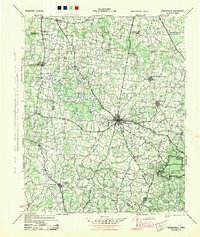 1944 Shelbyville1944 Print · USGSMid-century Middle Tennessee is captured here during the wartime mobilization of the 1940s. Genealogists and researchers can trace family lands near Bugscuffle, Shelbyville Mills, and the expansive Camp Forrest Military Res.
 - 1946 Map of Brick Church, 1981 Print
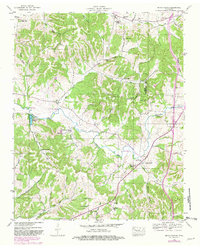 1946 Brick Church1981 Print · USGSGiles and Marshall Counties are captured here in the mid-1940s, showcasing a landscape of small rural hamlets and deeply established family cemeteries. Researchers can trace the grounds of Odd Fellows Hall, locate family plots at Kincaid Cem, or find the old Taylor Sch.
 - 1947 Map of Glendale, 1948 Print
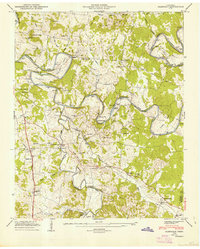 1947 Glendale1948 Print · USGSThe Duck River country of Maury County is captured here just after the war, showing a landscape defined by deep river bends and rural rail stops. Genealogists can locate dozens of family burial sites like Tankersley Cem and trace the Louisville & Nashville tracks through Park Station.6 unique versions available
 - 1947 Map of Farmington, 1948 Print
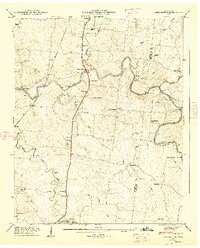 1947 Farmington1948 Print · USGSThe Duck River and the Louisville and Nashville RR shape this Marshall County landscape in the late 1940s. Genealogists can locate family names at Wilhoite Cem or trace the river at White Ford and Wilhoite Mills.4 unique versions available
 - 1947 Map of Bedford, 1948 Print
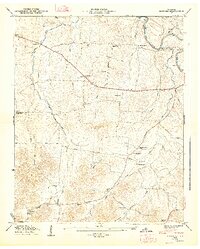 1947 Bedford1948 Print · USGSThe rural landscape of Middle Tennessee is captured here in the late 1940s, highlighting a network of small farming settlements and river crossings. Researchers can trace family history through sites like Temple Ford, Richmond Ch, and the numerous community burial grounds like Gaunt Cem.6 unique versions available
 - 1947 Map of Rally Hill, 1948 Print
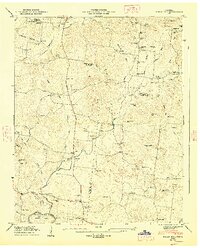 1947 Rally Hill1948 Print · USGSMid-century Middle Tennessee comes to life in this survey of the Maury and Williamson county line. Genealogists can trace family roots through dozens of sites like Derryberry Cem or visit vanished crossroads like Rally Hill and Lunns Store.4 unique versions available
 - 1947 Map of Verona, 1948 Print
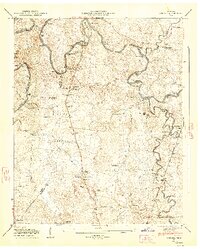 1947 Verona1948 Print · USGSMarshall and Maury counties in the late 1940s were defined by the winding course of the Duck River and its rural mill seats. Researchers can trace family homesteads near Verona, old burial sites like Lillard Cem, and river landmarks such as Lillard Mill.6 unique versions available
 - 1949 Map of Brick Church
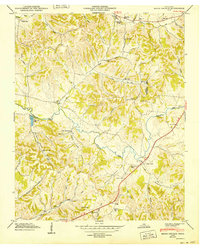 1949 Brick Church1949 Print · USGSGiles and Marshall counties appear here in the late 1940s, showing a rural landscape defined by ridge-and-hollow farming and small schoolhouse districts. Genealogists can trace family names through numerous sites like Lane Cem, Odd Fellows Hall, and New Zion Ch.3 unique versions available
 - 1949 Map of Chapel Hill, 1966 Print
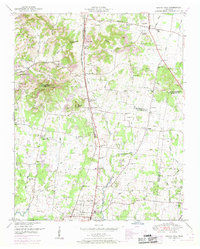 1949 Chapel Hill1966 Print · USGSMid-century Middle Tennessee comes to life here as the rail-and-road network connects rural Marshall and Rutherford counties. Genealogists can trace family landmarks across dozens of sites like Riggs Chapel, Holtland (PO), and the Marrs Hill Cem.2 unique versions available
 - 1949 Map of Belleville, 1974 Print
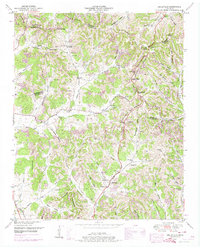 1949 Belleville1974 Print · USGSLincoln County was a landscape of high ridges and deep hollows in the years following the war, centered around the community of Belleville. Researchers can trace old family burial grounds and country parishes like Hickory Hill Church and Wylie Cemetery.2 unique versions available
 - 1949 Map of Belfast, 1975 Print
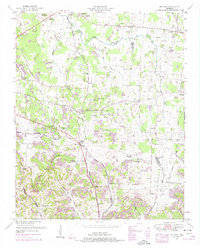 1949 Belfast1975 Print · USGSMarshall County in the late nineteen-forties is a landscape of rural schoolhouses and family cemeteries connected by the Louisville and Nashville RR. Genealogists can trace family lines near Belfast through local landmarks like Temple Cem and Cedar Grove School.2 unique versions available
 - 1949 Map of Campbells Station, 1982 Print
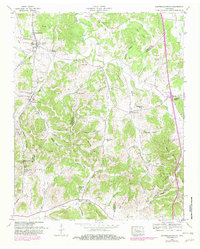 1949 Campbells Station1982 Print · USGSMid-century Tennessee hill country comes alive here as the LOUISVILLE AND NASHVILLE railroad winds through the ridges of Maury and Marshall counties. Genealogists and historians can trace family landholdings via dozens of sites like Shahe Cem, Mooresville School, and Dodson Siding.
 - 1949 Map of Cornersville, 1982 Print
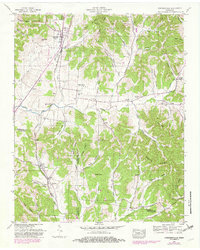 1949 Cornersville1982 Print · USGSCornersville and the surrounding Tennessee hill country are captured here at the end of the 1940s as the rail and river economy persisted. Researchers can trace the Louisville and Nashville line and find vanished landmarks like the County farm and New Hope Church.
End of results
Showing maps 1-13 of 13
Top cities of Marshall County
Frequently asked questions
- What are the different types of historical maps available for Marshall County?
- What is the oldest map of Marshall County?
- Where can I purchase historical maps of Marshall County for my home or office?
- Where can I download high-res historical maps of Marshall County?
- Are there historical topographic maps available for Marshall County?
- Is there historical aerial imagery available for Marshall County?
- Where are historical maps of Marshall County sourced from?