1900s (20th Century) Maps of Montgomery, Tennessee
Explore 6 historic maps of Montgomery from the 1900s (20th Century). These maps offer a rare glimpse into what life looked like during the 1900s — showing old roads, neighborhoods, homes, and landmarks that have changed or disappeared over time.
Whether you're researching your family's past, planning a metal detecting trip, or studying how Montgomery's landscape evolved across the 1900s, these high-resolution maps are a powerful tool for exploring the history of this region.
- Focus on a specific era: All maps on this page are from the 1900s, giving you a focused view of this time period.
- See what’s changed: Compare century-old streets, trails, and buildings to today's modern landscape using overlays and satellite layers.
- Research with precision: Use these maps for genealogy, historical research, land use analysis, or educational projects.
- View, download, or print: Maps are fully viewable online in high resolution, and can be downloaded or printed for your own records.
Start exploring Montgomery's history through authentic maps from the 1900s. This is your window into the past.
Montgomery, TN maps
(6)- 1936 Map of Block
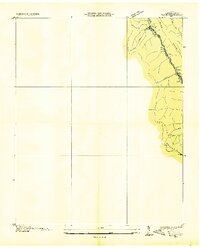 1936 Block1936 Print · USGSCoal and rail define this Campbell County landscape in the mid-thirties as mining operations carved into the ridges of Fork Mountain. Trace the steep industrial Incline paths and rail sidings serving Turley, Hickey, and Block.2 unique versions available
 - 1946 Map of Block, 1947 Print
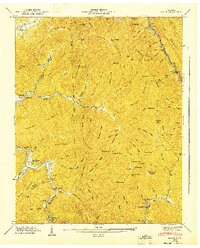 1946 Block1947 Print · USGSThe northern Tennessee coalfields are shown at their mid-century peak, where rail lines and steep inclines carve through the ridges. Genealogists and historians can trace the foundations of Smoky Junction, the Round Rock Sch, and family sites at Jerry Fields.2 unique versions available
 - 1952 Map of Block, 1973 Print
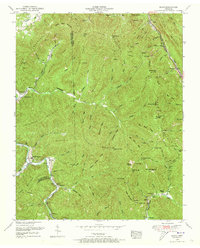 1952 Block1973 Print · USGSThe border of Scott and Campbell counties comes alive in the early fifties as the coal and rail industries navigate these deep Tennessee hollows. Researchers can trace the Southern rail line through Smoky Junction or locate the Upper Round Rock School and Antioch Church.5 unique versions available
 - 1956 Map of Corbin, 1966 Print
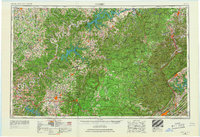 1956 Corbin1966 Print · USGSThe Kentucky and Tennessee borderlands are captured here in the mid-fifties, showing the region's shift toward modern interstate travel and reservoir development. Genealogists and historians can trace old community lines near Albany and Monticello or locate early rail junctions along the Southern and Tennessee Central lines.3 unique versions available
 - 1958 Map of Corbin
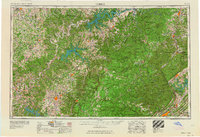 1958 Corbin1958 Print · USGSThe Upper Cumberland borderlands appear in the late 1950s as massive reservoirs and early atomic-era growth reshape the region. Trace family roots and vanished landmarks near Lake Cumberland, Oak Ridge, and the Cumberland National Forest.
 - 1979 Map of Oakridge, 1980 Print
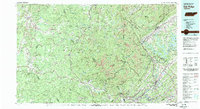 1979 Oakridge1980 Print · USGSThe eastern Tennessee highlands are captured here in the late 1970s, showcasing a landscape of coal mining and mountain conservation. Genealogists and researchers can locate family landmarks such as Potter Cem, Sunbright Sch, and the historic settlement of Rugby.
End of results
Showing maps 1-6 of 6
Top cities near Montgomery
- Clinton historical maps
- La Follette historical maps
- Oneida historical maps
- Jacksboro historical maps
- Caryville historical maps
- Rocky Top historical maps
See more
Frequently asked questions
- What are the different types of historical maps available for Montgomery?
- What is the oldest map of Montgomery?
- Where can I purchase historical maps of Montgomery for my home or office?
- Where can I download high-res historical maps of Montgomery?
- Are there historical topographic maps available for Montgomery?
- Is there historical aerial imagery available for Montgomery?
- Where are historical maps of Montgomery sourced from?