1950s Maps of Wayne County, Tennessee
Explore 17 historic maps of Wayne County from the 1950s. These maps offer a rare glimpse into what life looked like during the 1950s — showing old roads, neighborhoods, homes, and landmarks that have changed or disappeared over time.
Whether you're researching your family's past, planning a metal detecting trip, or studying how Wayne County's landscape evolved across the 1950s, these high-resolution maps are a powerful tool for exploring the history of this region.
- Focus on a specific era: All maps on this page are from the 1950s, giving you a focused view of this time period.
- See what’s changed: Compare century-old streets, trails, and buildings to today's modern landscape using overlays and satellite layers.
- Research with precision: Use these maps for genealogy, historical research, land use analysis, or educational projects.
- View, download, or print: Maps are fully viewable online in high resolution, and can be downloaded or printed for your own records.
Start exploring Wayne County's history through authentic maps from the 1950s. This is your window into the past.
Wayne County, TN maps
(17)- 1950 Map of Westpoint, 1954 Print
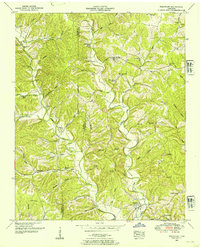 1950 Westpoint1954 Print · USGSThe Westpoint area of middle Tennessee is shown here during a period of industrial and rural transition. Local researchers can trace the routes of a Dismantled Railroad, find family landmarks like Sims Ridge Cem, and locate the sites of Silver Springs School and Lodi.2 unique versions available
 - 1950 Map of St. Joseph, 1954 Print
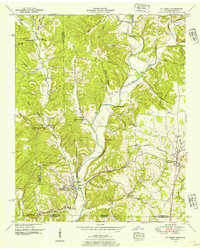 1950 St. Joseph1954 Print · USGSThe Tennessee-Alabama borderlands come into focus in the early 1950s, showing the rural communities and rail lines that connected these cross-state ridges. Researchers can trace the Louisville and Nashville Railroad through Iron City or locate old burial sites like Shiloh Cem and Blair Cem.2 unique versions available
 - 1950 Map of Ransom Stand, 1954 Print
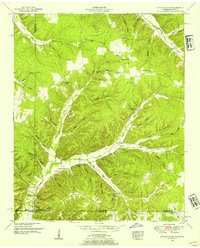 1950 Ransom Stand1954 Print · USGSThe Tennessee-Alabama borderlands at the start of the fifties reveal a landscape of deep hollows and high ridges. Genealogists can locate family names at Ransom Stand, McFalls Ch, and the Centenary Cem.2 unique versions available
 - 1950 Map of Martins Mills, 1954 Print
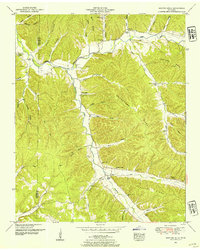 1950 Martins Mills1954 Print · USGSWayne County is shown here in the early postwar era, highlighting a landscape of ridge-top farms and valley hamlets. Researchers can trace ancestral roots at Martins Mills and Lutts, or locate rural landmarks like Pinhook School and Greeson Chapel.2 unique versions available
 - 1951 Map of Ovilla, 1954 Print
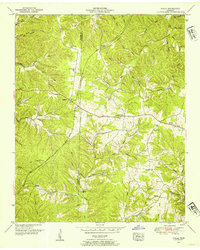 1951 Ovilla1954 Print · USGSThe rural divide between Wayne and Lawrence counties comes into focus in the early 1950s, highlighting a landscape of ridge-top schools and creek-bottom settlements. Genealogists and local historians can trace family roots at New Haven Ch, Spann Cem, and the County Line School.2 unique versions available
 - 1951 Map of Whitten, 1954 Print
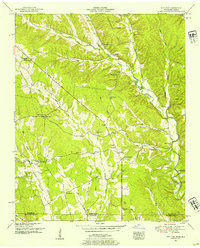 1951 Whitten1954 Print · USGSThe Tennessee-Alabama borderlands come into focus in the early fifties, showing a rural landscape of ridges and creek hollows. Genealogists can trace family landmarks like Whitten Chapel, Butler Sch, and the winding path of the Chisholm Road.2 unique versions available
 - 1951 Map of Waynesboro, 1954 Print
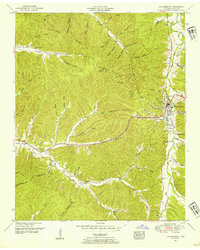 1951 Waynesboro1954 Print · USGSMid-century Wayne County is centered here at Waynesboro during a time of rural stability and emerging infrastructure. Researchers can trace family ties at Old Town Cem and Kee Cem, or locate landmarks like the Waynesboro Lookout Tower and Ray Sch.2 unique versions available
 - 1951 Map of Cypress Inn, 1954 Print
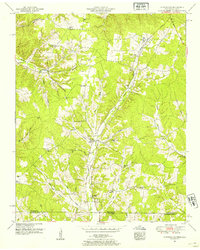 1951 Cypress Inn1954 Print · USGSThe Tennessee-Alabama borderlands at mid-century are defined by the winding waters of Cypress Creek and the historic path of the Natchez Trace Parkway. Local historians can trace family roots through numerous landmarks like Piney Grove Ch, Cheatham School, and the Balentine Cem.3 unique versions available
 - 1951 Map of Three Churches, 1954 Print
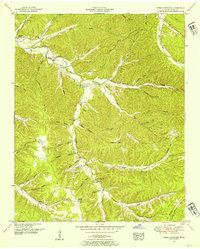 1951 Three Churches1954 Print · USGSWayne County in the early fifties shows a landscape of deep hollows and high ridges centered on the Three Churches community. Genealogists can locate legacy sites like Cromwell Crossroads, the Indian Creek School, and family plots at Copeland Cem.2 unique versions available
 - 1951 Map of Leatherwood, 1954 Print
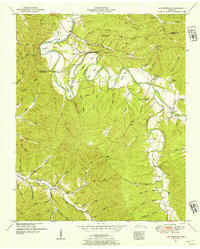 1951 Leatherwood1954 Print · USGSThe Buffalo River valley on the Wayne and Perry county line is captured here in the early fifties, showing a rural landscape of ridges and hollows. Researchers can locate family landmarks like Throgmorton Cem, the Old Union Sch, and the riverside hamlet of Flat Woods.3 unique versions available
 - 1951 Map of Negro Hollow, 1954 Print
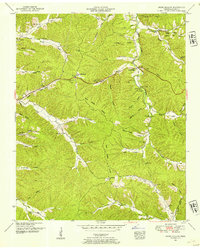 1951 Negro Hollow1954 Print · USGSWayne County, Tennessee, in the early fifties is mapped here as a labyrinth of namesake hollows and ridges. Genealogists and local historians can locate many family burial sites like Copeland Cem and Mt Hope Cem or trace the early path of the Natchez Trace Parkway.3 unique versions available
 - 1951 Map of Collinwood, 1956 Print
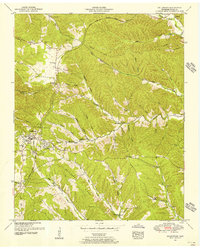 1951 Collinwood1956 Print · USGSCollinwood and the surrounding Wayne County timberlands appear in the early fifties during the modern development of the Natchez Trace Parkway. Genealogists can locate family sites at Risner Cem, McCall Sch, and the settlement of McGlamerys Stand.2 unique versions available
 - 1951 Map of Riverside, 1956 Print
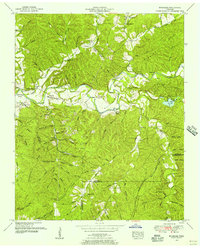 1951 Riverside1956 Print · USGSThe Buffalo River corridor in middle Tennessee is captured here in the early fifties, showing a landscape defined by deep hollows and ridge-top settlements. Researchers can trace family sites like Dabbs Cem and Turkey Track or locate the strip mines near Riverside.3 unique versions available
 - 1951 Map of Topsy, 1956 Print
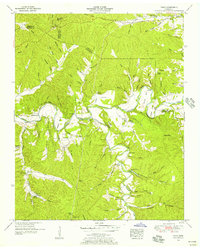 1951 Topsy1956 Print · USGSWayne County and Lewis County meet along the winding Buffalo River in the early fifties, where rural life centered on isolated valley settlements. Genealogists can trace family names through several historic sites, including Whitehead Cem, Salem Church, and Topsy Sch.2 unique versions available
 - 1956 Map of Columbia, 1960 Print
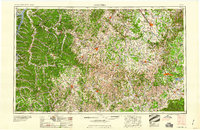 1956 Columbia1960 Print · USGSMiddle Tennessee in the mid-fifties presents a landscape of established river towns and critical rail hubs before the arrival of the modern interstate system. Researchers can trace the routes of the Louisville and Nashville railroad or locate historic landmarks like Stones River National Military Park and the Tennessee National Wildlife Refuge.6 unique versions available
 - 1956 Map of Blytheville, 1964 Print
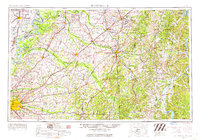 1956 Blytheville1964 Print · USGSWest Tennessee and the Arkansas Delta come alive in this mid-century survey of the river-and-rail corridor connecting Memphis to Jackson. Genealogists and historians can trace the rail lines of the Louisville and Nashville RR and locate landmarks like Western State Hospital or Fort Pillow State Prison Farm.2 unique versions available
 - 1959 Map of Blytheville
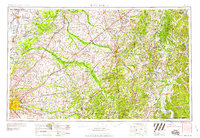 1959 Blytheville1959 Print · USGSWest Tennessee and Northeast Arkansas meet along the river in the late fifties, during a period of steady industrial and agricultural growth. Genealogists can trace the rail corridors of the Illinois Central through Jackson or explore landmarks like Shiloh National Military Park and Fort Pillow State Prison.
End of results
Showing maps 1-17 of 17
Top cities of Wayne County
Frequently asked questions
- What are the different types of historical maps available for Wayne County?
- What is the oldest map of Wayne County?
- Where can I purchase historical maps of Wayne County for my home or office?
- Where can I download high-res historical maps of Wayne County?
- Are there historical topographic maps available for Wayne County?
- Is there historical aerial imagery available for Wayne County?
- Where are historical maps of Wayne County sourced from?