1900s (20th Century) Maps of Grand Prairie, Texas
Explore 23 historic maps of Grand Prairie from the 1900s (20th Century). These maps offer a rare glimpse into what life looked like during the 1900s — showing old roads, neighborhoods, homes, and landmarks that have changed or disappeared over time.
Whether you're researching your family's past, planning a metal detecting trip, or studying how Grand Prairie's landscape evolved across the 1900s, these high-resolution maps are a powerful tool for exploring the history of this region.
- Focus on a specific era: All maps on this page are from the 1900s, giving you a focused view of this time period.
- See what’s changed: Compare century-old streets, trails, and buildings to today's modern landscape using overlays and satellite layers.
- Research with precision: Use these maps for genealogy, historical research, land use analysis, or educational projects.
- View, download, or print: Maps are fully viewable online in high resolution, and can be downloaded or printed for your own records.
Start exploring Grand Prairie's history through authentic maps from the 1900s. This is your window into the past.
Grand Prairie, TX maps
(23)- 1931 Map of Carrollton
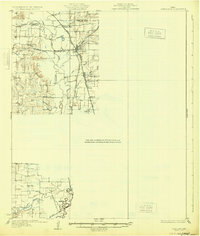 1931 Carrollton1931 Print · USGSCarrollton and the Elm Fork valley are captured here in the mid-twenties, when interurban rail and steam lines defined the North Texas corridor. Genealogists can trace family landmarks like Bethel Ch, Bear Creek Sch, and the rural community at Trinity Mills.3 unique versions available
 - 1931 Map of Grapevine
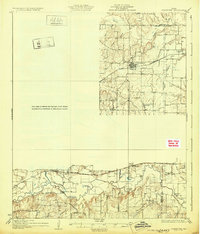 1931 Grapevine1931 Print · USGSTarrant and Dallas Counties appear in the early thirties as a network of rural settlements and rail-bound transit. Genealogists can locate family landmarks like Randalls Mill, the Bedford Bridge, and early school sites including Shady Grove Sch.2 unique versions available
 - 1954 Map of Dallas, 1963 Print
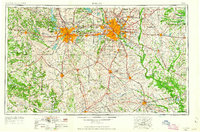 1954 Dallas1963 Print · USGSNorth Texas in the mid-fifties and early sixties reveals a landscape of rapid urban growth and water management. Genealogists and historians can trace the evolution of the metroplex through landmarks like Hensley Field, Boles Orphan Home, and the Texas & Pacific RR.4 unique versions available
 - 1958 Map of Dallas
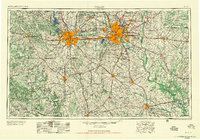 1958 Dallas1958 Print · USGSNorth Texas in the late fifties shows the dramatic expansion of the Metroplex as it absorbs surrounding farm towns. Genealogists and historians can trace old rail lines like the Missouri-Kansas-Texas and locate early lakefront developments at Eagle Mountain Lake and Lake Worth Village.
 - 1959 Map of Arlington, 1960 Print
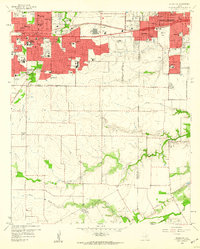 1959 Arlington1960 Print · USGSArlington and Grand Prairie were undergoing massive post-war growth when this survey recorded their expanding neighborhoods and industrial hubs. Researchers can trace the early footprints of Arlington State College, the Automobile Assembly Plant, and dozens of local churches like St Maria Goretti.6 unique versions available
 - 1959 Map of Euless, 1960 Print
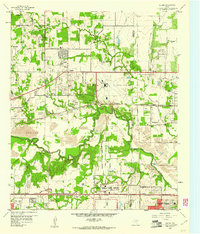 1959 Euless1960 Print · USGSMid-century Tarrant County is captured here during a period of rapid transit and aviation expansion. Genealogists can find numerous burial sites and rural landmarks like Bear Creek Cem, White Chapel, and the Terminal Control Tower at Amon Carter Field.7 unique versions available
 - 1959 Map of Irving, 1960 Print
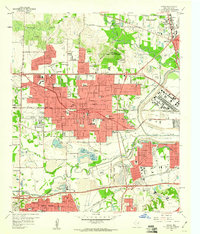 1959 Irving1960 Print · USGSIrving was rapidly transforming from a rural Dallas County landscape into a bustling suburban and industrial hub in the late fifties. Genealogists and historians can trace the foundations of the University of Dallas, locate the Sowers Cem, and find the Jap Lee Airstrip.5 unique versions available
 - 1959 Map of Cedar Hill, 1960 Print
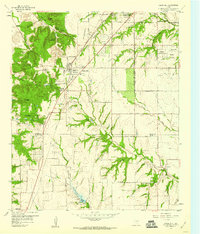 1959 Cedar Hill1960 Print · USGSDuring the late fifties, the Dallas and Ellis county line remained a mix of rural encampments and developing suburbs like Cedar Hill and De Soto. Researchers can trace old family sites at Rhodes Cemetery or find historic community hubs like Shiloh Cemetery and the True Vine Church.6 unique versions available
 - 1959 Map of Britton, 1960 Print
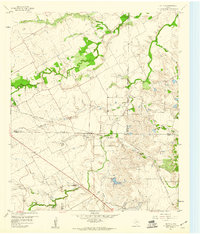 1959 Britton1960 Print · USGSNorth Texas farm and rail country comes into focus in the late fifties at the junction of Tarrant, Dallas, and Ellis counties. Genealogists can trace family landmarks like Pleasant Valley Cem, St Paul Ch, and the rail junction at Britton.6 unique versions available
 - 1959 Map of Duncanville, 1961 Print
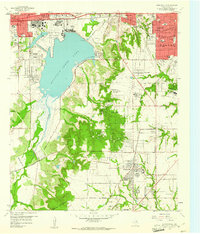 1959 Duncanville1961 Print · USGSDallas and Duncanville are captured here during a transitional era of military aviation and early suburban growth. Researchers can trace family sites at Trees Cem, explore the Dallas Naval Air Station, or locate the Camp Wisdom grounds.6 unique versions available
 - 1959 Map of Arlington, 1961 Print
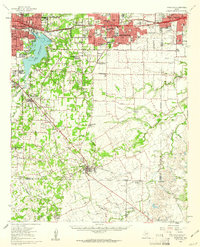 1959 Arlington1961 Print · USGSArlington and Mansfield are caught in a moment of post-war transformation as the suburbs of North Texas begin to bloom. Genealogists and local historians can trace family locations near Rehoboth Cem, study the footprint of Arlington State College, or locate vanished landmarks like Lucas Airport.
 - 1959 Map of Carrollton, 1963 Print
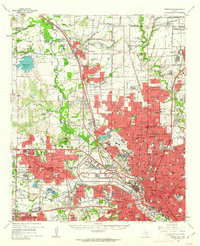 1959 Carrollton1963 Print · USGSNorth Dallas and its surrounding suburbs are captured during a period of massive suburban growth in the late fifties. Genealogists can trace family sites near Trinity Mills, while researchers can locate mid-century landmarks like Love Field Municipal Airport and Calvary Hill Cemetery.
 - 1959 Map of Grapevine, 1964 Print
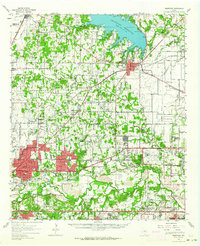 1959 Grapevine1964 Print · USGSTarrant County at the close of the fifties shows the transition from rural prairie to a major aviation and suburban hub. Trace family roots at the Lonesome Dove Ch or Medlin Cem while seeing early footprints of the Greater Southwest International Airport.
 - 1961 Map of Venus, 1963 Print
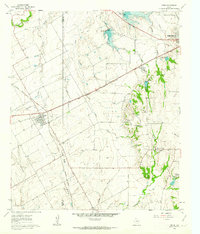 1961 Venus1963 Print · USGSThe rail-driven growth of the Johnson and Ellis county line is captured here in the early sixties, centered on the junction at Venus. Researchers can trace old family landmarks and infrastructure including Newton Cem, Hopewell Ch, and the Southern Pacific line.4 unique versions available
 - 1985 Map of Fort Worth
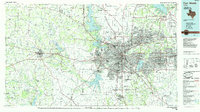 1985 Fort Worth1985 Print · USGSMid-1980s Tarrant County and Parker County emerge from a transition between urban sprawl and rural cattle country. Researchers can trace the expansion of Fort Worth and Arlington alongside older landmarks like Nebo Mtn and Kikapoo Falls.2 unique versions available
 - 1985 Map of Cleburne
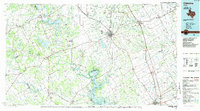 1985 Cleburne1985 Print · USGSThe Brazos River valley and its major mid-century reservoirs dominate this North Central Texas landscape during the 1980s. Local researchers can trace family roots through sites like Mt Carmel Ch, Oak Hill Sch, and the unique river bends near Glen Rose.2 unique versions available
 - 1986 Map of Dallas
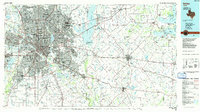 1986 Dallas1986 Print · USGSThe North Texas metropolitan landscape comes into focus during the mid-eighties as urban growth expands toward the eastern reservoirs. Researchers can trace historic cemeteries like Oak Cliff Cem, rail corridors of the Texas & Pacific RR, and landmarks such as Southern Methodist University.3 unique versions available
 - 1995 Map of Cedar Hill, 2001 Print
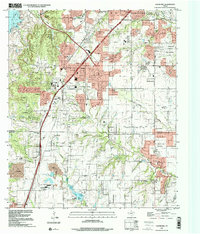 1995 Cedar Hill2001 Print · USGSThe suburban landscape south of Dallas was undergoing significant growth in the mid-nineties as cities like De Soto and Ovilla expanded. You can trace family roots at the Shiloh Cemetery or locate landmarks like the Mount Lebanon Encampment and Cedarview.
 - 1995 Map of Duncanville, 2001 Print
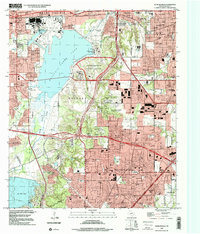 1995 Duncanville2001 Print · USGSSouthwest Dallas and Duncanville are shown here during the late twentieth-century suburban boom. Researchers can trace local heritage through landmarks like Armstrong Historical Park, the Dallas-Fort Worth National Cemetery, and Trees Cem.
 - 1995 Map of Irving, 2002 Print
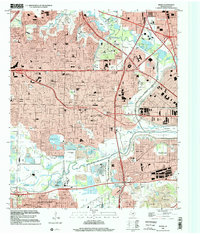 1995 Irving2002 Print · USGSIrving and West Dallas are shown in the mid-1990s, capturing the area's transition from a rail-and-quarry industrial hub to a dense suburban center. Researchers can trace historic sites like Sowers Cem, the Cistercian Monastery, and the footprint of Texas Stadium.
 - 1995 Map of Arlington, 2002 Print
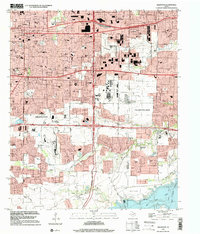 1995 Arlington2002 Print · USGSArlington and Grand Prairie appear at a peak of late-century expansion along the Tarrant and Dallas County line. Researchers can trace the growth of Arlington State College or locate family sites at Parkdale Cemetery, St Andrew Church, and Florence Hill.
 - 1995 Map of Britton, 2002 Print
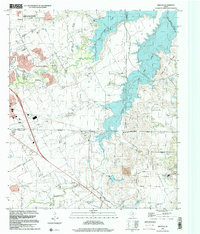 1995 Britton2002 Print · USGSThe Tarrant and Dallas county borderlands were being rapidly transformed by the waters of Joe Pool Lake in the mid-1990s. Local researchers can still find historic landmarks like the Britton settlement, Estes Cem, and Friendship Ch amid the expanding suburbs.
 - 1995 Map of Euless, 2002 Print
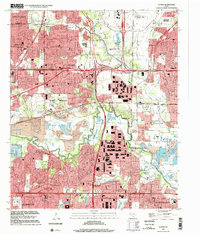 1995 Euless2002 Print · USGSMid-Cities development in the mid-nineties shows the urban interface between the burgeoning Dallas - Fort Worth International Airport and the surrounding suburbs. Researchers can locate long-standing local landmarks like Bear Creek Cem and Mt Elam Ch amid the modern growth of Euless and Irving.
End of results
Showing maps 1-23 of 23
Top cities near Grand Prairie
- Dallas historical maps
- Fort Worth historical maps
- Arlington historical maps
- Irving historical maps
- North Richland Hills historical maps
- Mansfield historical maps
See more
Top neighborhoods of Grand Prairie
- Heather Glen historical maps
- The Cove historical maps
- Westchester by Norstar historical maps
- Chester Village historical maps
- Somerton Village historical maps
- Westchester Glen historical maps
See more
Frequently asked questions
- What are the different types of historical maps available for Grand Prairie?
- What is the oldest map of Grand Prairie?
- Where can I purchase historical maps of Grand Prairie for my home or office?
- Where can I download high-res historical maps of Grand Prairie?
- Are there historical topographic maps available for Grand Prairie?
- Is there historical aerial imagery available for Grand Prairie?
- Where are historical maps of Grand Prairie sourced from?