1900s (20th Century) Maps of Hamlin, Texas
Explore 7 historic maps of Hamlin from the 1900s (20th Century). These maps offer a rare glimpse into what life looked like during the 1900s — showing old roads, neighborhoods, homes, and landmarks that have changed or disappeared over time.
Whether you're researching your family's past, planning a metal detecting trip, or studying how Hamlin's landscape evolved across the 1900s, these high-resolution maps are a powerful tool for exploring the history of this region.
- Focus on a specific era: All maps on this page are from the 1900s, giving you a focused view of this time period.
- See what’s changed: Compare century-old streets, trails, and buildings to today's modern landscape using overlays and satellite layers.
- Research with precision: Use these maps for genealogy, historical research, land use analysis, or educational projects.
- View, download, or print: Maps are fully viewable online in high resolution, and can be downloaded or printed for your own records.
Start exploring Hamlin's history through authentic maps from the 1900s. This is your window into the past.
Hamlin, TX maps
(7)- 1954 Map of Big Spring, 1965 Print
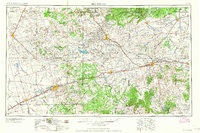 1954 Big Spring1965 Print · USGSWest Texas in the mid-1950s shows a landscape of growing oil towns and vital rail links along the Texas and Pacific RR. Researchers can trace the development of Big Spring, find smaller settlements like Knott and Lomax, or locate landmarks such as Boyds Chapel and Signal Mountain.4 unique versions available
 - 1958 Map of Big Spring
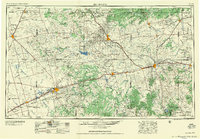 1958 Big Spring1958 Print · USGSThe West Texas oil boom was in full swing during the late fifties, transforming the landscape around Howard and Mitchell counties. Genealogists and historians can trace the growth of Big Spring and Snyder alongside industrial landmarks like the Kelly-Snyder Oil Field and the Santa Fe rail lines.
 - 1965 Map of Hamlin NE, 1967 Print
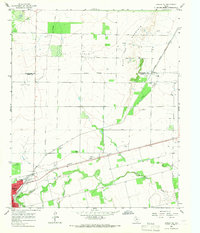 1965 Hamlin NE1967 Print · USGSThe West Texas ranching and oil country around Hamlin is captured here in the mid-sixties, showing a landscape defined by rail lines and resource extraction. Researchers can trace the legacy of the Atchison Topeka and Santa Fe, the East Cem, and the high ground of Flat Top Mountain.
 - 1965 Map of Neinda, 1967 Print
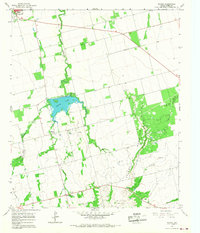 1965 Neinda1967 Print · USGSJones County's rural landscape is captured here in the mid-1960s, showing the intersection of ranching and oil production. Researchers can trace the layout of Neinda and Boyds Chapel, find the local Cem, and locate the old Drive-in Theater near Hamlin.
 - 1965 Map of Hamlin NW, 1967 Print
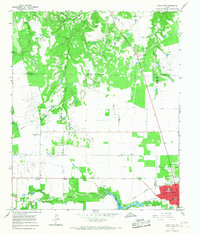 1965 Hamlin NW1967 Print · USGSFisher and Stonewall Counties in the mid-sixties reveal a landscape defined by petroleum production and rural community life. Researchers can trace family history at Afton Cem or locate vanished landmarks like Pardue Camp and Hitson.
 - 1965 Map of McCaulley, 1967 Print
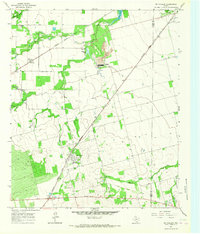 1965 McCaulley1967 Print · USGSFisher County and Jones County intersect in this mid-1960s survey of a rural Texas rail and mining corridor. Researchers can trace the industrial footprint of the Celotex plant and Strip Mine or locate family graves at the Swedonia Cem.2 unique versions available
 - 1985 Map of Snyder
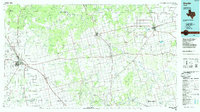 1985 Snyder1985 Print · USGSMid-1980s Scurry and Fisher Counties are captured here as a landscape of rail-driven commerce and river-bottom agriculture. Researchers can trace the pathways of the Missouri Pacific railroad or locate family-named landmarks like Mc Caulley and Hermleigh.2 unique versions available
End of results
Showing maps 1-7 of 7
Frequently asked questions
- What are the different types of historical maps available for Hamlin?
- What is the oldest map of Hamlin?
- Where can I purchase historical maps of Hamlin for my home or office?
- Where can I download high-res historical maps of Hamlin?
- Are there historical topographic maps available for Hamlin?
- Is there historical aerial imagery available for Hamlin?
- Where are historical maps of Hamlin sourced from?