1900s (20th Century) Maps of Ebony, Texas
Explore 6 historic maps of Ebony from the 1900s (20th Century). These maps offer a rare glimpse into what life looked like during the 1900s — showing old roads, neighborhoods, homes, and landmarks that have changed or disappeared over time.
Whether you're researching your family's past, planning a metal detecting trip, or studying how Ebony's landscape evolved across the 1900s, these high-resolution maps are a powerful tool for exploring the history of this region.
- Focus on a specific era: All maps on this page are from the 1900s, giving you a focused view of this time period.
- See what’s changed: Compare century-old streets, trails, and buildings to today's modern landscape using overlays and satellite layers.
- Research with precision: Use these maps for genealogy, historical research, land use analysis, or educational projects.
- View, download, or print: Maps are fully viewable online in high resolution, and can be downloaded or printed for your own records.
Start exploring Ebony's history through authentic maps from the 1900s. This is your window into the past.
Ebony, TX maps
(6)- 1928 Map of Zephyr
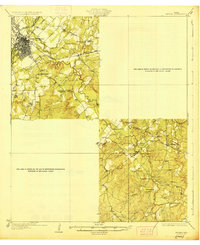 1928 Zephyr1928 Print · USGSCentral Texas ranching and rail activity are on full display in the mid-1920s as Brownwood expands toward the southeast. Trace ancestral connections at Steppes Creek Church or locate vanished local landmarks like Slighdale School and Adams Crossing.
 - 1950 Map of Zephyr
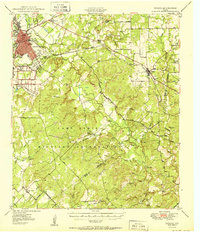 1950 Zephyr1950 Print · USGSBrownwood and the surrounding central Texas countryside are shown at a pivotal mid-century moment as the military and rail industries shaped the local economy. Researchers can locate the sprawling Camp Bowie Military Reservation, find local burial sites like Indian Creek Cemetery, and trace the path of the Santa Fe railroad.2 unique versions available
 - 1954 Map of Brownwood, 1955 Print
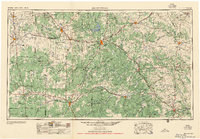 1954 Brownwood1955 Print · USGSCentral Texas in the early fifties shows a landscape of rail-linked cattle towns and winding river valleys before modern highway expansion. Genealogists and historians can trace family-named peaks and vanished rail stops like Trickham, Santa Anna, and the Brady Mountains.3 unique versions available
 - 1979 Map of Indian Creek, 1980 Print
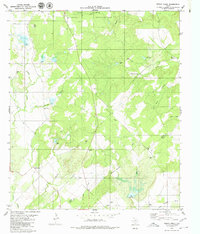 1979 Indian Creek1980 Print · USGSCentral Texas ranch lands and military grounds meet in the late seventies near the Brown and Mills County line. Genealogists and historians can trace local roots at Indian Creek Cem or Elkins Cem while exploring the banks of Devils River.2 unique versions available
 - 1985 Map of Comanche
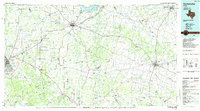 1985 Comanche1985 Print · USGSCentral Texas in the mid-eighties shows a landscape of established ranching towns and expanding reservoirs. Trace the family-named gaps and summits from Mercers Gap to Hog Mountains, alongside smaller settlements like Gentrys Mill and Hazeldell.2 unique versions available
 - 1997 Map of Indian Creek, 1998 Print
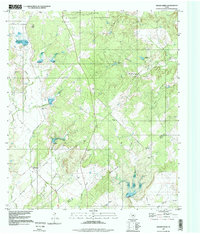 1997 Indian Creek1998 Print · USGSCentral Texas rural life and military land use are documented here in the late twentieth century. Genealogists can trace family sites at Indian Creek Cem and Elkins Cem or explore the area around Ebony.
End of results
Showing maps 1-6 of 6
Top cities near Ebony
- Brownwood historical maps
- Bangs historical maps
- Richland Springs historical maps
- Mullin historical maps
Frequently asked questions
- What are the different types of historical maps available for Ebony?
- What is the oldest map of Ebony?
- Where can I purchase historical maps of Ebony for my home or office?
- Where can I download high-res historical maps of Ebony?
- Are there historical topographic maps available for Ebony?
- Is there historical aerial imagery available for Ebony?
- Where are historical maps of Ebony sourced from?