1900s (20th Century) Maps of Mustang Beach, Port Aransas
Explore 11 historic maps of Mustang Beach from the 1900s (20th Century). These maps offer a rare glimpse into what life looked like during the 1900s — showing old roads, neighborhoods, homes, and landmarks that have changed or disappeared over time.
Whether you're researching your family's past, planning a metal detecting trip, or studying how Mustang Beach's landscape evolved across the 1900s, these high-resolution maps are a powerful tool for exploring the history of this region.
- Focus on a specific era: All maps on this page are from the 1900s, giving you a focused view of this time period.
- See what’s changed: Compare century-old streets, trails, and buildings to today's modern landscape using overlays and satellite layers.
- Research with precision: Use these maps for genealogy, historical research, land use analysis, or educational projects.
- View, download, or print: Maps are fully viewable online in high resolution, and can be downloaded or printed for your own records.
Start exploring Mustang Beach's history through authentic maps from the 1900s. This is your window into the past.
Mustang Beach, Port Aransas maps
(11)- 1925 Map of Aransas Pass
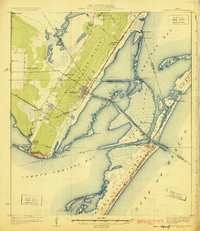 1925 Aransas Pass1925 Print · USGSThe Texas Gulf Coast comes to life in the mid-1920s, showing the early railroad developments and barrier island geography of the coastal bend. Trace the original footprints of Aransas Pass, the Aransas Pass Lighthouse, and local landmarks like Mc Campbell School.3 unique versions available
 - 1950 Map of Corpus Christi, 1953 Print
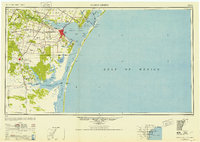 1950 Corpus Christi1953 Print · USGSThe South Texas coast comes into focus during the early fifties, showing the interplay between booming oil fields and expansive ranching operations. Genealogists and historians can trace the Texas Mexican rail line through Kingsville or locate heritage sites like Chapman Ranch and Riviera Beach.
 - 1954 Map of Port Aransas, 1956 Print
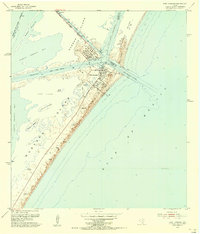 1954 Port Aransas1956 Print · USGSCoastal Texas in the mid-fifties is captured here as a landscape of barrier islands, dredging projects, and maritime industry. Genealogists and historians can trace the early streets of Port Aransas, the location of the Port Aransas Cemetery, and the remote Grant Ranch on Mustang Island.
 - 1954 Map of Aransas Pass, 1964 Print
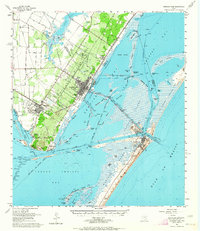 1954 Aransas Pass1964 Print · USGSThe Texas Gulf Coast comes alive in the mid-fifties, showing the growth of Aransas Pass and Port Aransas alongside vital rail and shipping corridors. Trace old routes like the Toll Road on Mustang Island and locate sites such as Prairie View Cem or the Coast Guard Station.2 unique versions available
 - 1956 Map of Corpus Christi
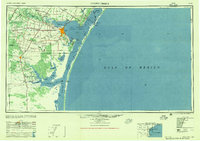 1956 Corpus Christi1956 Print · USGSThe South Texas coast and the burgeoning port of Corpus Christi are captured here during the mid-fifties. Genealogists and historians can trace the rail-and-oil economy through labels like Robstown Airpark, Chapman Ranch, and the Missouri Pacific railroad.
 - 1960 Map of Corpus Christi
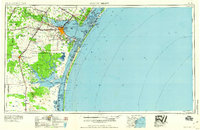 1960 Corpus Christi1960 Print · USGSCoastal South Texas and the Nueces County hinterlands are detailed in this mid-century survey. Genealogists and historians can trace early settlement patterns and rural landmarks like Casa Blanca during a period of steady regional growth.
 - 1966 Map of Corpus Christi
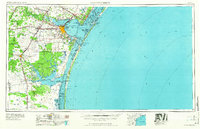 1966 Corpus Christi1966 Print · USGSThe Texas Coastal Bend in the mid-1960s reveals a landscape where massive cattle empires and strategic military bases meet the Gulf. Trace the vast reaches of King Ranch or locate aviation history at the Corpus Christi Air Station and Kingsville Air Station.
 - 1968 Map of Port Aransas, 1972 Print
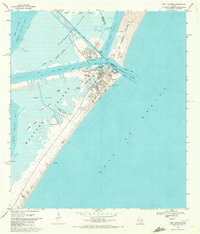 1968 Port Aransas1972 Print · USGSPort Aransas and its surrounding barrier islands are shown in detail during the late 1960s maritime era. Researchers can trace coastal development through the Mustang Beach Landing Strip, the Royal Palm Cem, and the Aransas Pass Lighthouse.2 unique versions available
 - 1975 Map of Port Aransas, 1985 Print
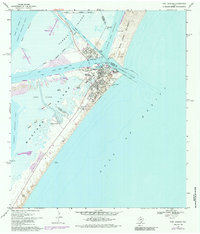 1975 Port Aransas1985 Print · USGSCoastal Texas near the mid-seventies reveals a thriving maritime community and research hub on the barrier islands. Genealogists and researchers can trace local landmarks like Royal Palm Cem, the Aransas Pass Lighthouse, and the Horace Caldwell Pier.
 - 1984 Map of Corpus Christi
 1984 Corpus Christi1984 Print · USGSThe Texas Coastal Bend in the 1980s reveals a landscape defined by deep-water ports and sprawling ranchlands. Researchers can trace the rail lines of the Texas Mexican railroad or locate historical landmarks like the Chapman Ranch and Seaside Memorial Cem.
 - 1989 Map of Corpus Christi, 1991 Print
 1989 Corpus Christi1991 Print · USGSCoastal South Texas and its deep bays are captured here in the late eighties, showcasing a landscape of military aviation and barrier island preservation. Researchers can trace family roots in Petronila or Vattmannville and locate landmarks like Cabaniss Field and Baffin.
End of results
Showing maps 1-11 of 11
Frequently asked questions
- What are the different types of historical maps available for Mustang Beach?
- What is the oldest map of Mustang Beach?
- Where can I purchase historical maps of Mustang Beach for my home or office?
- Where can I download high-res historical maps of Mustang Beach?
- Are there historical topographic maps available for Mustang Beach?
- Is there historical aerial imagery available for Mustang Beach?
- Where are historical maps of Mustang Beach sourced from?