1900s (20th Century) Maps of Clearfield, Utah
Explore 18 historic maps of Clearfield from the 1900s (20th Century). These maps offer a rare glimpse into what life looked like during the 1900s — showing old roads, neighborhoods, homes, and landmarks that have changed or disappeared over time.
Whether you're researching your family's past, planning a metal detecting trip, or studying how Clearfield's landscape evolved across the 1900s, these high-resolution maps are a powerful tool for exploring the history of this region.
- Focus on a specific era: All maps on this page are from the 1900s, giving you a focused view of this time period.
- See what’s changed: Compare century-old streets, trails, and buildings to today's modern landscape using overlays and satellite layers.
- Research with precision: Use these maps for genealogy, historical research, land use analysis, or educational projects.
- View, download, or print: Maps are fully viewable online in high resolution, and can be downloaded or printed for your own records.
Start exploring Clearfield's history through authentic maps from the 1900s. This is your window into the past.
Clearfield, UT maps
(18)- 1954 Map of Ogden, 1967 Print
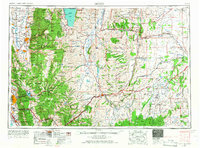 1954 Ogden1967 Print · USGSThe northern Utah corridor and Wyoming borderlands are captured here in the mid-1950s, showing the region's transition from mountain wilderness to settled valleys. Researchers can trace historic institutions like Utah State University or locate vanished points like Church Butte Station and the Trappist Monastery.3 unique versions available
 - 1954 Map of Brigham City, 1968 Print
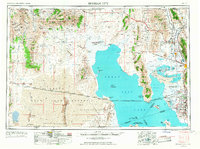 1954 Brigham City1968 Print · USGSNorthern Utah and the edges of the Great Salt Lake are captured here during the mid-fifties, showing the region's transition from pioneer rail hubs to modern military ranges. Researchers can find old sidings like Lemay Siding, the Golden Spike Monument, and settlements like Washakie.4 unique versions available
 - 1955 Map of Clearfield, 1956 Print
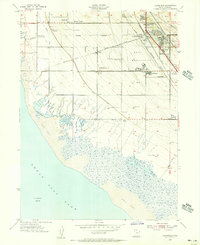 1955 Clearfield1956 Print · USGSCoastal Davis County is shown in the mid-fifties as the military and rail hub of the region expands toward the Great Salt Lake. Genealogists can trace family plots at West Point Cemetery or locate old school sites like Wasatch Sch and settlements at Laytona.
 - 1955 Map of Roy, 1956 Print
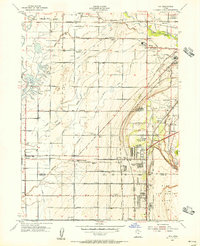 1955 Roy1956 Print · USGSSettlements along the Weber River valley were rapidly evolving in the mid-fifties as military and rail hubs expanded. Genealogists and historians can trace the foundations of Roy and Clinton, locating family-named landmarks like the Clinton Cemetery and Lakeview School.4 unique versions available
 - 1955 Map of Kaysville, 1956 Print
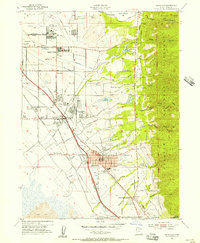 1955 Kaysville1956 Print · USGSDavis County transitioned from an agrarian valley to a strategic defense hub during the mid-fifties as the suburbs began to expand. You can trace the path of the electric Bamberger Railroad and locate civic landmarks like Sahara Village and the County High School.4 unique versions available
 - 1958 Map of Ogden
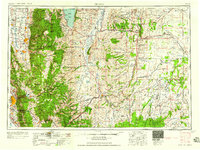 1958 Ogden1958 Print · USGSNorthern Utah and southwestern Wyoming are captured here during a period of steady growth and military expansion. You can trace the Union Pacific rail lines and early road networks connecting Ogden and Logan to Bear Lake and Evanston.
 - 1958 Map of Brigham City
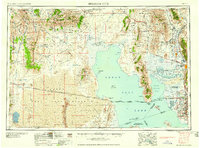 1958 Brigham City1958 Print · USGSNorthern Utah in the late fifties shows a landscape of extremes, from the salt flats to the bustling Bear River Valley. Trace historical routes like the Old Immigrant Trail and locate local landmarks such as the Brigham Sugar Mill and Booth Valley School.
 - 1960 Map of Ogden
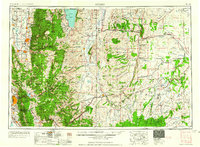 1960 Ogden1960 Print · USGSIn the mid-1950s, this region of the American West balanced military expansion with frontier history along the Union Pacific RR. Genealogists and historians can trace old settlements like Fort Bridger, the residential growth of Washington Terrace, and industrial sites from the Hill AFB complex to the coal mines of Kemmerer.
 - 1962 Map of Brigham City
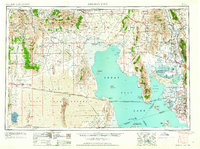 1962 Brigham City1962 Print · USGSNorthern Utah in the early sixties reveals a landscape of vast salt flats and growing towns along the Wasatch Front. Researchers can trace the Southern Pacific line past the Golden Spike Monument or locate landmarks like Indian Cave and Donner-Reed Pass.
 - 1972 Map of Clearfield, 1974 Print
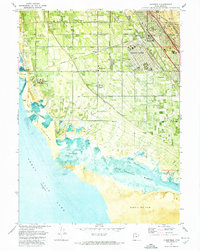 1972 Clearfield1974 Print · USGSClearfield and Syracuse are shown at a peak of military and industrial activity in the early seventies, between the Great Salt Lake and the mountains. Researchers can trace the layout of Hill Air Force Base, local landmarks like Syracuse Cem, and the massive Freeport Center rail complex.
 - 1986 Map of Ogden, 1987 Print
 1986 Ogden1987 Print · USGSThe Wasatch Front was undergoing significant development in the mid-eighties as the urban corridor stretched from Ogden toward the Great Salt Lake. Researchers can trace the legacy of regional transport and defense via Hill Air Force Base, the Union Pacific line, and mountain passes near Snow Basin.
 - 1987 Map of Promontory Point
 1987 Promontory Point1987 Print · USGSThe Wasatch Front meets the great salt desert in the late eighties, showing the rapid growth of towns from Brigham City to Layton. Follow the Southern Pacific (Lucin Cutoff) across the water and explore the remote terrain of Antelope Island and Promontory Point.
 - 1990 Map of Roy
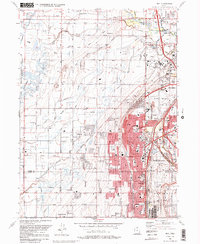 1990 Roy1990 Print · USGSThe corridor between Ogden and Clinton is shown here in the 1990s, defined by its massive military installations and expanding suburban grid. Researchers can trace local landmarks like Clinton Cem, the Ogden Municipal Airport, and the former Old Railroad Grade.2 unique versions available
 - 1991 Map of Clearfield
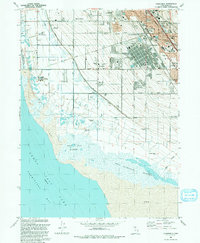 1991 Clearfield1991 Print · USGSDavis County's shoreline meets industrial expansion in the early nineties, showing a landscape defined by water management and military presence. Researchers can trace the sprawling Freeport Center, family roots at West Point Cemetery, and the intricate path of the Hooper Aqueduct.2 unique versions available
 - 1992 Map of Kaysville
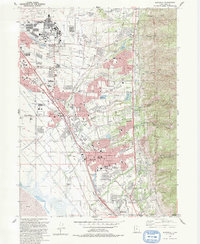 1992 Kaysville1992 Print · USGSThe Wasatch Front underwent significant suburban expansion in the early nineties, centered on the military and agricultural hubs of Davis County. Researchers can trace local development through landmarks like Hill Air Force Base, Layton Sta, and Lakeview Cemetery.2 unique versions available
 - 1998 Map of Kaysville, 2001 Print
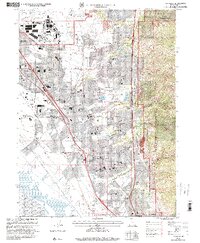 1998 Kaysville2001 Print · USGSDavis County underwent rapid suburban transformation in the late nineties as residential neighborhoods filled the benchlands below the Wasatch Front. Genealogists and local historians can trace the development of Clearfield, Layton, and Kaysville alongside landmarks like Lakeview Cemetery and the Hill Air Force Base.
 - 1999 Map of Clearfield, 2001 Print
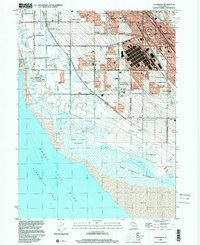 1999 Clearfield2001 Print · USGSThe eastern shore of the Great Salt Lake comes into focus in the late nineties as residential growth meets major industrial hubs. Researchers can trace the massive Freeport Center, the borders of Hill Air Force Base, and the West Point Cemetery.
 - 1999 Map of Roy, 2001 Print
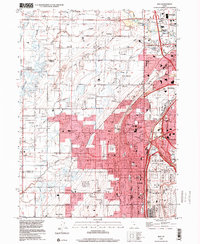 1999 Roy2001 Print · USGSWeber County's growing suburban and military landscape is captured here during the late 1990s as cities like Roy and Clinton expand. Researchers can trace family history at Stoker Memorial Cemetery or locate landmarks like Hill Air Force Base and the Aerospace Museum.
End of results
Showing maps 1-18 of 18
Top cities near Clearfield
- Ogden historical maps
- Layton historical maps
- Bountiful historical maps
- Roy historical maps
- Kaysville historical maps
- Syracuse historical maps
See more
Frequently asked questions
- What are the different types of historical maps available for Clearfield?
- What is the oldest map of Clearfield?
- Where can I purchase historical maps of Clearfield for my home or office?
- Where can I download high-res historical maps of Clearfield?
- Are there historical topographic maps available for Clearfield?
- Is there historical aerial imagery available for Clearfield?
- Where are historical maps of Clearfield sourced from?