Old Maps of Caineville, Utah for Genealogy
Trace your family roots with 14 historic maps of Caineville. These high-res maps reveal old neighborhoods, homesites, landmarks, and streets — helping you uncover where your ancestors lived and how the area evolved over time.
- Explore historic neighborhoods: Identify where your relatives may have lived in the 1800s or 1900s.
- Compare maps over time: Trace the changes in streets, buildings, and landmarks for multi-generational research.
- Perfect for genealogy & ancestry research: Used by family historians and researchers to map out lineage and migration.
These maps are an incredible resource for exploring your personal connection to Caineville's past.
Caineville, UT maps
(14)- 1885 Map of Fish Lake
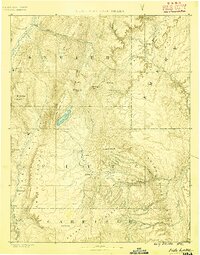 1885 Fish Lake1885 Print · USGSThe high plateaus and early canyon settlements of central Utah are documented here in the mid-1880s, shortly after the Powell Survey. Genealogists and historians can trace early families in Salina, Antimony, and Cousharem, or locate remote sites like Bean Spring.
 - 1896 Map of Fish Lake, 1899 Print
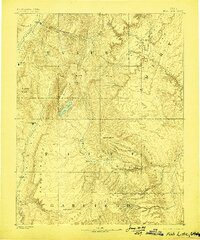 1896 Fish Lake1899 Print · USGSSouthern Utah in the late nineteenth century is a land of high plateaus and isolated river settlements. Trace early pioneer outposts like Thurber, Teardale, and Antimony alongside geological marvels such as Fish Lake and the Water Pocket Flexure.4 unique versions available
 - 1954 Map of Fruita, 1957 Print
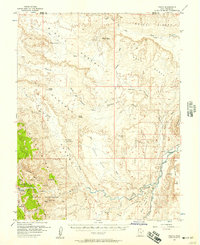 1954 Fruita1957 Print · USGSWayne County, Utah, is seen here in the mid-fifties, capturing the remote river valleys and monumental rock formations before modern tourism fully arrived. Researchers can trace the early trails and water sources that sustained this area, from Campers Spring to the Caineville Ditch and Hartnet Trail.2 unique versions available
 - 1954 Map of Notom 1 SE, 1957 Print
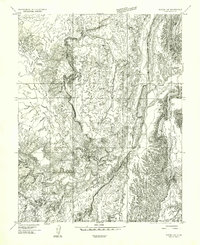 1954 Notom 1 SE1957 Print · USGSWayne County during the mid-1950s reveals a desert landscape shaped by the Fremont River and its essential irrigation works. Researchers can trace the path of the Caineville Ditch or locate the soaring North Caineville Mesa.
 - 1956 Map of Salina
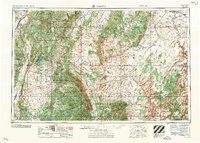 1956 Salina1956 Print · USGSCentral Utah in the mid-fifties reveals a landscape of high plateaus and desert basins before the modern highway era. Researchers can trace the ranching and mining roots of Hanksville and Loa or locate the Lucky Strike Mine near the San Rafael Swell.5 unique versions available
 - 1960 Map of Salina
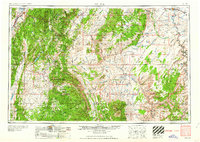 1960 Salina1960 Print · USGSThe high plateaus and canyonlands of south-central Utah appear in the early sixties as a region of remote ranching towns and developing parklands. Researchers can trace historic settlements like Fruita and Loa or locate the uranium mines and the tracks of the Denver and Rio Grande Western RR.2 unique versions available
 - 1962 Map of Salina
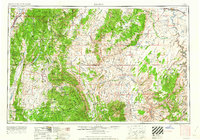 1962 Salina1962 Print · USGSSevier County and the surrounding desert wilderness appear here in the early sixties as a network of isolated river valley towns and high-altitude forests. Researchers can locate remote landmarks like Fruita, trace the Denver & Rio Grande Western RR, and find backcountry sites like the Aquarius Ranger Station.
 - 1980 Map of Loa
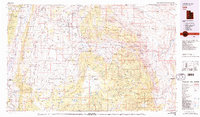 1980 Loa1980 Print · USGSCentral Utah's high plateaus and the Fremont River corridor are captured here during the 1980s, showcasing a landscape of high-elevation reservoirs and remote ranching outposts. Genealogists can trace family names and early settlements from Loa and Teasdale to the orchards of Fruita.2 unique versions available
 - 1987 Map of Caineville
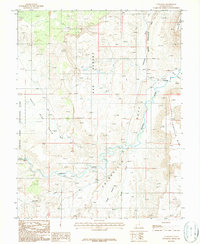 1987 Caineville1987 Print · USGSThe Fremont River corridor in Wayne County comes into focus in the late 1980s, revealing the isolated settlement of Caineville beneath massive mesas. Local historians can trace old mining Prospects across the Caineville Flats and the boundary of Capitol Reef National Park.
 - 2011 Map of Caineville, 2011 Print
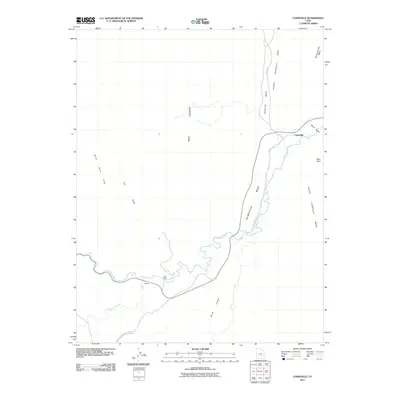 2011 Caineville2011 Print · USGSCaineville and the surrounding river breaks are captured in the early 21st century as the settlement and its geology remain inextricably linked. Local historians can trace the relationship between the Fremont River and the small outposts of Caineville and Aldrich, set against the massive Caineville Reef.
 - 2014 Map of Caineville, 2014 Print
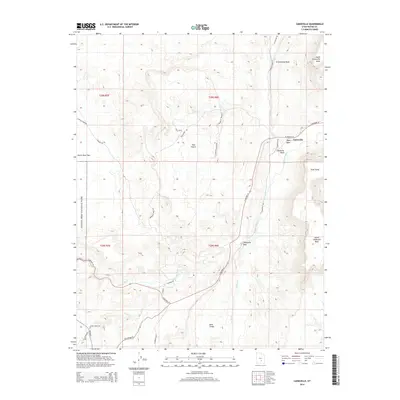 2014 Caineville2014 Print · USGSWayne County’s high desert landscape is recorded here in the early 2000s, where the Fremont River meets the settlement of Caineville. Genealogists and historians can locate Notom Cemetery and trace old routes like Wendells Mine Rd.
 - 2017 Map of Caineville, 2017 Print
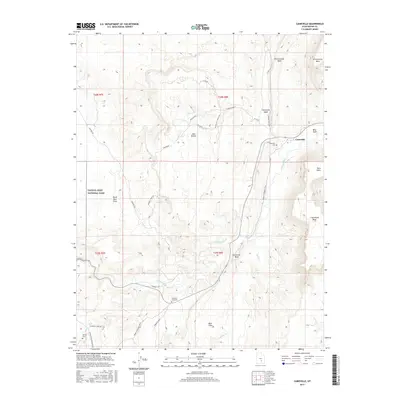 2017 Caineville2017 Print · USGSCaineville and the surrounding reef country are shown here in the late twenty-teens, during a period of modern recreation and continued agricultural persistence. Researchers can identify key burial sites like the Crowther Gravesite and follow the historic Moab to Boulder Town route through Capitol Reef National Park.
 - 2020 Map of Caineville, 2020 Print
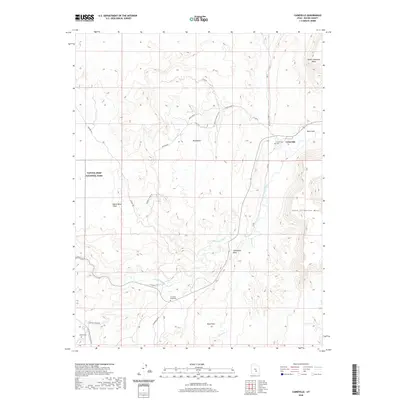 2020 Caineville2020 Print · USGSCaineville and the surrounding desert mesas are documented in this recent survey of the Fremont River valley. Researchers can pinpoint historic locations such as the Crowther Gravesite, Caineville Cem, and the boundaries of Capitol Reef National Park.
 - 2023 Map of Caineville, 2023 Print
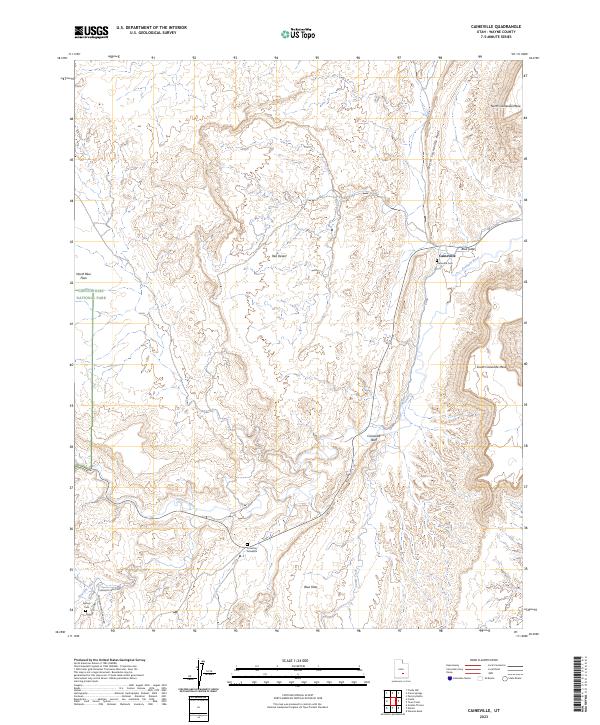 2023 Caineville2023 Print · USGSCaineville and the surrounding Wayne County desert are shown here in recent detail, where the Fremont River cuts through the reef country. Researchers can locate remote burial markers like the Crowther Gravesite and Notom Cem amidst the North Caineville Mesa.
End of results
Showing maps 1-14 of 14
Frequently asked questions
- What are the different types of historical maps available for Caineville?
- What is the oldest map of Caineville?
- Where can I purchase historical maps of Caineville for my home or office?
- Where can I download high-res historical maps of Caineville?
- Are there historical topographic maps available for Caineville?
- Is there historical aerial imagery available for Caineville?
- Where are historical maps of Caineville sourced from?