1940s Maps of Waterville, Vermont
Explore 6 historic maps of Waterville from the 1940s. These maps offer a rare glimpse into what life looked like during the 1940s — showing old roads, neighborhoods, homes, and landmarks that have changed or disappeared over time.
Whether you're researching your family's past, planning a metal detecting trip, or studying how Waterville's landscape evolved across the 1940s, these high-resolution maps are a powerful tool for exploring the history of this region.
- Focus on a specific era: All maps on this page are from the 1940s, giving you a focused view of this time period.
- See what’s changed: Compare century-old streets, trails, and buildings to today's modern landscape using overlays and satellite layers.
- Research with precision: Use these maps for genealogy, historical research, land use analysis, or educational projects.
- View, download, or print: Maps are fully viewable online in high resolution, and can be downloaded or printed for your own records.
Start exploring Waterville's history through authentic maps from the 1940s. This is your window into the past.
Waterville, VT maps
(6)- 1943 Map of Hyde Park
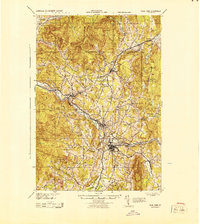 1943 Hyde Park1943 Print · USGSLamoille County during the mid-1940s shows a landscape of river-valley industry and upland hill farms. Researchers can locate dozens of country schoolhouses like Wiswell Sch and trace local mining history at the Talc Mine or the Lower Diggings.
 - 1943 Map of Jay Peak, 1946 Print
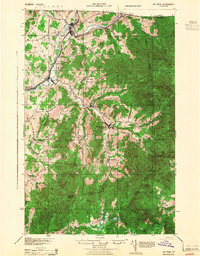 1943 Jay Peak1946 Print · USGSThe Vermont high country comes into focus in the mid-1940s, showing a rugged landscape of rail junctions and mountain industries. Genealogists and historians can locate remote mountain schools like Woodward Sch, the industrial Asbestos Mine, and the mill sites of Hectorville.
 - 1944 Map of Mount Mansfield
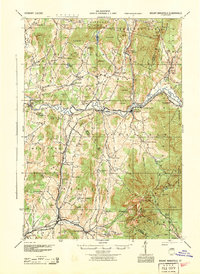 1944 Mount Mansfield1944 Print · USGSNorthern Vermont in the mid-1940s is defined here by high mountain peaks and a dense network of rural school districts. Genealogists can trace family footprints through numerous local landmarks like Irish Settlement Sch, Marses Mill, and the high-altitude Mt Mansfield Hotel.
 - 1944 Map of Enosburg Falls
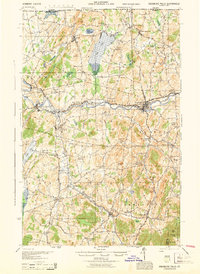 1944 Enosburg Falls1944 Print · USGSNorthern Vermont during the mid-1940s was a landscape of river-valley rail towns and upland dairy farms centered on the Missisquoi River. Researchers can trace the path of the Central Vermont railroad and find defunct local landmarks like Gilberts Tannery or the many numbered schoolhouses like School No 5.
 - 1948 Map of Jeffersonville, 1953 Print
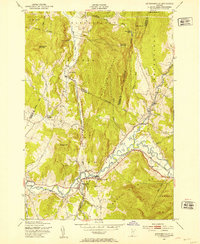 1948 Jeffersonville1953 Print · USGSVermont's Lamoille Valley in the late 1940s shows a landscape of river-bottom farming and mountain timbering. Trace the path of the St Johnsbury and Lamoille County railroad through Jeffersonville and Cambridge Junction.4 unique versions available
 - 1948 Map of Mount Mansfield, 1954 Print
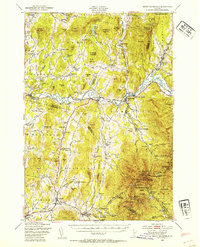 1948 Mount Mansfield1954 Print · USGSThe Green Mountains of Vermont meet the Lamoille River valley here during the post-war era, showing a mix of mountain tourism and traditional farming. Genealogists can trace family lines through the Irish Settlement and numerous rural sites like Sanderson Cem and Buck Hollow Sch.5 unique versions available
End of results
Showing maps 1-6 of 6
Top cities near Waterville
- Essex historical maps
- Stowe historical maps
- Jericho historical maps
- Fairfax historical maps
- Cambridge Village historical maps
- Johnson historical maps
See more
Frequently asked questions
- What are the different types of historical maps available for Waterville?
- What is the oldest map of Waterville?
- Where can I purchase historical maps of Waterville for my home or office?
- Where can I download high-res historical maps of Waterville?
- Are there historical topographic maps available for Waterville?
- Is there historical aerial imagery available for Waterville?
- Where are historical maps of Waterville sourced from?