1960s Maps of Alleghany County, Virginia
Explore 20 historic maps of Alleghany County from the 1960s. These maps offer a rare glimpse into what life looked like during the 1960s — showing old roads, neighborhoods, homes, and landmarks that have changed or disappeared over time.
Whether you're researching your family's past, planning a metal detecting trip, or studying how Alleghany County's landscape evolved across the 1960s, these high-resolution maps are a powerful tool for exploring the history of this region.
- Focus on a specific era: All maps on this page are from the 1960s, giving you a focused view of this time period.
- See what’s changed: Compare century-old streets, trails, and buildings to today's modern landscape using overlays and satellite layers.
- Research with precision: Use these maps for genealogy, historical research, land use analysis, or educational projects.
- View, download, or print: Maps are fully viewable online in high resolution, and can be downloaded or printed for your own records.
Start exploring Alleghany County's history through authentic maps from the 1960s. This is your window into the past.
Alleghany County, VA maps
(20)- 1961 Map of Bluefield
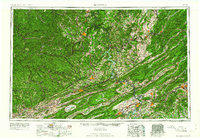 1961 Bluefield1961 Print · USGSThe coalfields and mountain ridges of southern West Virginia and southwest Virginia are captured in the early sixties. Genealogists can trace family ties through rail-linked towns like Princeton and Richlands or along the shores of Bluestone Reservoir.
 - 1962 Map of Eagle Rock, 1963 Print
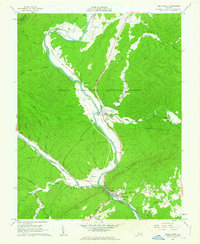 1962 Eagle Rock1963 Print · USGSThe James River valley at the start of the sixties reveals a landscape of ridge-top forests and riverside rail towns. Genealogists and historians can trace local family landmarks from the Haden Cemetery and Galatia Ch to the rail sidings of Bessemer and Gala.2 unique versions available
 - 1962 Map of Strom, 1963 Print
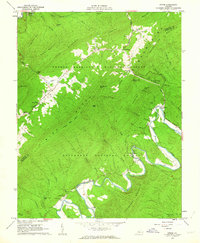 1962 Strom1963 Print · USGSBotetourt and Alleghany counties in the early sixties show a landscape shaped by iron history and mountain river life. Researchers can find numerous family cemeteries like Rose Hill Cem, early industrial sites at Roaring Run Furnace, and small settlements like Strom and Lignite.4 unique versions available
 - 1962 Map of Clifton Forge, 1964 Print
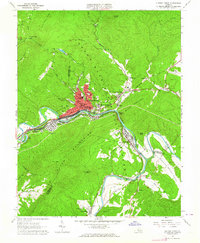 1962 Clifton Forge1964 Print · USGSClifton Forge and Iron Gate serve as industrial hubs at the meeting of the Jackson and Cowpasture Rivers in the early 1960s. Genealogists can trace the Chesapeake and Ohio rail lines to family landmarks like Locust Bottom Ch and Glen Wilton.5 unique versions available
 - 1962 Map of Covington, 1964 Print
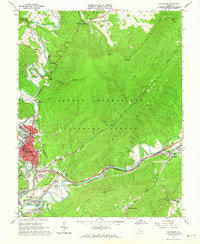 1962 Covington1964 Print · USGSAlleghany County industry and Appalachian topography meet in the early sixties along the Jackson River corridor. Researchers can trace the neighborhoods of Covington, locate family plots at Smith Cem, or identify the footprints of the Rich Patch Mines and Watson High Sch.4 unique versions available
 - 1963 Map of Roanoke
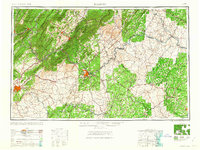 1963 Roanoke1963 Print · USGSCentral Virginia and the Blue Ridge front appear here in the early sixties, caught between their deep railroad roots and new postwar developments. Genealogists and historians can trace the rail lines of the Norfolk and Western through towns like Bedford and Altavista, or locate family landmarks near Smith Mountain Lake.
 - 1966 Map of Falling Spring, 1967 Print
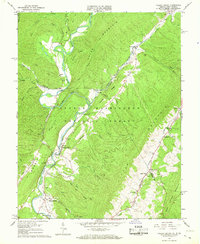 1966 Falling Spring1967 Print · USGSThe Jackson River valley and the rugged ridges of the George Washington National Forest define this mid-century landscape. Genealogists and hikers can trace old mountain routes and family settlements near Falling Spring, Carloover, and the Emory Ch.3 unique versions available
 - 1966 Map of Callaghan, 1967 Print
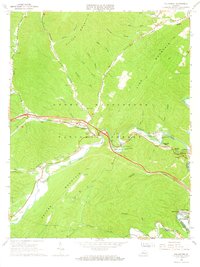 1966 Callaghan1967 Print · USGSAlleghany County in the mid-1960s shows a landscape defined by its mountain ridges and the vital Chesapeake and Ohio rail line. Researchers can trace family sites at Helmintoller Cem, locate rural landmarks like Fletcher Chapel, and see the historic Covered Bridge.2 unique versions available
 - 1966 Map of Jordan Mines, 1967 Print
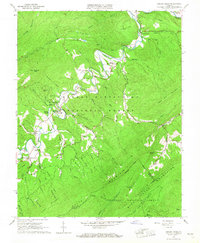 1966 Jordan Mines1967 Print · USGSAlleghany and Craig counties are captured in the mid-1960s as a landscape of isolated mountain hollows and riverside parishes. Genealogists and historians can trace the foundations of local life at Lone Star Ch, Jordan Mines, and along the Old Grade RR.3 unique versions available
 - 1966 Map of New Castle, 1967 Print
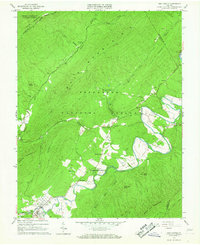 1966 New Castle1967 Print · USGSThe Jefferson and George Washington National Forests meet in this 1960s survey of New Castle, Virginia. Genealogists and historians can trace old homesteads and local landmarks like Virginia Mineral Springs, the Barbours Creek School, and Marshalltown.3 unique versions available
 - 1966 Map of Healing Springs, 1967 Print
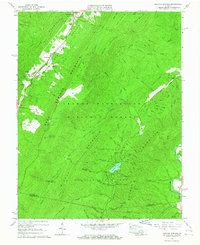 1966 Healing Springs1967 Print · USGSBath County's famous resort valley is captured in the mid-sixties, showcasing the height of the mountain springs era. Genealogists and researchers can trace local landmarks like Mt Olive Cem and Oak Grove Ch or explore the early layout of Douthat State Park.2 unique versions available
 - 1966 Map of Potts Creek, 1967 Print
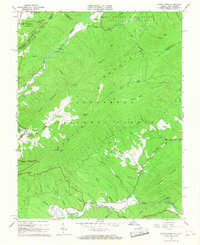 1966 Potts Creek1967 Print · USGSThe Virginia and West Virginia borderlands in the 1960s are defined here by the steep ridges of Peters Mountain and the winding course of Potts Creek. Genealogists and local historians can trace family locations at Rowan Memorial Home Cem, Paxton Chapel, and the Paint Bank National Fish Hatchery.2 unique versions available
 - 1966 Map of Glace, 1968 Print
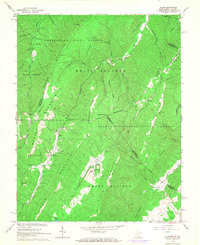 1966 Glace1968 Print · USGSThe West Virginia and Virginia borderlands come to life in the mid-sixties, showing the rugged topography of the Greenbrier State Forest. Genealogists and hikers can trace old landmarks like Hylton Ch, the Catholic Cem, and Moncove Lake.2 unique versions available
 - 1966 Map of Rucker Gap, 1968 Print
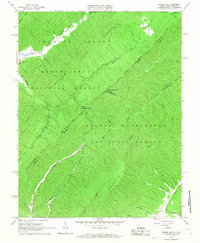 1966 Rucker Gap1968 Print · USGSThe high ridges of the Alleghenies meet along the Virginia-West Virginia border in the mid-1960s, where national forests converge at Rucker Gap. Genealogists and hikers can trace old family landmarks like Watts Chapel Cem and the waters of Anthony Creek or Ogle Creek.2 unique versions available
 - 1966 Map of Jerrys Run, 1968 Print
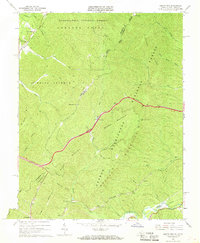 1966 Jerrys Run1968 Print · USGSThe Virginia and West Virginia borderlands in the 1960s reveal a landscape of deep railroad engineering and forest management. Trace the path of the Chesapeake and Ohio through the Lewis Tunnels and locate the mountain settlement at Alleghany.2 unique versions available
 - 1966 Map of Alleghany, 1968 Print
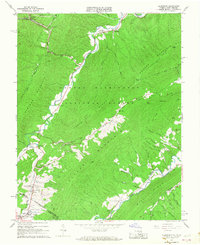 1966 Alleghany1968 Print · USGSThe Virginia and West Virginia state line runs through these high ridges in the mid-sixties, tracing a landscape of mountain rail passes and mineral springs. Researchers can locate remote sites like the Lewis Tunnel, Sweet Chalybeate, and old rural landmarks such as Palestine Ch.3 unique versions available
 - 1967 Map of Collierstown, 1969 Print
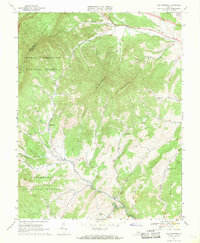 1967 Collierstown1969 Print · USGSRockbridge County's rural valleys and ridges appear in detail during the late sixties, as agricultural patterns remained visible across the terrain. Trace local family roots at the Hartbarger Cem or explore established communities like Collierstown and Denmark.3 unique versions available
 - 1969 Map of Longdale Furnace, 1971 Print
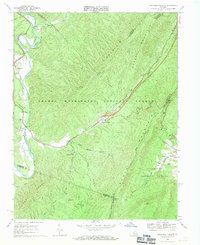 1969 Longdale Furnace1971 Print · USGSAlleghany County in the late sixties reveals a landscape shaped by mountain industry and the winding Cowpasture River. Genealogists can locate family landmarks like Lone Star Ch, Sharon Sch, and the historical site of Longdale Furnace.3 unique versions available
 - 1969 Map of Nimrod Hall, 1971 Print
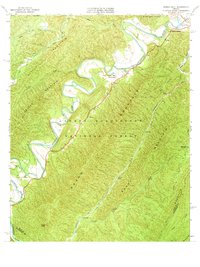 1969 Nimrod Hall1971 Print · USGSBath County's rugged ridge-and-valley landscape is documented here during the late 1960s as the river-and-rail economy shaped local life. Researchers can trace the path of the Chesapeake and Ohio through the Mason Tunnel or locate ancestral sites like Indian Hill Ch and Nimrod Hall.2 unique versions available
 - 1969 Map of Alvon, 1971 Print
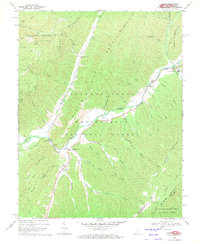 1969 Alvon1971 Print · USGSGreenbrier County is captured here in the late sixties as its mountain communities and forest lands intersect along the Allegheny front. Researchers can trace the footprints of Alvon, Neola, and the Little Creek Ch amidst the vast timberlands of the Monongahela National Forest.3 unique versions available
End of results
Showing maps 1-20 of 20
Top cities of Alleghany County
- Clifton Forge historical maps
- Mallow historical maps
- Low Moor historical maps
- Iron Gate historical maps
- Selma historical maps
- Cliftondale Park historical maps
See more
Frequently asked questions
- What are the different types of historical maps available for Alleghany County?
- What is the oldest map of Alleghany County?
- Where can I purchase historical maps of Alleghany County for my home or office?
- Where can I download high-res historical maps of Alleghany County?
- Are there historical topographic maps available for Alleghany County?
- Is there historical aerial imagery available for Alleghany County?
- Where are historical maps of Alleghany County sourced from?