Old Maps of Valley View, Virginia for Genealogy
Trace your family roots with 16 historic maps of Valley View. These high-res maps reveal old neighborhoods, homesites, landmarks, and streets — helping you uncover where your ancestors lived and how the area evolved over time.
- Explore historic neighborhoods: Identify where your relatives may have lived in the 1800s or 1900s.
- Compare maps over time: Trace the changes in streets, buildings, and landmarks for multi-generational research.
- Perfect for genealogy & ancestry research: Used by family historians and researchers to map out lineage and migration.
These maps are an incredible resource for exploring your personal connection to Valley View's past.
Valley View, VA maps
(16)- 1894 Map of Natural Bridge, 1898 Print
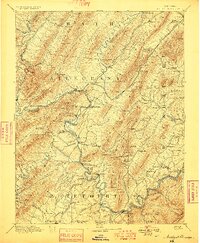 1894 Natural Bridge1898 Print · USGSThe Virginia ridges thrived with iron furnaces and mineral springs during the 1890s. Genealogists and historians can trace the early industrial footprint of Long Dale Furnace and Victoria Mines, or locate local landmarks like Lick Run Ferry and Rapps Mill.7 unique versions available
 - 1929 Map of Falling Spring
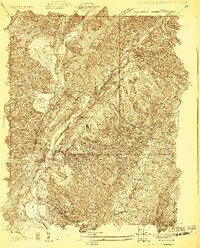 1929 Falling Spring1929 Print · USGSThe Jackson River valley comes to life in this late 1920s survey of the Virginia highlands. Researchers can locate early schools and settlements like Tinkersville, Greavers Mill, and the Valley View Valley Sch.2 unique versions available
 - 1932 Map of Falling Spring
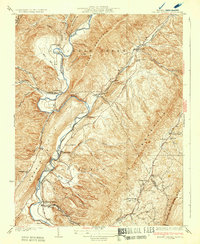 1932 Falling Spring1932 Print · USGSThe Virginia and West Virginia borderlands in the early 1930s reveal a landscape of mountain ridges and riverside rail industry. Genealogists can trace family footprints at Greavers Mill, Jenkins Ford, and the old Cedar Creek Sch.3 unique versions available
 - 1945 Map of Clifton Forge, 1963 Print
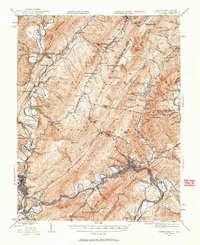 1945 Clifton Forge1963 Print · USGSThe rail and river corridors of Alleghany County are captured here at the end of the war, centered on the bustling junction of Clifton Forge. Genealogists and historians can trace old community landmarks like Union Chapel, the Rich Patch Mines, and the Deeds Sch among the ridgelines.2 unique versions available
 - 1947 Map of Roanoke, 1948 Print
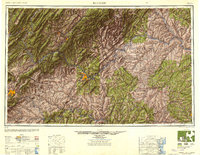 1947 Roanoke1948 Print · USGSCentral Virginia in the late 1940s reveals a region defined by its great mountain ridges and the powerful river-and-rail economy connecting Roanoke to Lynchburg. Researchers can trace the path of the Virginian RR and locate historic county seats like Charlotte Court House.2 unique versions available
 - 1949 Map of Clifton Forge
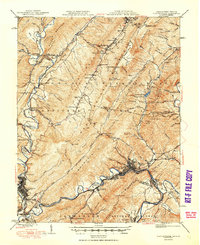 1949 Clifton Forge1949 Print · USGSThe industrial corridor of the Alleghany Highlands thrives in the late 1940s as rail and river networks converge. Researchers can trace historic family-named landmarks and mountain settlements like Carloover, Rich Patch Mines, and Union Chapel.3 unique versions available
 - 1959 Map of Roanoke
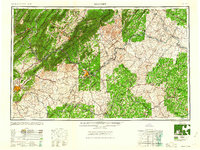 1959 Roanoke1959 Print · USGSCentral Virginia and the Blue Ridge appear in great detail during the late fifties, showcasing the transition from mountain industry to Piedmont farmland. Trace the path of the Norfolk and Western railroad or find old river towns like Appomattox and Amelia Court House.
 - 1963 Map of Roanoke
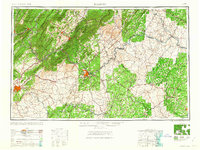 1963 Roanoke1963 Print · USGSCentral Virginia and the Blue Ridge front appear here in the early sixties, caught between their deep railroad roots and new postwar developments. Genealogists and historians can trace the rail lines of the Norfolk and Western through towns like Bedford and Altavista, or locate family landmarks near Smith Mountain Lake.
 - 1966 Map of Falling Spring, 1967 Print
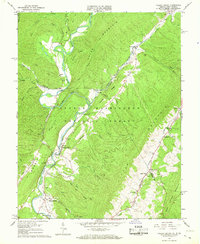 1966 Falling Spring1967 Print · USGSThe Jackson River valley and the rugged ridges of the George Washington National Forest define this mid-century landscape. Genealogists and hikers can trace old mountain routes and family settlements near Falling Spring, Carloover, and the Emory Ch.3 unique versions available
 - 1971 Map of Roanoke, 1977 Print
 1971 Roanoke1977 Print · USGSThe Virginia Piedmont and Blue Ridge mountains meet in this early 1970s landscape of river valleys and rail hubs. Researchers can trace historic transportation routes and landmarks like the Appomattox Court House Nat Hist Pk, the Peaks of Otter, and Amelia Court House.2 unique versions available
 - 1986 Map of Buena Vista
 1986 Buena Vista1986 Print · USGSThe mid-eighties landscape around Rockbridge County comes alive in this survey of the Blue Ridge and Allegheny foothills. Researchers can trace the legacy of institutions like Washington and Lee University or follow the historic Chesapeake and Ohio Railway through Clifton Forge.2 unique versions available
 - 2011 Map of Falling Spring, 2011 Print
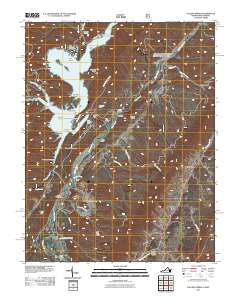 2011 Falling Spring2011 Print · USGSThe Jackson River valley in the early twenty-first century reveals a landscape shaped by both massive engineering and traditional settlements. Trace local history through the sites of Gathright Dam, the community of Falling Spring, and landmarks like Kelly Bridge.
 - 2013 Map of Falling Spring, 2013 Print
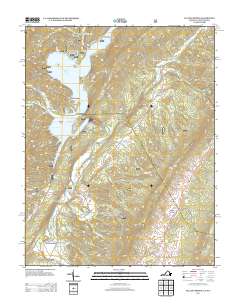 2013 Falling Spring2013 Print · USGSThe Virginia-West Virginia borderlands come alive in the early twenty-first century as the Jackson River snakes past ridge-and-valley settlements. Trace local family history and recreation sites from Tinkertown down to Camp Appalachia and Natural Well.
 - 2016 Map of Falling Spring, 2016 Print
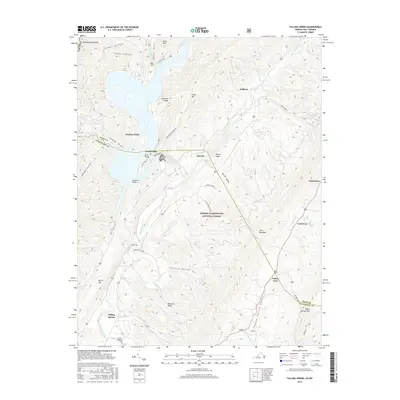 2016 Falling Spring2016 Print · USGSThe mountain valleys of Bath and Alleghany counties are captured here in the mid-2010s, centered on the Jackson River and Lake Moomaw. Researchers can trace old mountain routes and rural communities like Falling Spring, Carloover, and Kincaid tucked between the ridges.
 - 2019 Map of Falling Spring, 2019 Print
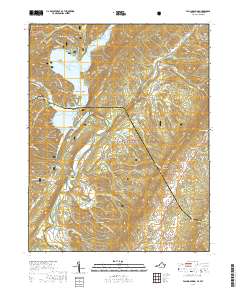 2019 Falling Spring2019 Print · USGSThe border of Bath and Alleghany counties comes into focus in this recent survey of the Falling Spring Valley. Genealogists and hikers can trace the mountain gaps and valley roads connecting Falling Spring, Carloover, and Tinkertown along the Jackson River.
 - 2022 Map of Falling Spring, 2022 Print
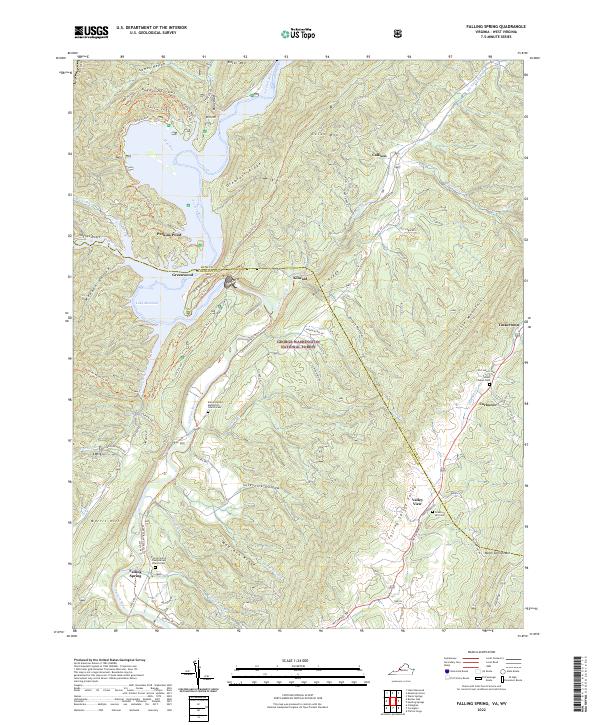 2022 Falling Spring2022 Print · USGSFalling Spring and the Jackson River valley are captured here in the early twenty-first century as they wind through the Appalachian ridges. Genealogists can trace family roots at the Falling Spring Presbyterian Church Cem or find old homesites near Tinkertown and Valley View.
End of results
Showing maps 1-16 of 16
Top cities near Valley View
- Covington historical maps
- Clifton Forge historical maps
- Mallow historical maps
- Hot Springs historical maps
- Low Moor historical maps
- Iron Gate historical maps
See more
Frequently asked questions
- What are the different types of historical maps available for Valley View?
- What is the oldest map of Valley View?
- Where can I purchase historical maps of Valley View for my home or office?
- Where can I download high-res historical maps of Valley View?
- Are there historical topographic maps available for Valley View?
- Is there historical aerial imagery available for Valley View?
- Where are historical maps of Valley View sourced from?