1960s Maps of Floyd County, Virginia
Explore 18 historic maps of Floyd County from the 1960s. These maps offer a rare glimpse into what life looked like during the 1960s — showing old roads, neighborhoods, homes, and landmarks that have changed or disappeared over time.
Whether you're researching your family's past, planning a metal detecting trip, or studying how Floyd County's landscape evolved across the 1960s, these high-resolution maps are a powerful tool for exploring the history of this region.
- Focus on a specific era: All maps on this page are from the 1960s, giving you a focused view of this time period.
- See what’s changed: Compare century-old streets, trails, and buildings to today's modern landscape using overlays and satellite layers.
- Research with precision: Use these maps for genealogy, historical research, land use analysis, or educational projects.
- View, download, or print: Maps are fully viewable online in high resolution, and can be downloaded or printed for your own records.
Start exploring Floyd County's history through authentic maps from the 1960s. This is your window into the past.
Floyd County, VA maps
(18)- 1961 Map of Bluefield
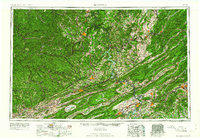 1961 Bluefield1961 Print · USGSThe coalfields and mountain ridges of southern West Virginia and southwest Virginia are captured in the early sixties. Genealogists can trace family ties through rail-linked towns like Princeton and Richlands or along the shores of Bluestone Reservoir.
 - 1962 Map of Winston-Salem
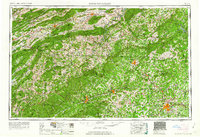 1962 Winston-Salem1962 Print · USGSThe North Carolina Piedmont meets the Virginia highlands in the early sixties, showing the rail corridors and mountain gaps of the southern Appalachians. Researchers can trace the Blue Ridge Parkway or locate family sites near Winston-Salem, Mount Airy, and Hanging Rock Mountain.
 - 1963 Map of Callaway, 1964 Print
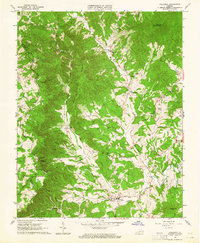 1963 Callaway1964 Print · USGSFranklin County's high ridges and hollows come into focus in the early sixties as the Blue Ridge Parkway skirts the county line. Researchers can locate dozens of family-named landmarks and cemeteries, from Dillons Mill and Algoma to the Wilson Cem and Adney Gap Fire Tower.2 unique versions available
 - 1963 Map of Check, 1965 Print
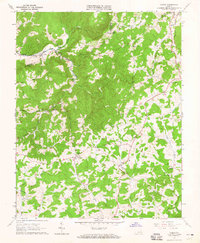 1963 Check1965 Print · USGSFloyd County at the dawn of the 1960s shows a landscape of upland farms and tight-knit valley communities. Genealogists and local historians can trace family land via field lines and find landmarks like Willis Store, Hemlock School, and Kefauver Cemetery.3 unique versions available
 - 1965 Map of Pilot, 1966 Print
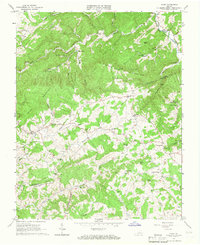 1965 Pilot1966 Print · USGSThe mid-sixties Blue Ridge highlands come into focus along the Montgomery and Floyd county line, where small communities follow the winding creek valleys. Genealogists and historians can trace family-named landmarks like Smith Hill or find local meeting points such as Sowders Chapel and Vaughn Chapel.3 unique versions available
 - 1965 Map of Radford South, 1966 Print
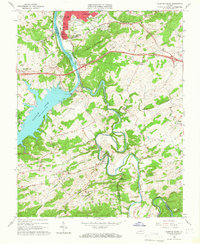 1965 Radford South1966 Print · USGSPulaski and Montgomery counties are captured in the mid-1960s as the New River valley balances industrial growth with rural tradition. Genealogists can trace family names through landmarks like Snowville, Simpkinstown, and schools like Bethel Sch.5 unique versions available
 - 1965 Map of Riner, 1968 Print
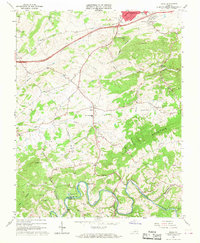 1965 Riner1968 Print · USGSMontgomery and Floyd counties in the mid-sixties are defined by the winding Little River and the quiet valley roads around Riner. Genealogists and local historians can trace rural life through numerous landmarks like Auburn High Sch, Camp Carysbrook, and Sidney Ch.3 unique versions available
 - 1967 Map of Ferrum, 1969 Print
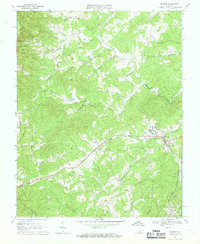 1967 Ferrum1969 Print · USGSFranklin County's foothills come alive in the late 1960s as the Norfolk and Western rail line threads through the Ferrum valley. Genealogists can locate family burial sites and rural congregations like Mountain View Ch, Republican Ch, and the small settlement of Prilliman.3 unique versions available
 - 1967 Map of Endicott, 1969 Print
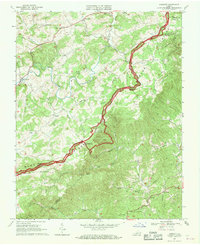 1967 Endicott1969 Print · USGSThe Virginia highlands near the Floyd and Franklin county line are captured here in the late sixties, dominated by the winding Blue Ridge Parkway. Genealogists can trace rural family life through landmarks like Kings Store, County Line Ch, and Endicott.
 - 1967 Map of Charity, 1970 Print
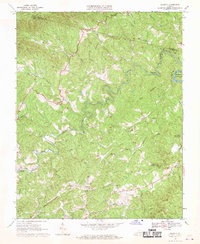 1967 Charity1970 Print · USGSPatrick County's rural landscape is captured here in the mid-1960s as the hills meet the waters of the Smith River. Researchers can locate numerous country churches and cemeteries near Charity, Elamsville, and the historic Covered Bridge Smith River Ch.2 unique versions available
 - 1968 Map of Meadows of Dan, 1971 Print
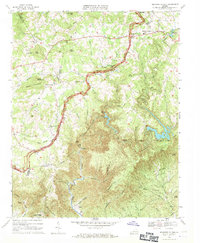 1968 Meadows of Dan1971 Print · USGSThe Blue Ridge highlands at the end of the 1960s reveal a mix of early industry and modern infrastructure. Genealogists and historians can trace family roots through sites like Mabry Mill, New Bell Spur Ch, and the high-elevation Meadows of Dan.3 unique versions available
 - 1968 Map of Dugspur, 1971 Print
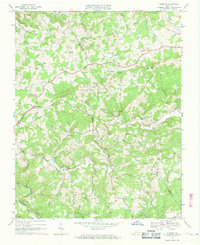 1968 Dugspur1971 Print · USGSDugspur and the surrounding Blue Ridge highlands are captured in the late sixties as the area maintained its traditional rural character. Researchers can trace family history through a network of local landmarks like Dugspur Sch, the State Prison Camp No 5, and Buffalo Mountain Ch.2 unique versions available
 - 1968 Map of Hiwassee, 1971 Print
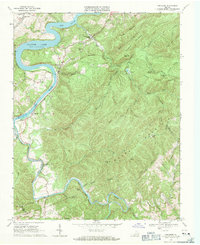 1968 Hiwassee1971 Print · USGSPulaski and Carroll counties appear here in the late sixties, where the mountain terrain meets the rising waters of the New River valley. Researchers can trace the rail corridor through Hiwassee or find local landmarks like Bethel Ch and Tinytown.2 unique versions available
 - 1968 Map of Indian Valley, 1971 Print
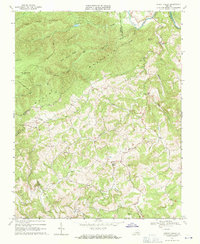 1968 Indian Valley1971 Print · USGSIndian Valley and the Blue Ridge highlands appear here in the late sixties as a network of ridge-top farms and creek-bottom settlements. Researchers can locate numerous local landmarks including Indian Valley Sch, Copper Valley Ch, and the rugged Big Tan Trough.3 unique versions available
 - 1968 Map of Alum Ridge, 1971 Print
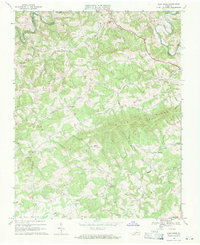 1968 Alum Ridge1971 Print · USGSThe Floyd County highlands come into focus in the late sixties, showcasing a landscape of isolated ridges and winding creek valleys. Genealogists can trace family roots through numerous country landmarks like Duncan Chapel, Wangle Junction, and Sowers Cem.
 - 1968 Map of Woolwine, 1971 Print
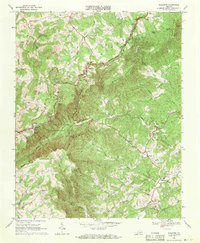 1968 Woolwine1971 Print · USGSThe Blue Ridge high country is captured here in the late sixties, where the winding parkway meets long-established mountain gaps. You can trace family roots through several churches and cemeteries, or locate landmarks like Rakes Millpond, Woolwine, and the Rocky Knob Recreation Area.2 unique versions available
 - 1968 Map of Floyd, 1971 Print
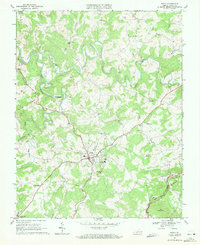 1968 Floyd1971 Print · USGSFloyd and the surrounding Blue Ridge highlands are captured here in the late sixties before modern development altered the rural landscape. Genealogists can trace family footprints through numerous landmarks like Shelors Mill, Jacksonville Cem, and Zion Ch.
 - 1968 Map of Willis, 1971 Print
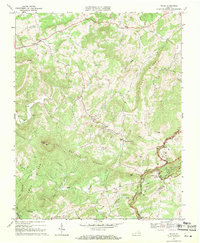 1968 Willis1971 Print · USGSThe Floyd County highlands are captured here in the late sixties, showing the mountain communities around Willis. Local researchers can trace family landmarks and rural centers like Mabry Mill, Slate Mtn Ch, and the high Buffalo Mtn Lookout Tower.2 unique versions available
End of results
Showing maps 1-18 of 18
Top cities of Floyd County
Frequently asked questions
- What are the different types of historical maps available for Floyd County?
- What is the oldest map of Floyd County?
- Where can I purchase historical maps of Floyd County for my home or office?
- Where can I download high-res historical maps of Floyd County?
- Are there historical topographic maps available for Floyd County?
- Is there historical aerial imagery available for Floyd County?
- Where are historical maps of Floyd County sourced from?