Old Maps of Floyd County, Virginia for Academic Research
Study the evolution of Floyd County with 119 high-resolution historic maps. Whether you're teaching, researching, or modeling changes in land use, these maps provide essential visual documentation of urban, environmental, and geographic change.
- Analyze long-term change: Track patterns in development, transportation, and natural features.
- Ideal for environmental or urban studies: Support academic projects with primary historical map data.
- Use in the classroom or lab: Educators and researchers rely on these maps to bring historical context to life.
These maps are a powerful tool for teaching, research, and visualizing how Floyd County has changed over the decades.
Floyd County, VA maps
(119)- 1889 Map of Hillsville
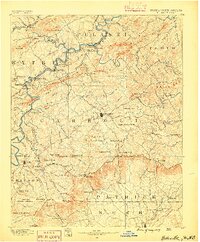 1889 Hillsville1889 Print · USGSThe Blue Ridge Highlands and the upper New River valley are captured in the late 1880s, showcasing a landscape of iron furnaces and mountain gaps. Trace early industrial sites like Boom Furnace and Lead Mines, or locate ancestral homesteads near Hillsville and Old Town.
 - 1890 Map of Dublin
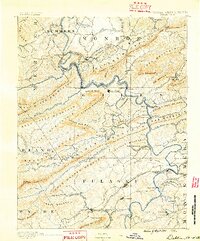 1890 Dublin1890 Print · USGSThe mountainous borderlands of Virginia and West Virginia are captured here in the late nineteenth century as industry and rail expanded along the New River. Genealogists and historians can trace the foundations of local commerce through sites like Pearisburg, the Belle Hampton Mine, and river crossings at Peppers Ferry.
 - 1890 Map of Christiansburg
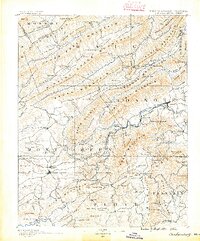 1890 Christiansburg1890 Print · USGSSouthwestern Virginia in the late nineteenth century centers on the emerging rail and resort economy. Trace the Norfolk and Western Railroad through Christiansburg and find historic resorts like Alleghany Springs.10 unique versions available
 - 1891 Map of Dublin
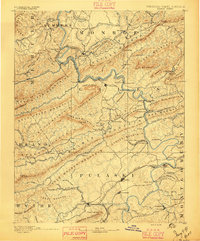 1891 Dublin1891 Print · USGSAcross Southwest Virginia and West Virginia in the late nineteenth century, the river and rail lines dictated the pace of mountain life. Genealogists can trace family footprints through numerous river crossings like Ingles Ferry and historic industry sites like Altoona Mines and Mercers Salt Works.9 unique versions available
 - 1892 Map of Hillsville
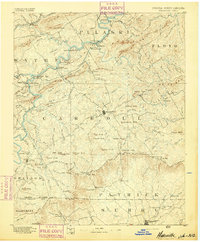 1892 Hillsville1892 Print · USGSSouthwest Virginia in the late nineteenth century is captured here as a landscape of iron furnaces and river crossings. Genealogists and historians can trace old family mills and ferries like Pedegos Mill, Howards Ferry, and the early settlement at Old Town.
 - 1896 Map of Hillsville
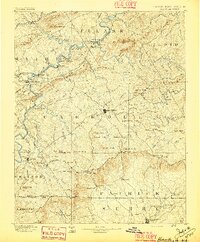 1896 Hillsville1896 Print · USGSThe Blue Ridge Highlands and New River corridor appear here in the 1890s, when iron furnaces and river ferries dictated the pace of local life. Researchers can trace ancestral locations near Hillsville, the Lead Mines, and historic river crossings like Jackson Ferry.7 unique versions available
 - 1928 Map of Stuart
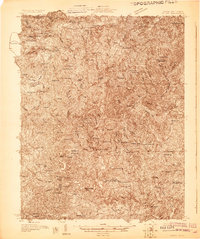 1928 Stuart1928 Print · USGSThe Blue Ridge foothills of the late twenties are captured here as a network of mountain settlements and river-powered industry. Genealogists can trace family roots through numerous country landmarks like Greaseys Chapel, Stonewall Jackson School, and Carters Mill.2 unique versions available
 - 1931 Map of Stuart
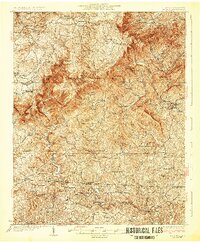 1931 Stuart1931 Print · USGSThe Blue Ridge plateau meets the Piedmont in the late 1920s, showing a landscape of mountain farming and river-driven milling. Genealogists can trace family roots through numerous local landmarks like Meadows of Dan, Stonewall Jackson Sch, and Three Forks Mill.3 unique versions available
 - 1932 Map of Blacksburg
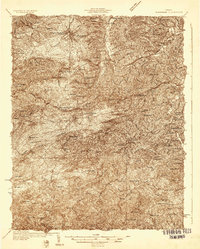 1932 Blacksburg1932 Print · USGSMontgomery and Floyd Counties are documented here in the early thirties as the regional rail and coal economy thrived. Genealogists can trace family homesteads near landmarks like the Virginia Polytechnic Institute, Merrimac Mines, and Christiansburg Industrial Sch.2 unique versions available
 - 1937 Map of Blacksburg
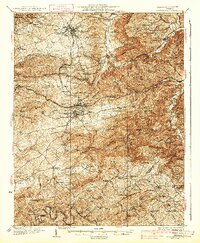 1937 Blacksburg1937 Print · USGSMontgomery County was a hub of higher education, coal mining, and rail transport in the 1930s. Researchers can trace the early grounds of the Virginia Polytechnic Institute and locate numerous rural landmarks like Merrimac Mines, Kanodee Mill, and Yellow Sulphur Springs.3 unique versions available
 - 1950 Map of Elliston, 1952 Print
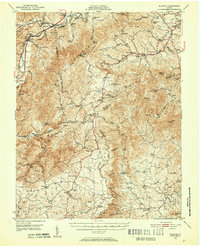 1950 Elliston1952 Print · USGSThe Roanoke River headwaters and Blue Ridge highlands are captured here in the early postwar era. Genealogists and historians can trace community roots through numerous country landmarks like Check High Sch, Dillons Mill, and Bend Union Ch.4 unique versions available
 - 1950 Map of Radford, 1952 Print
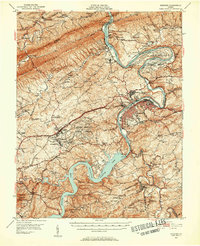 1950 Radford1952 Print · USGSThe New River valley and the newly formed Claytor Lake are captured here at the start of the 1950s. Genealogists and historians can locate family-named sites like Goodwins Ferry, Hickman Cem, and schools such as Walton Sch No 1.3 unique versions available
 - 1953 Map of Winston-Salem, 1974 Print
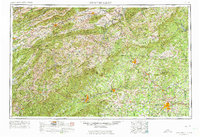 1953 Winston-Salem1974 Print · USGSThe North Carolina Piedmont and Virginia highlands meet in the mid-1950s, a landscape defined by the tobacco and textile hubs of the Blue Ridge foothills. Researchers can trace the rail-and-river geography connecting Winston-Salem to mountain towns like Mount Airy and Galax.2 unique versions available
 - 1955 Map of Bluefield
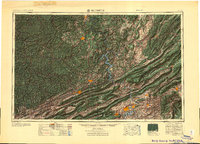 1955 Bluefield1955 Print · USGSThe Central Appalachian borderlands come alive in the mid-fifties, showing the coal and rail networks connecting Bluefield to Beckley. Researchers can trace the industrial landscape of the New River Ordnance Plant and the terrain of Burkes Garden.
 - 1955 Map of Winston-Salem
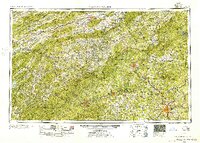 1955 Winston-Salem1955 Print · USGSThe Central Blue Ridge and Piedmont transition are captured here in the mid-fifties, from the industrial hub of Winston-Salem to the high peaks of Southwest Virginia. Genealogists can trace family landmarks like Richmond Hill Ch, Siloam Ch, and the old rail stops along the Southern Railway.
 - 1956 Map of Macks Mountain, 1969 Print
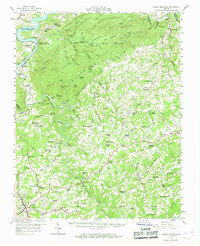 1956 Macks Mountain1969 Print · USGSCarroll and Floyd counties are shown here in the mid-fifties, just as the regional landscape was being reshaped by the waters of Claytor Lake. Genealogists can trace family roots through numerous mountain landmarks like Mabry Crossroads, Indian Valley, and the Dugspur School.
 - 1957 Map of Endicott, 1959 Print
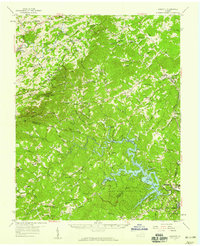 1957 Endicott1959 Print · USGSFranklin and Patrick counties are captured in the late fifties as the new waters of Philpott Reservoir settle into the landscape. Trace generational landmarks like Ferrum Jr College, the County Farm, and Woods Store across the Blue Ridge foothills.2 unique versions available
 - 1957 Map of Floyd, 1959 Print
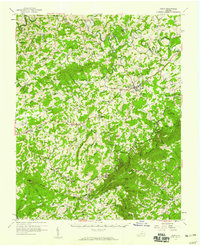 1957 Floyd1959 Print · USGSFloyd and the surrounding Blue Ridge highlands are captured here in the late fifties as the Blue Ridge Parkway integrated with local backroads. Researchers can locate family landmarks like Mabry Mill, Shelors Mill, and numerous country churches including Dillons Chapel.
 - 1957 Map of Bluefield, 1967 Print
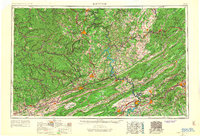 1957 Bluefield1967 Print · USGSThe heart of Central Appalachia in the mid-fifties is defined by the winding rail lines and river valleys of the coalfields. Researchers can trace the industrial footprints of towns like Welch and Princeton or locate landmarks such as the Bluestone Reservoir and Claytor Lake.2 unique versions available
 - 1961 Map of Bluefield
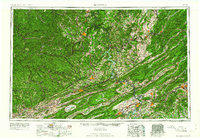 1961 Bluefield1961 Print · USGSThe coalfields and mountain ridges of southern West Virginia and southwest Virginia are captured in the early sixties. Genealogists can trace family ties through rail-linked towns like Princeton and Richlands or along the shores of Bluestone Reservoir.
 - 1962 Map of Winston-Salem
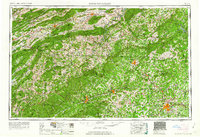 1962 Winston-Salem1962 Print · USGSThe North Carolina Piedmont meets the Virginia highlands in the early sixties, showing the rail corridors and mountain gaps of the southern Appalachians. Researchers can trace the Blue Ridge Parkway or locate family sites near Winston-Salem, Mount Airy, and Hanging Rock Mountain.
 - 1963 Map of Callaway, 1964 Print
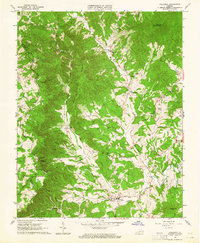 1963 Callaway1964 Print · USGSFranklin County's high ridges and hollows come into focus in the early sixties as the Blue Ridge Parkway skirts the county line. Researchers can locate dozens of family-named landmarks and cemeteries, from Dillons Mill and Algoma to the Wilson Cem and Adney Gap Fire Tower.2 unique versions available
 - 1963 Map of Check, 1965 Print
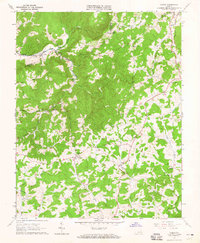 1963 Check1965 Print · USGSFloyd County at the dawn of the 1960s shows a landscape of upland farms and tight-knit valley communities. Genealogists and local historians can trace family land via field lines and find landmarks like Willis Store, Hemlock School, and Kefauver Cemetery.3 unique versions available
 - 1965 Map of Pilot, 1966 Print
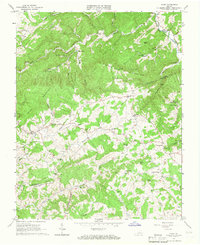 1965 Pilot1966 Print · USGSThe mid-sixties Blue Ridge highlands come into focus along the Montgomery and Floyd county line, where small communities follow the winding creek valleys. Genealogists and historians can trace family-named landmarks like Smith Hill or find local meeting points such as Sowders Chapel and Vaughn Chapel.3 unique versions available
 - 1965 Map of Radford South, 1966 Print
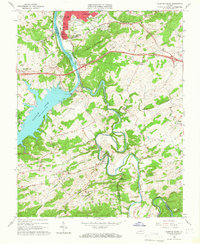 1965 Radford South1966 Print · USGSPulaski and Montgomery counties are captured in the mid-1960s as the New River valley balances industrial growth with rural tradition. Genealogists can trace family names through landmarks like Snowville, Simpkinstown, and schools like Bethel Sch.5 unique versions available
Showing maps 1-25 of 119
Top cities of Floyd County
Frequently asked questions
- What are the different types of historical maps available for Floyd County?
- What is the oldest map of Floyd County?
- Where can I purchase historical maps of Floyd County for my home or office?
- Where can I download high-res historical maps of Floyd County?
- Are there historical topographic maps available for Floyd County?
- Is there historical aerial imagery available for Floyd County?
- Where are historical maps of Floyd County sourced from?