Old Maps of Lee, Virginia for Genealogy
Trace your family roots with 16 historic maps of Lee. These high-res maps reveal old neighborhoods, homesites, landmarks, and streets — helping you uncover where your ancestors lived and how the area evolved over time.
- Explore historic neighborhoods: Identify where your relatives may have lived in the 1800s or 1900s.
- Compare maps over time: Trace the changes in streets, buildings, and landmarks for multi-generational research.
- Perfect for genealogy & ancestry research: Used by family historians and researchers to map out lineage and migration.
These maps are an incredible resource for exploring your personal connection to Lee's past.
Lee, VA maps
(16)- 1890 Map of Goochland
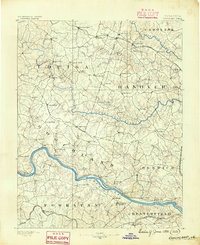 1890 Goochland1890 Print · USGSGoochland and the surrounding Virginia Piedmont are captured here in the late nineteenth century as the river-and-rail economy thrived. Researchers can trace the paths of the Chesapeake and Ohio Railroad and find landmarks like Hopeful Church or the Coal Pits.
 - 1892 Map of Goochland
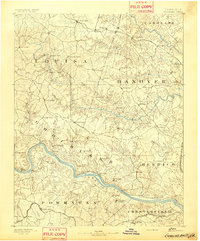 1892 Goochland1892 Print · USGSThe rural heart of central Virginia is captured here in the decade before the turn of the century, showing a landscape shaped by major rivers and early rail lines. Genealogists can trace family names and early settlements like Negro Foot, Mabelton, and the historic Hanover Academy.8 unique versions available
 - 1943 Map of Fine Creek Mills
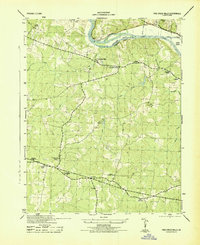 1943 Fine Creek Mills1943 Print · USGSThe rural landscape of Powhatan and Goochland counties is captured here in the mid-1940s, highlighting a river-and-rail economy along the James River. Genealogists and historians can trace community hubs like Fine Creek Mills and Subletts, or locate rural landmarks such as Quinns Store and Subletts School.2 unique versions available
 - 1943 Map of Richmond, 1972 Print
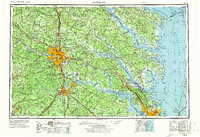 1943 Richmond1972 Print · USGSCoastal Virginia and the state capital are shown in detail during the mid-century era of infrastructure expansion. Genealogists and historians can trace the grounds of Richmond Nat Battlefield Park, locate the Yorktown Nat Cem, or follow the many rural routes through Amelia Court House and Tappahannock.
 - 1949 Map of Richmond, 1951 Print
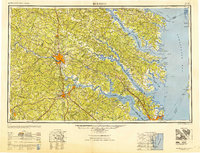 1949 Richmond1951 Print · USGSCoastal Virginia in the years following World War II remained a landscape of historic river towns and expanding military bases. Genealogists and historians can trace the rail lines of the Southern Ry and locate established landmarks from Camp Lee to the remote reaches of Dragon Swamp.
 - 1959 Map of Richmond
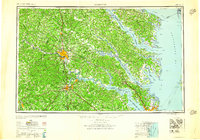 1959 Richmond1959 Print · USGSMid-century Virginia is captured here at its most vital rail and river junctions, from the capital city to the Chesapeake Bay. Genealogists and historians can trace the development of colonial settlements like Williamsburg and military landmarks including Fort Monroe and Camp Lee.
 - 1964 Map of Richmond
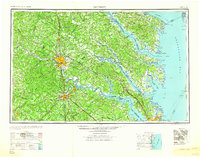 1964 Richmond1964 Print · USGSCoastal and central Virginia are mapped during the mid-twentieth century, showing the critical intersection of rail, river, and military life. Genealogists can trace family roots through rural county seats like Amelia or find vanished coastal neighborhoods near Phoebus and Hilton Village.
 - 1964 Map of Fine Creek Mills, 1966 Print
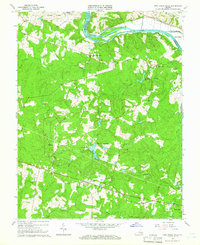 1964 Fine Creek Mills1966 Print · USGSThe James River corridor in the mid-sixties reveals a rural landscape of family cemeteries and riverside industry. Genealogists and researchers can locate Old Powhatan Ch, the Watkins Cem, and the historic community at Fine Creek Mills.4 unique versions available
 - 1973 Map of Richmond, 1974 Print
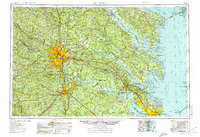 1973 Richmond1974 Print · USGSThe Virginia Tidewater and Piedmont come alive in the early seventies, showcasing a region defined by its great rivers and massive military installations. Researchers can trace the mid-century growth of Richmond or locate family sites near Amelia Court House and Highland Springs.2 unique versions available
 - 1979 Map of Fine Creek Mills, 1982 Print
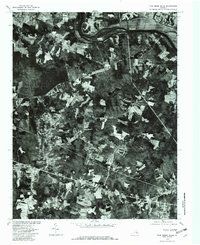 1979 Fine Creek Mills1982 Print · USGSPowhatan County’s riverfront and rural interior are captured here in the late seventies through detailed aerial orthophotography. Trace local landmarks like Fine Creek Mills, the banks of the James River, and the community of Flat Rock.
 - 1984 Map of Richmond, 1986 Print
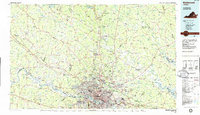 1984 Richmond1986 Print · USGSCentral Virginia during the mid-eighties shows a landscape of rapid suburban expansion centered on the state capital and its historic riverfront. Genealogists and historians can trace institutional sites like Randolph-Macon College, the grounds of Fort Lee, and small community landmarks like Hebron Ch.3 unique versions available
 - 2010 Map of Fine Creek Mills, 2010 Print
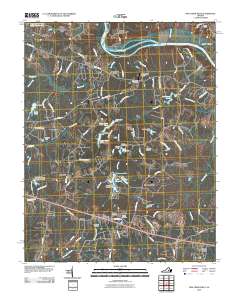 2010 Fine Creek Mills2010 Print · USGSGoochland County at the turn of the decade shows a landscape shaped by the James River and its industrial past. Researchers can trace local lineage through Saint Lukes Cemetery and Subletts Cemetery or locate historic mill sites like Fine Creek Mills and Krouses Mill.
 - 2013 Map of Fine Creek Mills, 2013 Print
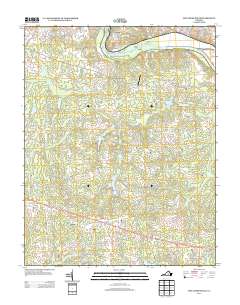 2013 Fine Creek Mills2013 Print · USGSGoochland County comes into focus in this recent survey, showing the evolving landscape along the James River. Researchers can trace old industrial sites like Krouses Mill and Byers Millpond alongside local landmarks like Spring Valley Airport and Sabot Hill.
 - 2016 Map of Fine Creek Mills, 2016 Print
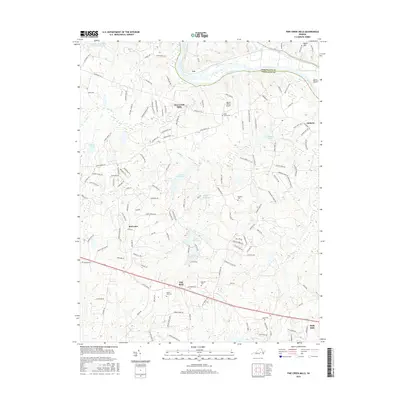 2016 Fine Creek Mills2016 Print · USGSGoochland and Powhatan counties meet at the James River in this recent survey of the Virginia Piedmont. Local historians and genealogists can trace family heritage through numerous marked burial sites like Watkins Cem and old crossroads at Subletts and Fine Creek Mills.
 - 2019 Map of Fine Creek Mills, 2019 Print
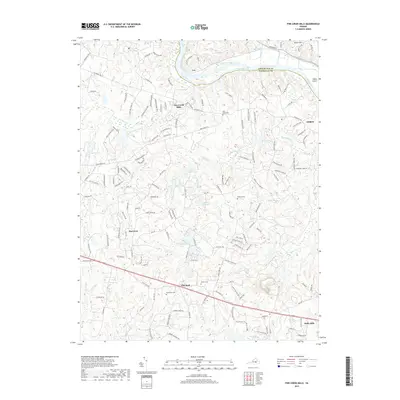 2019 Fine Creek Mills2019 Print · USGSPowhatan and Goochland counties meet along the James River in this recent survey of the Virginia Piedmont. Family historians can trace local roots through Subletts Cem and Watkins Cem or explore the milling heritage at Fine Creek Mills and Byers Millpond.
 - 2022 Map of Fine Creek Mills, 2022 Print
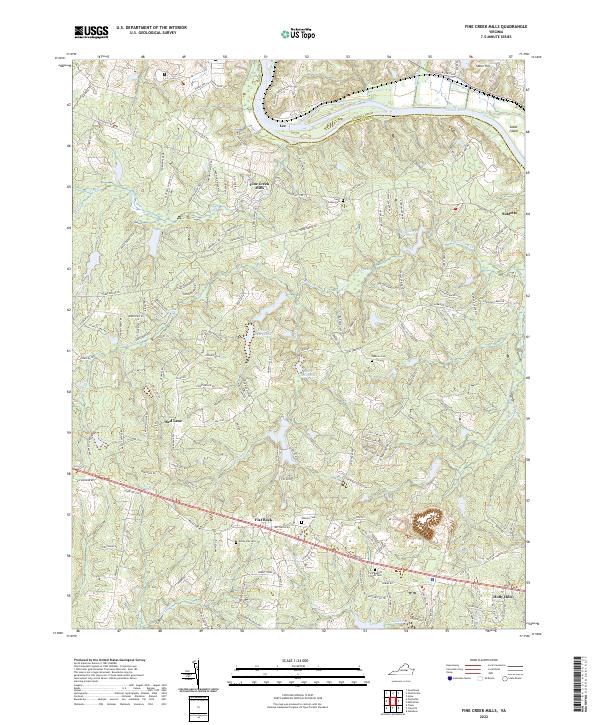 2022 Fine Creek Mills2022 Print · USGSPowhatan and Goochland counties meet along the James River in this modern survey of central Virginia. Researchers can locate several historic burial grounds like Saint Lukes Cem and trace old industrial sites at Fine Creek Mills and Byers Millpond.
End of results
Showing maps 1-16 of 16
Top cities near Lee
Frequently asked questions
- What are the different types of historical maps available for Lee?
- What is the oldest map of Lee?
- Where can I purchase historical maps of Lee for my home or office?
- Where can I download high-res historical maps of Lee?
- Are there historical topographic maps available for Lee?
- Is there historical aerial imagery available for Lee?
- Where are historical maps of Lee sourced from?