1900s (20th Century) Maps of Varina, Virginia
Explore 11 historic maps of Varina from the 1900s (20th Century). These maps offer a rare glimpse into what life looked like during the 1900s — showing old roads, neighborhoods, homes, and landmarks that have changed or disappeared over time.
Whether you're researching your family's past, planning a metal detecting trip, or studying how Varina's landscape evolved across the 1900s, these high-resolution maps are a powerful tool for exploring the history of this region.
- Focus on a specific era: All maps on this page are from the 1900s, giving you a focused view of this time period.
- See what’s changed: Compare century-old streets, trails, and buildings to today's modern landscape using overlays and satellite layers.
- Research with precision: Use these maps for genealogy, historical research, land use analysis, or educational projects.
- View, download, or print: Maps are fully viewable online in high resolution, and can be downloaded or printed for your own records.
Start exploring Varina's history through authentic maps from the 1900s. This is your window into the past.
Varina, VA maps
(11)- 1938 Map of Dutch Gap
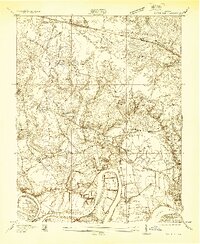 1938 Dutch Gap1938 Print · USGSHenrico County and the James River loops are seen here in the late thirties, when military breastworks still crisscrossed the rural landscape. Researchers can locate Richmond National Battlefield Park and ancestral sites like Montague Cem and the Union Grove Chapel.
 - 1943 Map of Dutch Gap
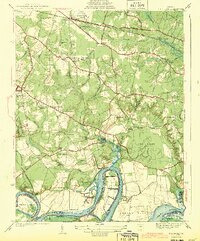 1943 Dutch Gap1943 Print · USGSHenrico County during the early years of the Second World War shows a landscape of historic river plantations and Civil War fortifications. Researchers can locate family landmarks like Aiken House and rural community hubs including Gravel Hill Sch and Fourmile Creek Ch.2 unique versions available
 - 1943 Map of Richmond, 1972 Print
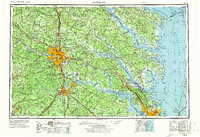 1943 Richmond1972 Print · USGSCoastal Virginia and the state capital are shown in detail during the mid-century era of infrastructure expansion. Genealogists and historians can trace the grounds of Richmond Nat Battlefield Park, locate the Yorktown Nat Cem, or follow the many rural routes through Amelia Court House and Tappahannock.
 - 1946 Map of Bermuda Hundred
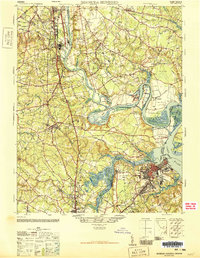 1946 Bermuda Hundred1946 Print · USGSThe James River corridor south of Richmond is shown here just after the war, where industrial hubs like Hopewell meet colonial-era landscapes. Genealogists and historians can trace the foundations of Bermuda Hundred, the grounds of Camp Lee, and landmarks like Shirley or Drewrys Bluff.2 unique versions available
 - 1949 Map of Richmond, 1951 Print
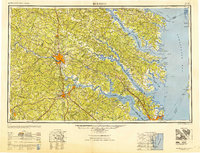 1949 Richmond1951 Print · USGSCoastal Virginia in the years following World War II remained a landscape of historic river towns and expanding military bases. Genealogists and historians can trace the rail lines of the Southern Ry and locate established landmarks from Camp Lee to the remote reaches of Dragon Swamp.
 - 1952 Map of Dutch Gap, 1959 Print
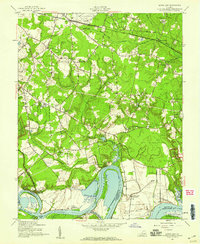 1952 Dutch Gap1959 Print · USGSHenrico County in the early fifties remains a landscape of river plantations and Civil War battlements along the James River. Genealogists and historians can trace family sites at Varina Plantation, find Second Bethel Ch, or locate markers within the National Cem and Richmond National Battlefield Park.
 - 1959 Map of Richmond
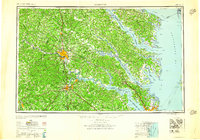 1959 Richmond1959 Print · USGSMid-century Virginia is captured here at its most vital rail and river junctions, from the capital city to the Chesapeake Bay. Genealogists and historians can trace the development of colonial settlements like Williamsburg and military landmarks including Fort Monroe and Camp Lee.
 - 1964 Map of Richmond
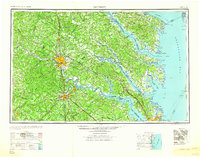 1964 Richmond1964 Print · USGSCoastal and central Virginia are mapped during the mid-twentieth century, showing the critical intersection of rail, river, and military life. Genealogists can trace family roots through rural county seats like Amelia or find vanished coastal neighborhoods near Phoebus and Hilton Village.
 - 1969 Map of Dutch Gap, 1971 Print
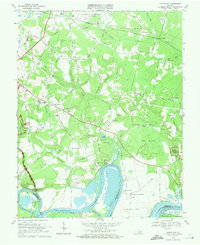 1969 Dutch Gap1971 Print · USGSHenrico County in the late sixties shows a landscape where Civil War earthworks meet the jet age at Byrd Field. Genealogists and historians can locate Curles Neck Plantation, the Washington Memorial Cem, and Fort Harrison.4 unique versions available
 - 1973 Map of Richmond, 1974 Print
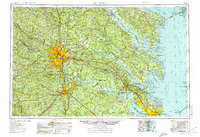 1973 Richmond1974 Print · USGSThe Virginia Tidewater and Piedmont come alive in the early seventies, showcasing a region defined by its great rivers and massive military installations. Researchers can trace the mid-century growth of Richmond or locate family sites near Amelia Court House and Highland Springs.2 unique versions available
 - 1984 Map of Petersburg, 1985 Print
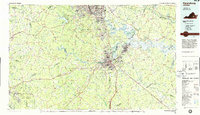 1984 Petersburg1985 Print · USGSCentral Virginia in the mid-eighties shows a complex landscape of growing suburban centers and significant military installations. Researchers can trace historic boundaries and civic sites from Amelia Court House to the Glendale Nat Cem and Virginia State College.2 unique versions available
End of results
Showing maps 1-11 of 11
Top cities near Varina
- Richmond historical maps
- Tuckahoe historical maps
- Mechanicsville historical maps
- Petersburg historical maps
- Chester historical maps
- Hopewell historical maps
See more
Frequently asked questions
- What are the different types of historical maps available for Varina?
- What is the oldest map of Varina?
- Where can I purchase historical maps of Varina for my home or office?
- Where can I download high-res historical maps of Varina?
- Are there historical topographic maps available for Varina?
- Is there historical aerial imagery available for Varina?
- Where are historical maps of Varina sourced from?