Old Maps of Oakland, Virginia for Academic Research
Study the evolution of Oakland with 28 high-resolution historic maps. Whether you're teaching, researching, or modeling changes in land use, these maps provide essential visual documentation of urban, environmental, and geographic change.
- Analyze long-term change: Track patterns in development, transportation, and natural features.
- Ideal for environmental or urban studies: Support academic projects with primary historical map data.
- Use in the classroom or lab: Educators and researchers rely on these maps to bring historical context to life.
These maps are a powerful tool for teaching, research, and visualizing how Oakland has changed over the decades.
Oakland, VA maps
(28)- 1917 Map of Toano, 1959 Print
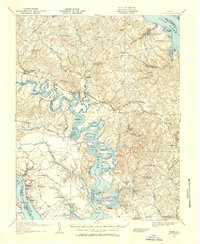 1917 Toano1959 Print · USGSCoastal Virginia during the early twentieth century shows a landscape where rail lines and steamboat routes intersect. Genealogists can trace family roots through numerous sites like Hickory Neck Church, One Eye School, and Barrets Ferry.
 - 1918 Map of Toano
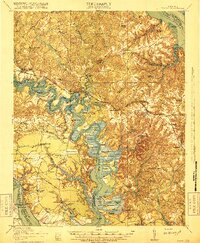 1918 Toano1918 Print · USGSThe Virginia Peninsula comes alive in the years following the Great War, showing a landscape of river landings and rail-side villages. Researchers can trace the path of the Chesapeake and Ohio through Toano or locate early rural schoolhouses like One Eye School and Brickbat School.3 unique versions available
 - 1943 Map of Richmond, 1972 Print
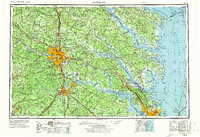 1943 Richmond1972 Print · USGSCoastal Virginia and the state capital are shown in detail during the mid-century era of infrastructure expansion. Genealogists and historians can trace the grounds of Richmond Nat Battlefield Park, locate the Yorktown Nat Cem, or follow the many rural routes through Amelia Court House and Tappahannock.
 - 1949 Map of Richmond, 1951 Print
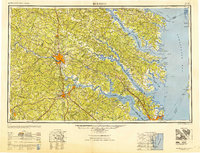 1949 Richmond1951 Print · USGSCoastal Virginia in the years following World War II remained a landscape of historic river towns and expanding military bases. Genealogists and historians can trace the rail lines of the Southern Ry and locate established landmarks from Camp Lee to the remote reaches of Dragon Swamp.
 - 1952 Map of Norge, 1958 Print
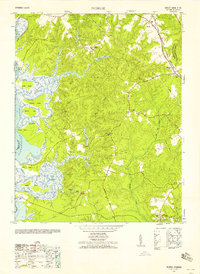 1952 Norge1958 Print · USGSThe Virginia Peninsula comes alive in the early fifties, documenting a world of river landings and small crossroads communities. Genealogists and historians can trace family-named sites like Warren Mill, find the Brickbat School, or locate the Barretta Ferry crossing.
 - 1953 Map of Toano
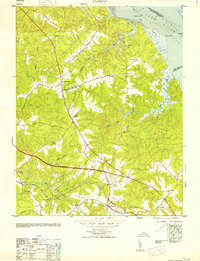 1953 Toano1953 Print · USGSThe rural Virginia Peninsula is captured here in the early fifties, where the rail-centered economy of James City and New Kent counties remains intact. Genealogists and historians can locate legacy landmarks like Hickory Neck Church, the Bock Cem, and the small siding at Diascund.
 - 1953 Map of Norge
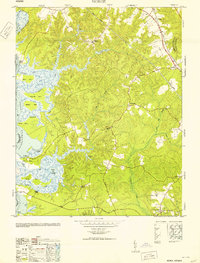 1953 Norge1953 Print · USGSJames City County is shown in the early fifties as the rural landscape surrounding Norge and Lightfoot began to modernize. Researchers can trace historic river access at Shipyard Landing and locate old community hubs like Warren Mill or Jerusalem Church.
 - 1958 Map of Toano
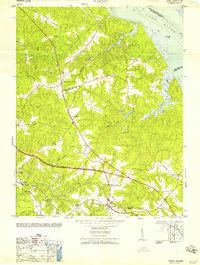 1958 Toano1958 Print · USGSThe wooded lowlands and creek systems of James City County are shown here at mid-century, centered on the village of Toano. Researchers can trace the heritage of local congregations at Hickory Neck Church and St Johns Church, or locate family sites near Barhamsville.
 - 1959 Map of Richmond
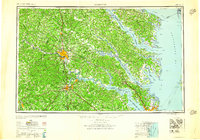 1959 Richmond1959 Print · USGSMid-century Virginia is captured here at its most vital rail and river junctions, from the capital city to the Chesapeake Bay. Genealogists and historians can trace the development of colonial settlements like Williamsburg and military landmarks including Fort Monroe and Camp Lee.
 - 1964 Map of Richmond
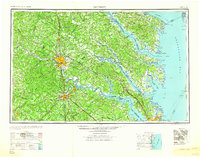 1964 Richmond1964 Print · USGSCoastal and central Virginia are mapped during the mid-twentieth century, showing the critical intersection of rail, river, and military life. Genealogists can trace family roots through rural county seats like Amelia or find vanished coastal neighborhoods near Phoebus and Hilton Village.
 - 1965 Map of Toano, 1966 Print
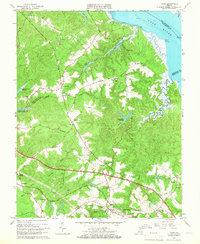 1965 Toano1966 Print · USGSCoastal wetlands and rural rail towns define this portion of the Virginia Peninsula in the mid-sixties. Local researchers can trace old crossroads like Barhamsville and Croaker, find historic country churches such as Mt Olive Ch, or locate Branch Siding on the railroad.4 unique versions available
 - 1965 Map of Norge, 1967 Print
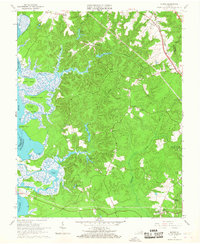 1965 Norge1967 Print · USGSJames City County in the mid-1960s is a landscape of tidal river systems and quiet crossroads settlements. Genealogists and local historians can trace family locations near Norge, Lightfoot, and Jamestown Farms, or locate old landmarks like Warren Mill and Shipyard Landing.3 unique versions available
 - 1973 Map of Richmond, 1974 Print
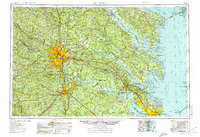 1973 Richmond1974 Print · USGSThe Virginia Tidewater and Piedmont come alive in the early seventies, showcasing a region defined by its great rivers and massive military installations. Researchers can trace the mid-century growth of Richmond or locate family sites near Amelia Court House and Highland Springs.2 unique versions available
 - 1973 Map of Toano, 1977 Print
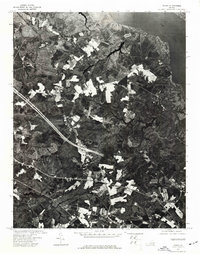 1973 Toano1977 Print · USGSVirginia's coastal plain appears in high detail during the early 1970s, showcasing the agricultural and forested landscape near the York River. Researchers can examine the exact footprint of farmsteads and transport routes as they were captured during an aerial survey in the spring of 1973.
 - 1978 Map of Norge, 1983 Print
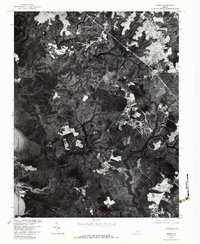 1978 Norge1983 Print · USGSJames City County settlement and landscape patterns are visible in this late-1970s aerial survey. Trace the growth of Norge and Lightfoot or locate sites like Warren Mill and Jolly Pond along the tidewater tributaries.
 - 1984 Map of Norge
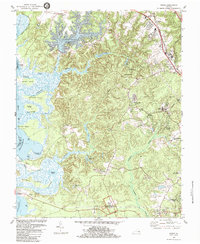 1984 Norge1984 Print · USGSJames City County is shown here in the mid-1980s, capturing a blend of colonial heritage sites and modern residential expansion. Genealogists and historians can trace the Green Spring Ruins, locate old congregations at James City Chapel, and explore the shoreline from Shields Point to Claybank Landing.3 unique versions available
 - 1984 Map of Williamsburg, 1985 Print
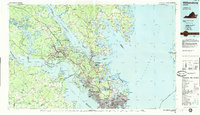 1984 Williamsburg1985 Print · USGSThe Virginia Peninsula and Chesapeake Bay shores are shown in the mid-1980s, revealing a landscape defined by colonial heritage and massive military installations. Researchers can trace the grounds of the College of William and Mary, the Yorktown National Cemetery, and the historic Jamestown Island.3 unique versions available
 - 1994 Map of Norge, 2000 Print
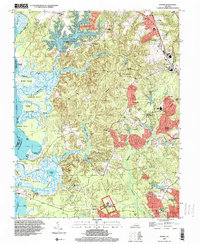 1994 Norge2000 Print · USGSJames City County was undergoing suburban growth in the 1990s while preserving its deep colonial roots. Researchers can trace historic foundations at Green Spring Ruins and locate community landmarks like James City Chapel Cem and Norge.
 - 2010 Map of Norge, 2010 Print
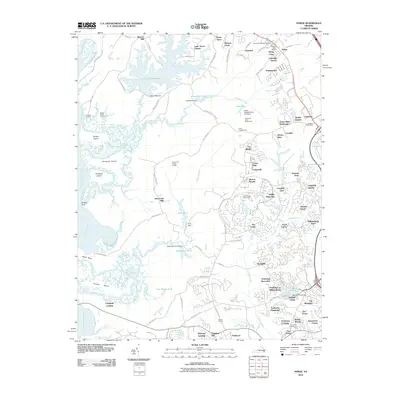 2010 Norge2010 Print · USGSJames City County at the start of the 2010s shows a landscape of growing residential enclaves set against the tidal marshes of the Chickahominy River. Genealogists and local historians can trace family sites near Norge, the James City Chapel Cemetery, and the old grounds of Warren Mill.
 - 2011 Map of Toano, 2011 Print
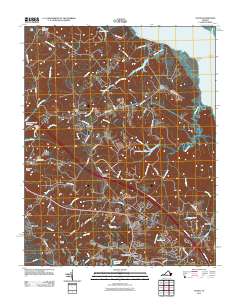 2011 Toano2011 Print · USGSThe James City County and New Kent County borderlands are shown here in the early 2000s as a landscape of tidal creeks and crossroads settlements. Researchers can trace the legacy of rural industry and transport at Warren Mill, Branch Siding, and the Toano Post Office.
 - 2013 Map of Toano, 2013 Print
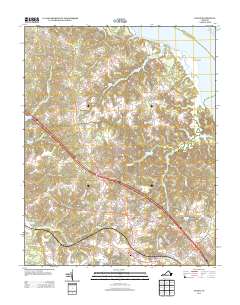 2013 Toano2013 Print · USGSThe Virginia Peninsula near the York River was characterized by dense swamp networks and crossroads settlements in the early 2000s. Genealogists and historians can trace local landmarks like Barhamsville, the State Prison Camp Number 16, and the Richardson Millpond.
 - 2013 Map of Norge, 2013 Print
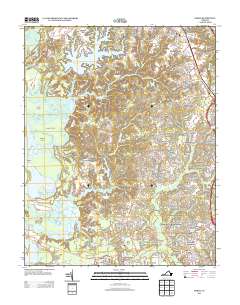 2013 Norge2013 Print · USGSThe area around Norge and Lightfoot is shown during a period of rapid residential development integrated with the historic James City County landscape. Researchers can trace the layout of contemporary neighborhoods like Powhatan Plantation and Kristiansand alongside natural landmarks like Jolly Pond and Little Creek Reservoir.
 - 2016 Map of Norge, 2016 Print
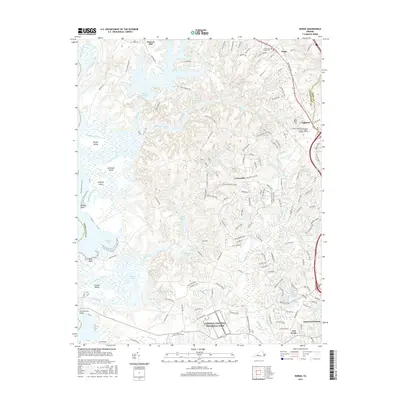 2016 Norge2016 Print · USGSJames City County and the communities along the Chickahominy River are shown here in the mid-2010s. Researchers can trace local landmarks from Warren Mill and James City Chapel Cem to the modern Five Forks crossroads.
 - 2016 Map of Toano, 2016 Print
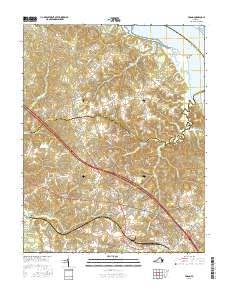 2016 Toano2016 Print · USGSThe Virginia Tidewater is captured here in the mid-2010s, showing the evolving landscape between the New Kent and James City county lines. Researchers can trace historic road networks like Polish Town Rd and locate landmarks such as Richardson Millpond and the Taylor Pit.
 - 2019 Map of Toano, 2019 Print
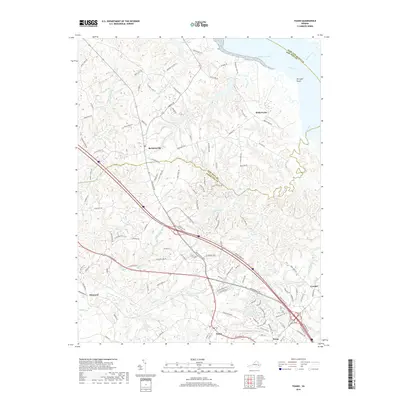 2019 Toano2019 Print · USGSThe Virginia Peninsula is captured here in the late twenty-tens, showing the established communities of Toano and Norge amidst the coastal drainages of the York River. Genealogists and local historians can trace family road names and locate landmarks like Terrapin Point, Barhamsville, and Taylor Pit.
Showing maps 1-25 of 28
Frequently asked questions
- What are the different types of historical maps available for Oakland?
- What is the oldest map of Oakland?
- Where can I purchase historical maps of Oakland for my home or office?
- Where can I download high-res historical maps of Oakland?
- Are there historical topographic maps available for Oakland?
- Is there historical aerial imagery available for Oakland?
- Where are historical maps of Oakland sourced from?