1900s (20th Century) Maps of Greene Mill Preserve, Virginia
Explore 23 historic maps of Greene Mill Preserve from the 1900s (20th Century). These maps offer a rare glimpse into what life looked like during the 1900s — showing old roads, neighborhoods, homes, and landmarks that have changed or disappeared over time.
Whether you're researching your family's past, planning a metal detecting trip, or studying how Greene Mill Preserve's landscape evolved across the 1900s, these high-resolution maps are a powerful tool for exploring the history of this region.
- Focus on a specific era: All maps on this page are from the 1900s, giving you a focused view of this time period.
- See what’s changed: Compare century-old streets, trails, and buildings to today's modern landscape using overlays and satellite layers.
- Research with precision: Use these maps for genealogy, historical research, land use analysis, or educational projects.
- View, download, or print: Maps are fully viewable online in high resolution, and can be downloaded or printed for your own records.
Start exploring Greene Mill Preserve's history through authentic maps from the 1900s. This is your window into the past.
Greene Mill Preserve, VA maps
(23)- 1933 Map of Middleburg
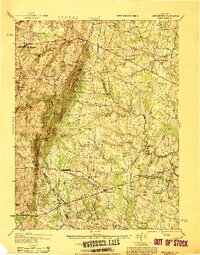 1933 Middleburg1933 Print · USGSNorthern Virginia is captured here in the years following the Great War, showing a landscape defined by its ridges and historical milestones. Genealogists and historians can locate family landmarks like the Henry House, Beverly Mill, and rural centers such as Hickory Grove.
 - 1943 Map of Arcola, 1957 Print
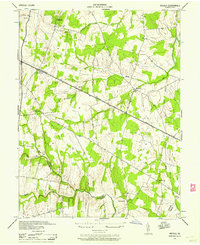 1943 Arcola1957 Print · USGSNorthern Virginia remains a landscape of quiet crossroads and family farms during the mid-1940s. Genealogists can trace rural life through landmarks like Watson Sch, Conklin Ch, and the small settlement of Lenah along the Lee-Jackson Memorial Highway.3 unique versions available
 - 1944 Map of Leesburg
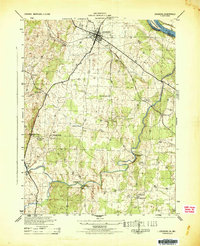 1944 Leesburg1944 Print · USGSLoudoun County, Virginia, is captured in the mid-1940s as a landscape of crossroads, mills, and riverside farms. Genealogists and historians can trace old homesteads and landmarks like Oatlands, the Prison Labor Camp No 2, and the C & O Canal (Abandoned).
 - 1944 Map of Arcola
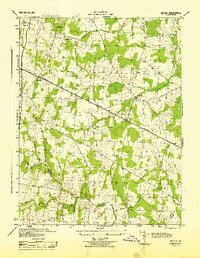 1944 Arcola1944 Print · USGSNorthern Virginia was a landscape of quiet crossroads and rural parishes during the mid-forties. Genealogists and local historians can trace family roots through landmarks like Watson-Sch, Mt Zion Ch, and the small settlement of Arcola.
 - 1948 Map of Baltimore
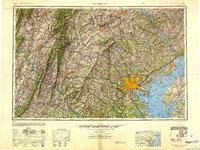 1948 Baltimore1948 Print · USGSMaryland and Pennsylvania crossroads are captured in the late 1940s, showing a landscape defined by historic rail lines and major military installations. Genealogists can trace family connections in Gettysburg, Westminster, and near the U.S. Naval Academy in Annapolis.2 unique versions available
 - 1948 Map of Washington
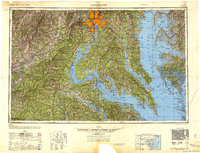 1948 Washington1948 Print · USGSThe Potomac and Chesapeake regions in the late 1940s reveal a landscape of expanding military reach and deep-rooted Tidewater settlements. Trace old rail corridors like the Richmond Fredericksburg & Potomac RR or locate landmarks like the Wakefield Washington Monument and St. Marys College.2 unique versions available
 - 1952 Map of Leesburg, 1960 Print
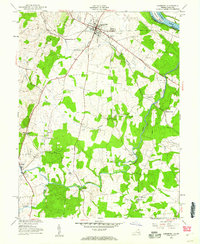 1952 Leesburg1960 Print · USGSLoudoun County is shown in the early fifties as a rural landscape centered on the crossroads of the Washington and Old Dominion rail line. Genealogists can trace local landmarks like Oatlands, find country schools such as Douglas Sch, and locate old river crossings including Murrays Ford Bridge.
 - 1954 Map of Baltimore
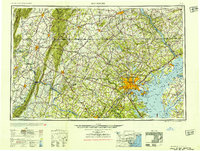 1954 Baltimore1954 Print · USGSThe Mid-Atlantic region in the early fifties shows a landscape of growing suburban centers and heavy rail corridors. Trace mid-century transit networks and military landmarks from the Aberdeen Proving Ground to the Gettysburg National Military Park.
 - 1956 Map of Baltimore
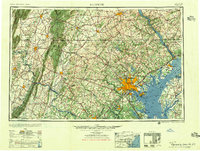 1956 Baltimore1956 Print · USGSMid-century Maryland and Pennsylvania are captured here during a period of massive suburban and military growth across the Chesapeake region. Genealogists and historians can trace the rail corridors of the Baltimore & Ohio RR and locate landmarks like Fort McHenry or the Aberdeen Proving Ground.
 - 1957 Map of Baltimore, 1964 Print
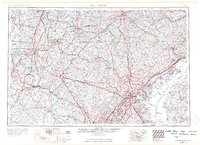 1957 Baltimore1964 Print · USGSMaryland and Southern Pennsylvania are shown during the mid-century expansion of the Baltimore-Washington corridor. Researchers can trace the extensive rail lines of the Baltimore & Ohio RR and locate sites like Fort Detrick and Gettysburg National Military Park.5 unique versions available
 - 1957 Map of Washington, 1966 Print
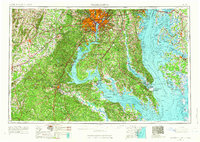 1957 Washington1966 Print · USGSThe mid-Atlantic region during the mid-fifties and early sixties reveals a landscape of growing suburbs and vital military outposts. Researchers can trace historic river towns and shorelines from Alexandria to the Hooper Islands and St Clements Island.5 unique versions available
 - 1961 Map of Washington
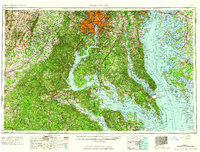 1961 Washington1961 Print · USGSThe mid-Atlantic region in the late fifties is presented in remarkable detail, from the Blue Ridge foothills to the Chesapeake Eastern Shore. Researchers can trace historic river landings and military sites like Mount Vernon, Fort Belvoir, and Point Lookout.2 unique versions available
 - 1961 Map of Baltimore
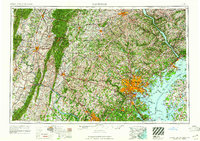 1961 Baltimore1961 Print · USGSMaryland and Pennsylvania are captured at a mid-century peak of industrial and military expansion. Genealogists and historians can trace rail corridors like the Western Maryland Ry or locate regional landmarks such as Camp Detrick and Kent Island.
 - 1968 Map of Leesburg, 1970 Print
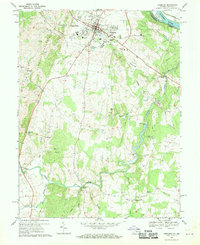 1968 Leesburg1970 Print · USGSLoudoun County is captured in the late sixties as a pastoral landscape on the verge of change. Genealogists and local historians can trace family-named landmarks and historic hubs like Oatlands, Evergreen Mills, and Leesburg.5 unique versions available
 - 1968 Map of Arcola, 1970 Print
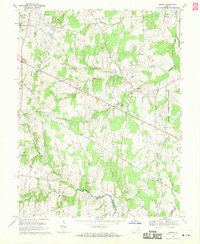 1968 Arcola1970 Print · USGSLoudoun County remains largely rural in the late sixties, just as the influence of the nearby capital begins to expand. Researchers can trace old family sites and transit routes through Arcola, Gilberts Corner, and the historic Braddock Road, or locate Mt Zion Ch and the State Prison Camp No 26.5 unique versions available
 - 1977 Map of Middleburg, 1979 Print
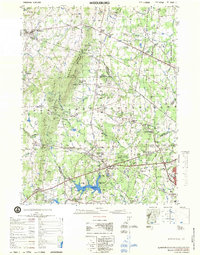 1977 Middleburg1979 Print · USGSNorthern Virginia in the late seventies reveals a landscape transitioning from rural estate country to a growing suburban corridor. Researchers can locate significant Civil War sites at Manassas National Battlefield Park and trace family names through Buchannon Gap Cem or the Linton Hall Military Sch.
 - 1977 Map of Arcola, 1982 Print
 1977 Arcola1982 Print · USGSLoudoun County, Virginia, is captured in the late seventies just as its rural landscape remained dominated by traditional agriculture. Genealogists and land researchers can pinpoint specific farmsteads near Arcola, Watson, and the southern banks of Bull Run.
 - 1982 Map of Washington West, 1983 Print
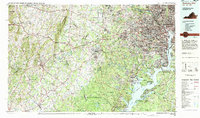 1982 Washington West1983 Print · USGSThe Virginia and Maryland suburbs were undergoing intense development in the early eighties as the capital region expanded outward. Researchers can trace the footprint of Cold War-era defense sites like Fort Belvoir and Vint Hill Farms Station alongside growing academic centers like George Mason University.
 - 1984 Map of Frederick, 1985 Print
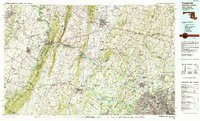 1984 Frederick1985 Print · USGSMaryland's Piedmont and the Potomac River valley are shown here in the mid-eighties as suburban growth began to meet historic rural landscapes. Genealogists and historians can trace the paths of the Baltimore and Ohio RR or locate the boundaries of Antietam National Battlefield and Fort Detrick.
 - 1986 Map of Washington West
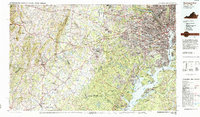 1986 Washington West1986 Print · USGSNorthern Virginia and the D.C. metro area are captured here in the mid-eighties as suburban growth began to meet rural Fauquier County. Trace the development of the corridor from Alexandria out to Dulles and the preserved lands of Prince William Forest Park.2 unique versions available
 - 1989 Map of Baltimore
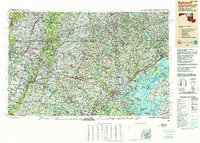 1989 Baltimore1989 Print · USGSThe Mid-Atlantic corridor in the late eighties is captured here, from the Baltimore harbor to the Blue Ridge foothills. Researchers can trace the sprawling footprints of Aberdeen Proving Ground, the historic grounds of Gettysburg National Military Park, and the winding Susquehanna River.
 - 1989 Map of Washington
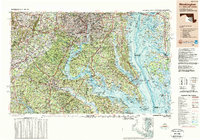 1989 Washington1989 Print · USGSThe Potomac River valley and Chesapeake Bay are shown in comprehensive detail during the late 1980s. Genealogists and historians can trace the transition from urban Alexandria to the rural Northern Neck, locating landmarks like Mount Vernon and Stratford Hall.
 - 1994 Map of Leesburg, 1998 Print
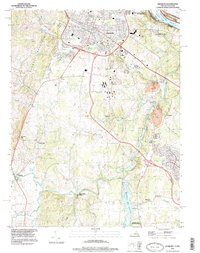 1994 Leesburg1998 Print · USGSLeesburg and the surrounding Loudoun County countryside are captured here in the mid-1990s as the region balanced its rural roots with modern growth. Researchers can trace historic sites like Oatlands and Balls Bluff Battlefield Regional Park alongside the emerging W&OD Trail.
End of results
Showing maps 1-23 of 23
Frequently asked questions
- What are the different types of historical maps available for Greene Mill Preserve?
- What is the oldest map of Greene Mill Preserve?
- Where can I purchase historical maps of Greene Mill Preserve for my home or office?
- Where can I download high-res historical maps of Greene Mill Preserve?
- Are there historical topographic maps available for Greene Mill Preserve?
- Is there historical aerial imagery available for Greene Mill Preserve?
- Where are historical maps of Greene Mill Preserve sourced from?