1960s Maps of Middlesex County, Virginia
Explore 11 historic maps of Middlesex County from the 1960s. These maps offer a rare glimpse into what life looked like during the 1960s — showing old roads, neighborhoods, homes, and landmarks that have changed or disappeared over time.
Whether you're researching your family's past, planning a metal detecting trip, or studying how Middlesex County's landscape evolved across the 1960s, these high-resolution maps are a powerful tool for exploring the history of this region.
- Focus on a specific era: All maps on this page are from the 1960s, giving you a focused view of this time period.
- See what’s changed: Compare century-old streets, trails, and buildings to today's modern landscape using overlays and satellite layers.
- Research with precision: Use these maps for genealogy, historical research, land use analysis, or educational projects.
- View, download, or print: Maps are fully viewable online in high resolution, and can be downloaded or printed for your own records.
Start exploring Middlesex County's history through authentic maps from the 1960s. This is your window into the past.
Middlesex County, VA maps
(11)- 1964 Map of Richmond
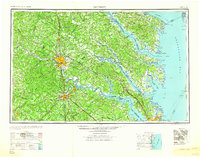 1964 Richmond1964 Print · USGSCoastal and central Virginia are mapped during the mid-twentieth century, showing the critical intersection of rail, river, and military life. Genealogists can trace family roots through rural county seats like Amelia or find vanished coastal neighborhoods near Phoebus and Hilton Village.
 - 1964 Map of Deltaville, 1966 Print
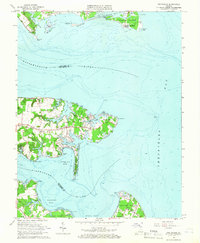 1964 Deltaville1966 Print · USGSThe Middlesex County coastline in the mid-sixties reveals a landscape defined by its relation to the Chesapeake. Genealogists and historians can trace family locations near Deltaville, find local landmarks like Philippi Ch, or locate old landings at Stingray Point and Westland.4 unique versions available
 - 1964 Map of Wilton, 1966 Print
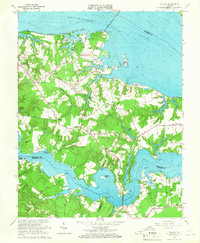 1964 Wilton1966 Print · USGSThe Virginia Middle Peninsula in the mid-1960s reveals a tidewater landscape of small settlements and riverfront landings. Genealogists and historians can locate rural landmarks such as Old Brick Ch, Stampers Wharf Sch, and Barricks Millpond.4 unique versions available
 - 1965 Map of Shacklefords, 1966 Print
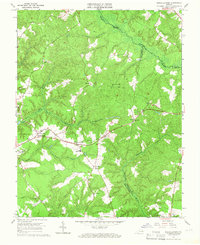 1965 Shacklefords1966 Print · USGSKing and Queen County at the mid-sixties transition is characterized by its deep creek valleys and crossroads communities. Genealogists and local historians can trace legacy sites like York Academy, Hockley Cem, and the historic Poroporone Ch near Shacklefords.4 unique versions available
 - 1965 Map of Saluda, 1967 Print
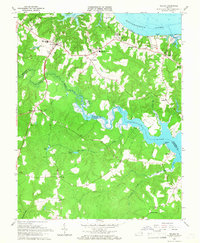 1965 Saluda1967 Print · USGSMiddlesex and Gloucester counties come to life in the mid-1960s as a landscape of river wharves and rural crossroads. Genealogists and historians can trace family-named landmarks and old congregations from Burhans Wharf to Antioch Church and the campus of Christchurch Sch.6 unique versions available
 - 1968 Map of Morattico, 1971 Print
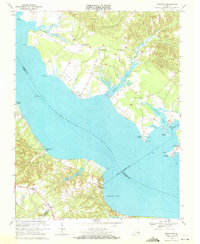 1968 Morattico1971 Print · USGSThe Rappahannock River defines this late 1960s survey of the Virginia Tidewater, where water and road networks meet at historic landings. Researchers can trace waterfront settlements like Sharps, Bowlers Wharf, and Morattico alongside rural landmarks like Ebenezer Ch.2 unique versions available
 - 1968 Map of Urbanna, 1971 Print
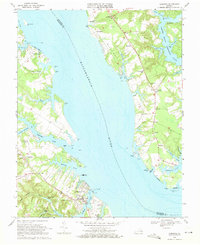 1968 Urbanna1971 Print · USGSThe Rappahannock River corridor in the late sixties shows a landscape of tidal creeks and quiet landings spanning Lancaster and Middlesex counties. Researchers can trace local genealogy at St Marys White Chapel, Middlesex Memorial Cem, and the historic waterfront of Urbanna.2 unique versions available
 - 1968 Map of Lively, 1971 Print
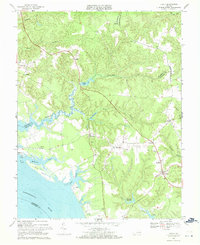 1968 Lively1971 Print · USGSThe Northern Neck of Virginia is shown in the late sixties as a network of quiet tidewater settlements and millponds. Genealogists and historians can trace family locations near Lively, the riverfront at Morattico, and local landmarks like Belle Isle and Hopewell Ch.4 unique versions available
 - 1968 Map of Truhart, 1971 Print
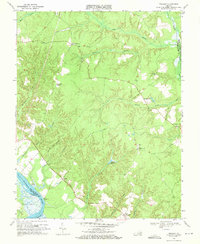 1968 Truhart1971 Print · USGSKing and Queen County in the late sixties remained a landscape defined by tidewater rivers and expansive swamps. Researchers can trace the rural road network connecting Little Plymouth and Dragonville or locate Lower King and Queen Ch and Exol Cem.2 unique versions available
 - 1968 Map of Irvington, 1971 Print
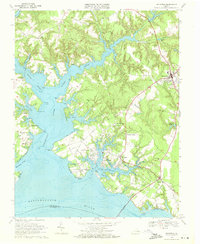 1968 Irvington1971 Print · USGSThe Northern Neck of Virginia is documented here in the late sixties, showing the tidal creeks and river landings that defined local commerce. Genealogists and historians can trace family-named sites from Merry Point to White Stone, including Christ Church and Campbell Memorial Ch.6 unique versions available
 - 1968 Map of Church View, 1972 Print
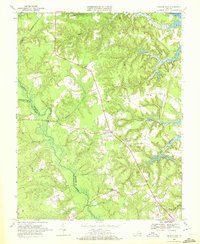 1968 Church View1972 Print · USGSThe Middle Peninsula of Virginia is shown here in the late sixties, a landscape of extensive wetlands and timbered swamps. Researchers can locate family landmarks like Union Shiloh Ch, trace the banks of Dragon Swamp, or explore old crossroads at Jamaica and Church View.5 unique versions available
End of results
Showing maps 1-11 of 11
Top cities of Middlesex County
Frequently asked questions
- What are the different types of historical maps available for Middlesex County?
- What is the oldest map of Middlesex County?
- Where can I purchase historical maps of Middlesex County for my home or office?
- Where can I download high-res historical maps of Middlesex County?
- Are there historical topographic maps available for Middlesex County?
- Is there historical aerial imagery available for Middlesex County?
- Where are historical maps of Middlesex County sourced from?