Old Maps of Topping, Virginia for Academic Research
Study the evolution of Topping with 16 high-resolution historic maps. Whether you're teaching, researching, or modeling changes in land use, these maps provide essential visual documentation of urban, environmental, and geographic change.
- Analyze long-term change: Track patterns in development, transportation, and natural features.
- Ideal for environmental or urban studies: Support academic projects with primary historical map data.
- Use in the classroom or lab: Educators and researchers rely on these maps to bring historical context to life.
These maps are a powerful tool for teaching, research, and visualizing how Topping has changed over the decades.
Topping, VA maps
(16)- 1916 Map of Kilmarnock
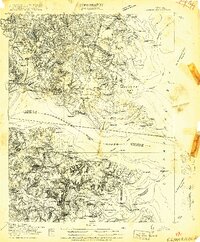 1916 Kilmarnock1916 Print · USGSBefore the era of modern bridges, this coastal Virginia region relied on a busy steamboat route network connecting the Northern Neck and Middle Peninsula. Genealogists can locate family landmarks like Wharton Grove Camp, White Chapel Church, and numerous landings including Morattico Wharf.2 unique versions available
 - 1917 Map of Kilmarnock
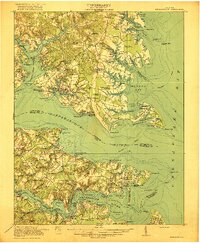 1917 Kilmarnock1917 Print · USGSThe Northern Neck and Middle Peninsula of Virginia are shown during the height of the steamboat era. Genealogists can locate family-named landmarks and essential community hubs like the Old Brick Church, Harmony Village, and Kilmarnock Wharf.4 unique versions available
 - 1942 Map of Kilmarnock
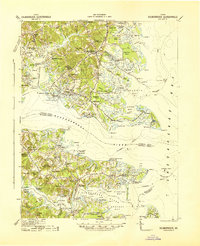 1942 Kilmarnock1942 Print · USGSThe Virginia Tidewater in the early 1940s was a world of steamboat routes and bustling river landings. Trace the maritime history of the Northern Neck through Whitestone Wharf, the Shipleys Ferry crossing, and the grounds of Christ Church.
 - 1943 Map of Richmond, 1972 Print
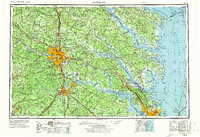 1943 Richmond1972 Print · USGSCoastal Virginia and the state capital are shown in detail during the mid-century era of infrastructure expansion. Genealogists and historians can trace the grounds of Richmond Nat Battlefield Park, locate the Yorktown Nat Cem, or follow the many rural routes through Amelia Court House and Tappahannock.
 - 1949 Map of Wilton
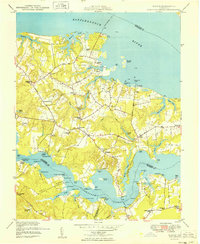 1949 Wilton1949 Print · USGSCoastal Middlesex County comes alive in this post-war survey of the peninsulas between the Rappahannock and Piankatank rivers. Genealogists and historians can trace old landings and community hubs like Blands Wharf, Old Brick Ch, and Harmony Village.
 - 1949 Map of Richmond, 1951 Print
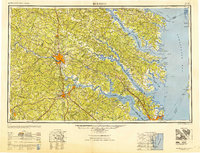 1949 Richmond1951 Print · USGSCoastal Virginia in the years following World War II remained a landscape of historic river towns and expanding military bases. Genealogists and historians can trace the rail lines of the Southern Ry and locate established landmarks from Camp Lee to the remote reaches of Dragon Swamp.
 - 1959 Map of Richmond
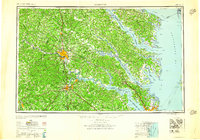 1959 Richmond1959 Print · USGSMid-century Virginia is captured here at its most vital rail and river junctions, from the capital city to the Chesapeake Bay. Genealogists and historians can trace the development of colonial settlements like Williamsburg and military landmarks including Fort Monroe and Camp Lee.
 - 1964 Map of Richmond
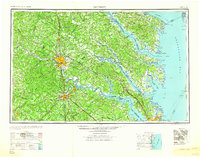 1964 Richmond1964 Print · USGSCoastal and central Virginia are mapped during the mid-twentieth century, showing the critical intersection of rail, river, and military life. Genealogists can trace family roots through rural county seats like Amelia or find vanished coastal neighborhoods near Phoebus and Hilton Village.
 - 1964 Map of Wilton, 1966 Print
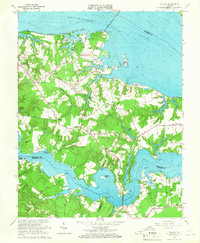 1964 Wilton1966 Print · USGSThe Virginia Middle Peninsula in the mid-1960s reveals a tidewater landscape of small settlements and riverfront landings. Genealogists and historians can locate rural landmarks such as Old Brick Ch, Stampers Wharf Sch, and Barricks Millpond.4 unique versions available
 - 1973 Map of Richmond, 1974 Print
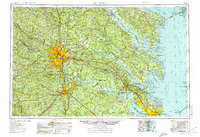 1973 Richmond1974 Print · USGSThe Virginia Tidewater and Piedmont come alive in the early seventies, showcasing a region defined by its great rivers and massive military installations. Researchers can trace the mid-century growth of Richmond or locate family sites near Amelia Court House and Highland Springs.2 unique versions available
 - 1984 Map of Tappahannock
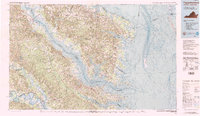 1984 Tappahannock1984 Print · USGSThe Northern Neck and Middle Peninsula of Virginia are captured in detail during the mid-1980s, showcasing the region's deep-rooted maritime and agricultural identity. Genealogists and local historians can trace family locations across the intricate shorelines of the Rappahannock River and settlements like Kilmarnock, Heathsville, and Urbanna.3 unique versions available
 - 2010 Map of Wilton, 2010 Print
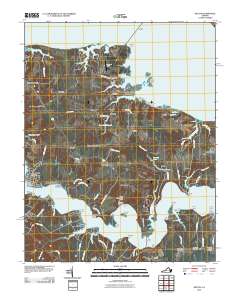 2010 Wilton2010 Print · USGSCoastal Middlesex County is shown here in the early twenty-first century, spanning the neck between the Rappahannock and Piankatank Rivers. Researchers can locate family landmarks like Mathews Chapel and Ebenezer Cemetery or trace the old water-access points at Blands Wharf and Stamper Landing.
 - 2013 Map of Wilton, 2013 Print
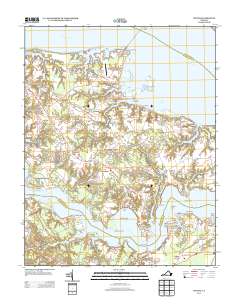 2013 Wilton2013 Print · USGSCoastal life in Middlesex County is centered on the peninsula between the Rappahannock and Piankatank rivers. Historians and researchers can trace local landmarks like Stampers Wharf, the grounds of Royal Ambassador Camp, and settlements such as Harmony Village and Nohead Bottom.
 - 2016 Map of Wilton, 2016 Print
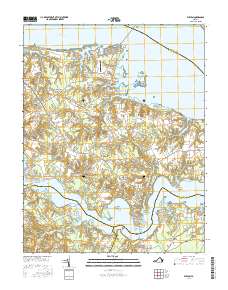 2016 Wilton2016 Print · USGSCoastal Middlesex and Gloucester counties come to life in this survey of the Virginia Tidewater. Researchers can trace historic family burial sites like Ebenezer Cem, the small settlement at Nohead Bottom, and the wetlands of Pratts Mill Swamp.
 - 2019 Map of Wilton, 2019 Print
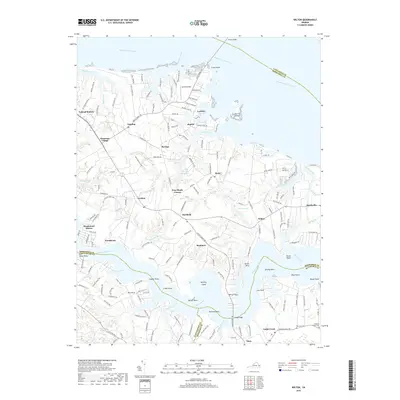 2019 Wilton2019 Print · USGSThe Virginia Middle Peninsula at the end of the 2010s reveals a landscape shaped by the Rappahannock River and Piankatank River. Researchers can trace local lineage through sites like Ebenezer Cem and historic communities including Free Shade Corner, Harmony Village, and Nohead Bottom.
 - 2022 Map of Wilton, 2022 Print
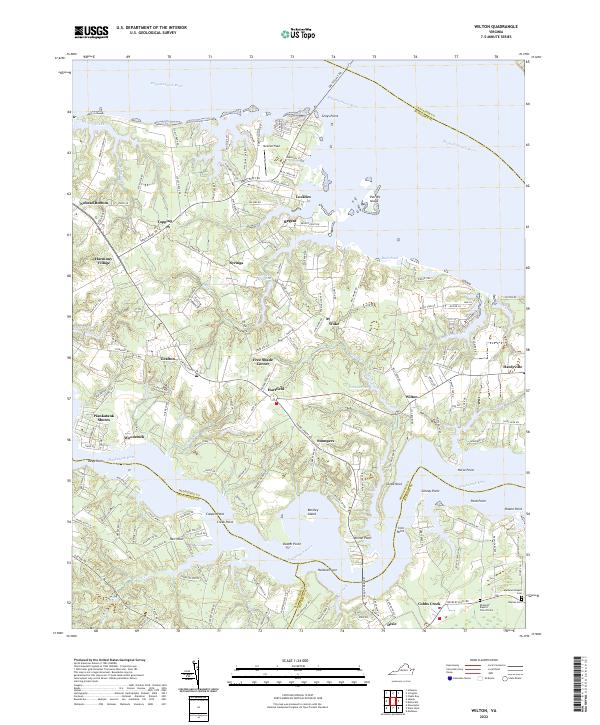 2022 Wilton2022 Print · USGSCoastal Virginia life at the start of the 2020s is mapped here between the Rappahannock and Piankatank Rivers. Researchers can locate local landmarks like Hummel Field, Ebenezer Baptist Church Cem, and the community of Harmony Village.
End of results
Showing maps 1-16 of 16
Top cities near Topping
- Gloucester historical maps
- Kilmarnock historical maps
- Deltaville historical maps
- Irvington historical maps
- Saluda historical maps
- Hudgins historical maps
See more
Frequently asked questions
- What are the different types of historical maps available for Topping?
- What is the oldest map of Topping?
- Where can I purchase historical maps of Topping for my home or office?
- Where can I download high-res historical maps of Topping?
- Are there historical topographic maps available for Topping?
- Is there historical aerial imagery available for Topping?
- Where are historical maps of Topping sourced from?