1950s Maps of New Kent County, Virginia
Explore 11 historic maps of New Kent County from the 1950s. These maps offer a rare glimpse into what life looked like during the 1950s — showing old roads, neighborhoods, homes, and landmarks that have changed or disappeared over time.
Whether you're researching your family's past, planning a metal detecting trip, or studying how New Kent County's landscape evolved across the 1950s, these high-resolution maps are a powerful tool for exploring the history of this region.
- Focus on a specific era: All maps on this page are from the 1950s, giving you a focused view of this time period.
- See what’s changed: Compare century-old streets, trails, and buildings to today's modern landscape using overlays and satellite layers.
- Research with precision: Use these maps for genealogy, historical research, land use analysis, or educational projects.
- View, download, or print: Maps are fully viewable online in high resolution, and can be downloaded or printed for your own records.
Start exploring New Kent County's history through authentic maps from the 1950s. This is your window into the past.
New Kent County, VA maps
(11)- 1950 Map of West Point
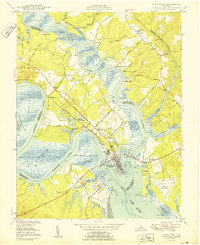 1950 West Point1950 Print · USGSCoastal Virginia at the turn of the decade centers on the confluence of the Mattaponi and Pamunkey. Researchers can trace family sites at Chelsea, locate historic burials at Sunny Slope Cem, and follow the SOUTHERN rail lines into the heart of West Point.2 unique versions available
 - 1950 Map of Old Church
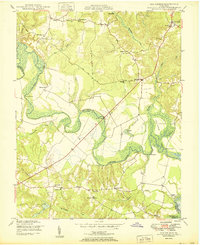 1950 Old Church1950 Print · USGSThe Pamunkey River basin in the early postwar era reveals a landscape of tidal swamps and scattered crossroads communities. Genealogists and historians can trace the foundations of the area at Old Church, Appersons Store, and historic landings like Carters Landing.2 unique versions available
 - 1952 Map of Gressitt, 1957 Print
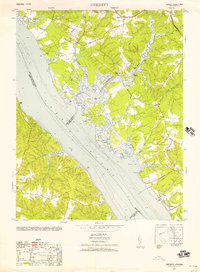 1952 Gressitt1957 Print · USGSThe Tidewater region of Virginia comes to life in the early fifties, documenting the river-centered life along the YORK RIVER. Researchers can trace family sites in Allmondsville, locate the old Prospect School, or find maritime history at Moodys Old Wharf and Red Bank Landing.
 - 1953 Map of Toano
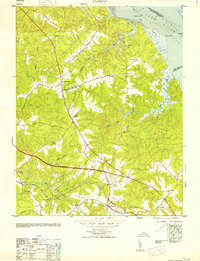 1953 Toano1953 Print · USGSThe rural Virginia Peninsula is captured here in the early fifties, where the rail-centered economy of James City and New Kent counties remains intact. Genealogists and historians can locate legacy landmarks like Hickory Neck Church, the Bock Cem, and the small siding at Diascund.
 - 1953 Map of Gressitt
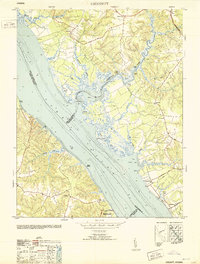 1953 Gressitt1953 Print · USGSThe York River and Poropotank River meet in this Tidewater survey from the early fifties, showing a landscape defined by water and woods. Genealogists and local historians can trace old family landing sites and vanished communities like Gressitt, Adner, and Capahosic.
 - 1953 Map of Providence Forge, 1957 Print
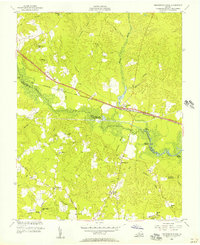 1953 Providence Forge1957 Print · USGSThe border of New Kent and Charles City counties is defined by the Chickahominy River in the early 1950s. Genealogists and local historians can trace the exact locations of many rural institutions, including Emmaus Ch, Binns Store, and the Alpine Sch.
 - 1953 Map of Walkers, 1957 Print
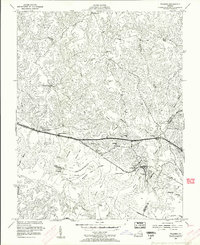 1953 Walkers1957 Print · USGSCoastal Virginia life in the early fifties unfolds along the banks of the Chickahominy River and the local rail corridor. Genealogists and historians can trace riverside settlements and country churches, from the Lanexa schoolhouse to Tsena Commoko and Windsor Shades.
 - 1953 Map of Roxbury, 1957 Print
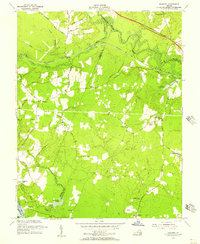 1953 Roxbury1957 Print · USGSCharles City and Henrico counties appear here in the early fifties, documenting a landscape of riverfront plantations and inland crossroads. Researchers can trace rural landmarks like the Samaria Indian Sch, the National Cem, and family sites like Hughes Store.
 - 1953 Map of Charles City, 1960 Print
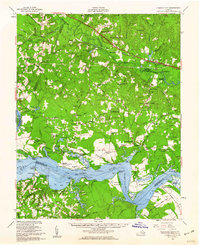 1953 Charles City1960 Print · USGSCoastal Virginia during the mid-fifties reveals a landscape defined by historic James River plantations and rural crossroads. Genealogists and historians can trace family-named sites from Berkeley and Westover to local landmarks like Ednas Mill and Merchant Hope Ch.2 unique versions available
 - 1958 Map of Toano
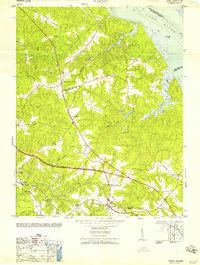 1958 Toano1958 Print · USGSThe wooded lowlands and creek systems of James City County are shown here at mid-century, centered on the village of Toano. Researchers can trace the heritage of local congregations at Hickory Neck Church and St Johns Church, or locate family sites near Barhamsville.
 - 1959 Map of Richmond
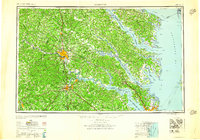 1959 Richmond1959 Print · USGSMid-century Virginia is captured here at its most vital rail and river junctions, from the capital city to the Chesapeake Bay. Genealogists and historians can trace the development of colonial settlements like Williamsburg and military landmarks including Fort Monroe and Camp Lee.
End of results
Showing maps 1-11 of 11
Frequently asked questions
- What are the different types of historical maps available for New Kent County?
- What is the oldest map of New Kent County?
- Where can I purchase historical maps of New Kent County for my home or office?
- Where can I download high-res historical maps of New Kent County?
- Are there historical topographic maps available for New Kent County?
- Is there historical aerial imagery available for New Kent County?
- Where are historical maps of New Kent County sourced from?