Old Maps of Furnace, Virginia for Academic Research
Study the evolution of Furnace with 13 high-resolution historic maps. Whether you're teaching, researching, or modeling changes in land use, these maps provide essential visual documentation of urban, environmental, and geographic change.
- Analyze long-term change: Track patterns in development, transportation, and natural features.
- Ideal for environmental or urban studies: Support academic projects with primary historical map data.
- Use in the classroom or lab: Educators and researchers rely on these maps to bring historical context to life.
These maps are a powerful tool for teaching, research, and visualizing how Furnace has changed over the decades.
Furnace, VA maps
(13)- 1892 Map of Harrisonburg, 1901 Print
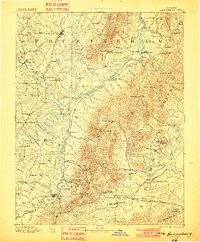 1892 Harrisonburg1901 Print · USGSThe Shenandoah Valley during the 1890s reveals a landscape of thriving springs, mills, and emerging industry across Rockingham and Albemarle counties. Genealogists can trace family locations through sites like Meyerhoffer's Store, the Crimora Mine, and the University of Virginia Observatory.6 unique versions available
 - 1937 Map of Elkton
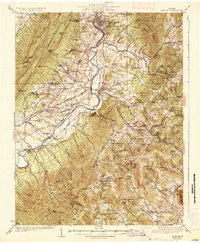 1937 Elkton1937 Print · USGSThe Shenandoah Valley and Blue Ridge highlands are captured here in the 1930s as mountain missions and rural schools still served remote hollows. Genealogists can locate family landmarks like the Wyatt Shiflett Ch, Simmons Gap PO, and Blose Sch.3 unique versions available
 - 1949 Map of Charlottesville
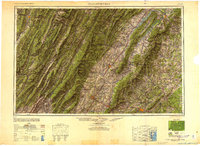 1949 Charlottesville1949 Print · USGSThe Shenandoah Valley and Blue Ridge appear in the late 1940s as a thriving corridor of rail and river commerce. Researchers can trace the mid-century footprints of Harrisonburg, Staunton, and Culpeper alongside the historic routes of the Southern Railway.2 unique versions available
 - 1956 Map of Charlottesville, 1966 Print
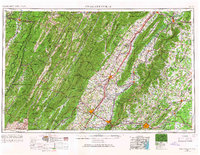 1956 Charlottesville1966 Print · USGSThe Shenandoah Valley and Blue Ridge are captured in detail during the mid-1960s as the modern interstate system began to emerge. Genealogists and historians can trace rail-connected hubs like Waynesboro or follow the river paths of the Rapidan River and Rivanna River.4 unique versions available
 - 1965 Map of Elkton East, 1967 Print
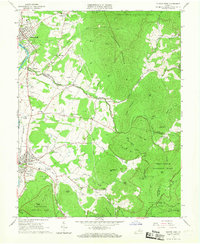 1965 Elkton East1967 Print · USGSThe Shenandoah Valley and Blue Ridge highlands meet in the 1960s, showing a landscape of river-side towns and mountain hollows. Genealogists can trace family roots at Naylor Cem or Mt Paran Ch, and follow the rails of the Norfolk and Western.3 unique versions available
 - 1977 Map of Elkton East, 1981 Print
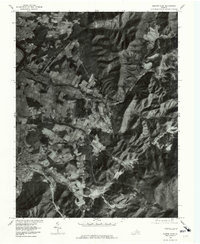 1977 Elkton East1981 Print · USGSThe Rockingham County valley meets the Blue Ridge in the late seventies. Family historians can trace rural settlements like Furnace and Verbena, or locate land along Naked Creek and Elk Run.
 - 1986 Map of Charlottesville
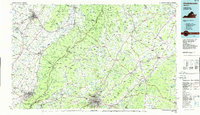 1986 Charlottesville1986 Print · USGSCentral Virginia in the mid-eighties shows a landscape balanced between the growing city centers of the Piedmont and the protected ridges of the Blue Ridge. Trace the historic rail lines of the Chesapeake and Ohio Railway or locate local landmarks like Monticello Mountain and Bridgewater College.3 unique versions available
 - 1997 Map of Elkton East, 1999 Print
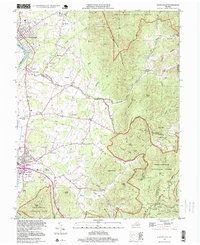 1997 Elkton East1999 Print · USGSThe Shenandoah Valley meets the Blue Ridge in the late twentieth century, showing a mix of mountain wilderness and river-town life. Trace family sites at Naylor Cem, old routes near Furnace, and springs like Bear Lithia Spring.
 - 2010 Map of Elkton East, 2010 Print
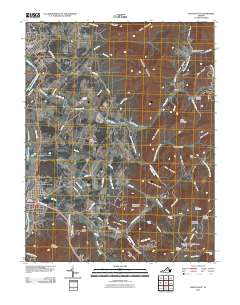 2010 Elkton East2010 Print · USGSThe Page Valley and Blue Ridge come into focus during the early twenty-first century, showing the rural communities between Elkton and Shenandoah. Genealogists can locate family landmarks like Koontz Cemetery or trace the old roads leading to Jollett and Furnace.
 - 2013 Map of Elkton East, 2013 Print
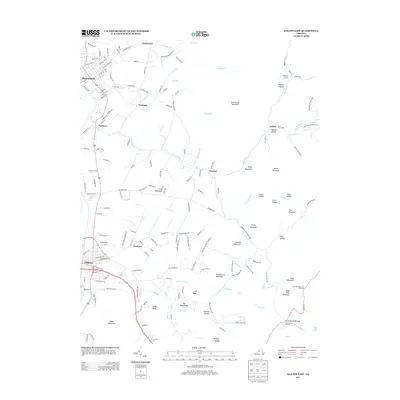 2013 Elkton East2013 Print · USGSThe eastern edges of Rockingham and Page Counties are captured here as the Blue Ridge foothills meet the river valley. Genealogists and hikers can trace connections between Shenandoah and Elkton, locating Bear Lithia Spring and the steep hollows of Shenandoah National Park.
 - 2016 Map of Elkton East, 2016 Print
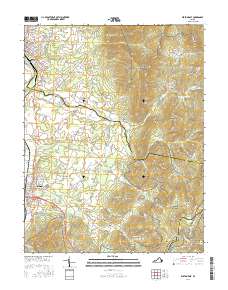 2016 Elkton East2016 Print · USGSPage Valley and the Blue Ridge foothills are captured here in the mid-2010s, showing the settled landscape between the South Fork Shenandoah River and Shenandoah National Park. Researchers can trace local lineage through sites like Samuels Cem, Dollys Knob, and the village of Furnace.
 - 2019 Map of Elkton East, 2019 Print
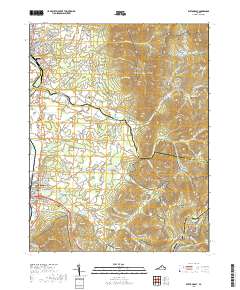 2019 Elkton East2019 Print · USGSRockingham and Page counties are shown here as they transition from the valley floor to the Blue Ridge summits in the late 2010s. Local researchers can identify family burial sites like Koontz Cem and trace the paths of historic hamlets such as Fleeburg and Newtown.
 - 2022 Map of Elkton East, 2022 Print
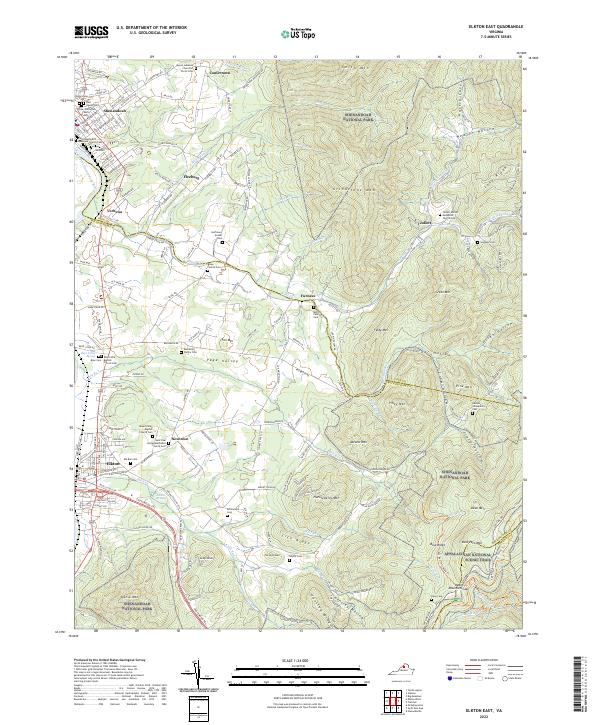 2022 Elkton East2022 Print · USGSThe eastern Blue Ridge and the Shenandoah Valley meet here, showing a landscape defined by high mountain ridges and deep hollows. Genealogists can trace family names through numerous burial sites like the Merica Family Cem, Samuels Cem, and Ed Hensley Cem.
End of results
Showing maps 1-13 of 13
Top cities near Furnace
- Luray historical maps
- Elkton historical maps
- Shenandoah historical maps
- Massanutten historical maps
- New Market historical maps
- Timberville historical maps
See more
Frequently asked questions
- What are the different types of historical maps available for Furnace?
- What is the oldest map of Furnace?
- Where can I purchase historical maps of Furnace for my home or office?
- Where can I download high-res historical maps of Furnace?
- Are there historical topographic maps available for Furnace?
- Is there historical aerial imagery available for Furnace?
- Where are historical maps of Furnace sourced from?