Old Maps of Richmond, Virginia for Genealogy
Trace your family roots with 49 historic maps of Richmond. These high-res maps reveal old neighborhoods, homesites, landmarks, and streets — helping you uncover where your ancestors lived and how the area evolved over time.
- Explore historic neighborhoods: Identify where your relatives may have lived in the 1800s or 1900s.
- Compare maps over time: Trace the changes in streets, buildings, and landmarks for multi-generational research.
- Perfect for genealogy & ancestry research: Used by family historians and researchers to map out lineage and migration.
These maps are an incredible resource for exploring your personal connection to Richmond's past.
Richmond, VA maps
(49)- 1890 Map of Goochland
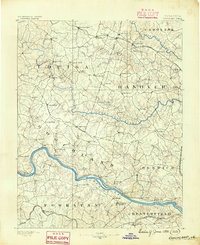 1890 Goochland1890 Print · USGSGoochland and the surrounding Virginia Piedmont are captured here in the late nineteenth century as the river-and-rail economy thrived. Researchers can trace the paths of the Chesapeake and Ohio Railroad and find landmarks like Hopeful Church or the Coal Pits.
 - 1892 Map of Goochland
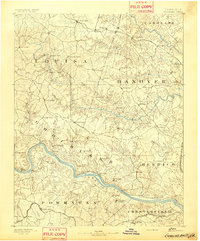 1892 Goochland1892 Print · USGSThe rural heart of central Virginia is captured here in the decade before the turn of the century, showing a landscape shaped by major rivers and early rail lines. Genealogists can trace family names and early settlements like Negro Foot, Mabelton, and the historic Hanover Academy.8 unique versions available
 - 1894 Map of Bermuda Hundred
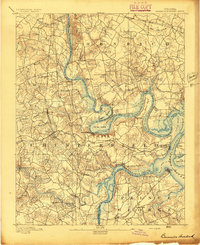 1894 Bermuda Hundred1894 Print · USGSBermuda Hundred and the James River winding toward the Chesapeake are captured here in the late nineteenth century. Researchers can trace the legacy of the Civil War through Drewry Bluff, Malvern Hill, and the engineering of the Dutch Gap Canal.5 unique versions available
 - 1894 Map of Richmond
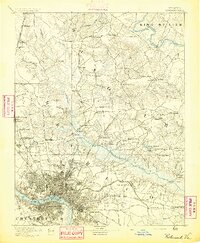 1894 Richmond1894 Print · USGSThe Richmond area at the close of the nineteenth century reveals a city expanding into its rural surroundings via a complex network of turnpikes and railroads. Genealogists and historians can trace family-named sites like Hawes Shop, Hazelgrove's Store, and Gilman's Mill alongside civil war landmarks at Seven Pines and Old Cold Harbor.
 - 1895 Map of Richmond
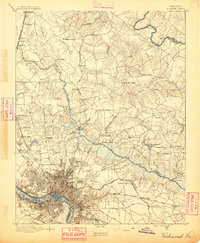 1895 Richmond1895 Print · USGSRichmond and Manchester thrive as bustling riverfront hubs in the 1890s, where rail lines and historic turnpikes converge on the James River. Genealogists and historians can trace family locations near Merry Oaks Church or follow the road to Old Cold Harbor and Seven Pines.5 unique versions available
 - 1897 Map of Amelia
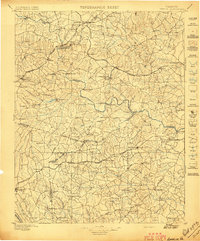 1897 Amelia1897 Print · USGSThe rural interior of central Virginia comes into focus in the late nineteenth century, as the Appomattox River corridor transitions from a river-based economy to a rail-centered one. Researchers can trace ancestral property lines near Giles Mill, locate the rail hub at Mosley Junction, or find old river crossings like Goode Bridge.5 unique versions available
 - 1934 Map of Richmond
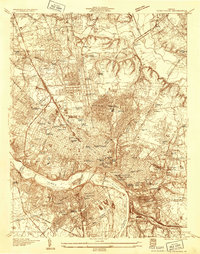 1934 Richmond1934 Print · USGSRichmond's urban landscape is captured in the mid-1930s, showing a capital city shaped by its riverfront industry and rail network. Researchers can trace the grounds of the State Capitol, find the Broad Street Sta, and locate the Confederate Soldiers Home.2 unique versions available
 - 1936 Map of Richmond West
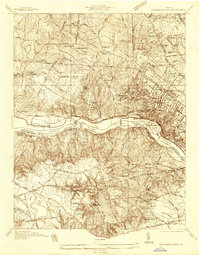 1936 Richmond West1936 Print · USGSThe James River corridor west of Richmond was rapidly evolving in the mid-1930s as suburban life and industry converged. Genealogists and historians can trace the foundations of Windsor Farms, the University of Richmond, and rural landmarks like Camack Mill and Bon Air.2 unique versions available
 - 1938 Map of Drewrys Bluff
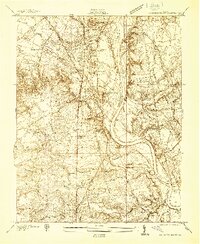 1938 Drewrys Bluff1938 Print · USGSThe James River corridor south of Richmond is seen here just before the Second World War, showing a landscape still defined by its defensive past. Genealogists can trace family names and sites like Bensley Village, Ebenezer Ch, and numerous Civil War-era Breastworks.
 - 1939 Map of Richmond
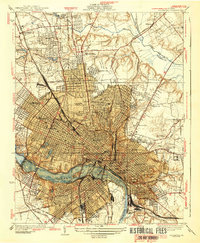 1939 Richmond1939 Print · USGSRichmond before the war shows a sophisticated urban landscape defined by river power and a complex rail network. Genealogists and historians can locate numerous burial grounds like Hollywood Cemetery or trace the early streetcar path of the Richmond Ashland Electric Ry.2 unique versions available
 - 1942 Map of Westhampton
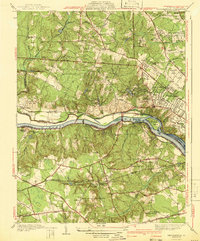 1942 Westhampton1942 Print · USGSThe James River corridor west of Richmond was a mix of historic estates and rural crossroads in the early 1940s. Genealogists can locate family landmarks like Hammack Mill, trace the Kanawha Canal, or find old sites like the Bellona Arsenal (Ruins).2 unique versions available
 - 1943 Map of Chesterfield
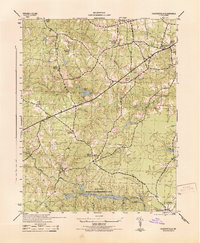 1943 Chesterfield1943 Print · USGSChesterfield County during the early 1940s shows a landscape of rural schoolhouses and country churches transitioning toward modern public spaces. Genealogists can trace family landmarks like Good Hope School, Ramsey Church, and the Shawondasee Boy Scout Camp.3 unique versions available
 - 1943 Map of Richmond, 1972 Print
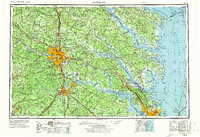 1943 Richmond1972 Print · USGSCoastal Virginia and the state capital are shown in detail during the mid-century era of infrastructure expansion. Genealogists and historians can trace the grounds of Richmond Nat Battlefield Park, locate the Yorktown Nat Cem, or follow the many rural routes through Amelia Court House and Tappahannock.
 - 1946 Map of Bermuda Hundred
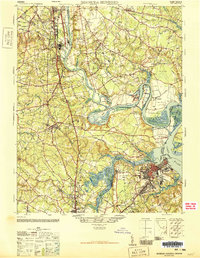 1946 Bermuda Hundred1946 Print · USGSThe James River corridor south of Richmond is shown here just after the war, where industrial hubs like Hopewell meet colonial-era landscapes. Genealogists and historians can trace the foundations of Bermuda Hundred, the grounds of Camp Lee, and landmarks like Shirley or Drewrys Bluff.2 unique versions available
 - 1949 Map of Richmond, 1951 Print
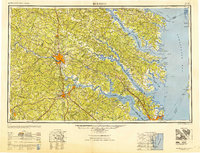 1949 Richmond1951 Print · USGSCoastal Virginia in the years following World War II remained a landscape of historic river towns and expanding military bases. Genealogists and historians can trace the rail lines of the Southern Ry and locate established landmarks from Camp Lee to the remote reaches of Dragon Swamp.
 - 1952 Map of Drewrys Bluff, 1959 Print
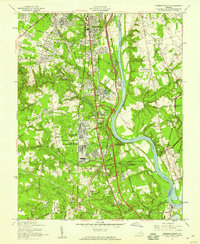 1952 Drewrys Bluff1959 Print · USGSChesterfield County and the James River corridor are captured here in the 1950s as suburban growth and highway expansion begin to meet historic defense lines. Trace the local landscape through the Richmond Quatermaster Depot, Parnell Airport, and Antioch Ch.
 - 1956 Map of Richmond, 1959 Print
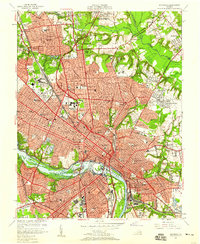 1956 Richmond1959 Print · USGSMid-century Richmond is shown just as the new turnpike began to reshape the urban landscape and the historic James River riverfront. Researchers can trace the footprints of Union Theological Seminary, the historic Hollywood Cemetery, and the old Seaboard Air Line Railroad yards.
 - 1959 Map of Richmond
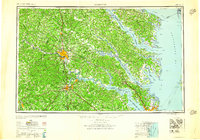 1959 Richmond1959 Print · USGSMid-century Virginia is captured here at its most vital rail and river junctions, from the capital city to the Chesapeake Bay. Genealogists and historians can trace the development of colonial settlements like Williamsburg and military landmarks including Fort Monroe and Camp Lee.
 - 1963 Map of Chesterfield, 1965 Print
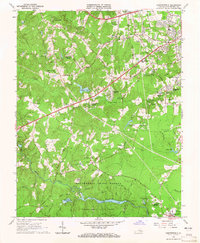 1963 Chesterfield1965 Print · USGSChesterfield County during the early sixties shows a landscape of growing residential tracts and deep-woods parkland. Researchers can trace the development of Penn Acres and find local landmarks like Tomahawk Academy Sch and Spring Creek Ch.6 unique versions available
 - 1964 Map of Richmond
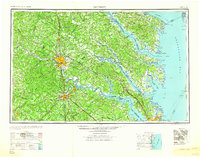 1964 Richmond1964 Print · USGSCoastal and central Virginia are mapped during the mid-twentieth century, showing the critical intersection of rail, river, and military life. Genealogists can trace family roots through rural county seats like Amelia or find vanished coastal neighborhoods near Phoebus and Hilton Village.
 - 1964 Map of Bon Air, 1965 Print
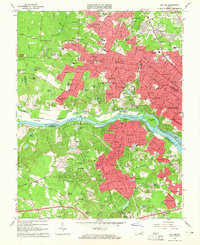 1964 Bon Air1965 Print · USGSMid-century Chesterfield and Henrico Counties show a mix of old rural sites and new suburban growth just as the Beltway era begins. Genealogists can trace family landmarks and parishes from Ziontown to Bon Air, or locate the Bellona Arsenal Ruins and Westhampton Memorial Park.8 unique versions available
 - 1964 Map of Richmond, 1966 Print
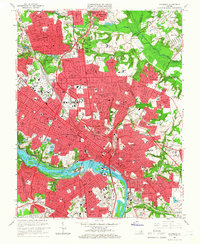 1964 Richmond1966 Print · USGSRichmond and its riverfront suburbs come alive in the mid-1960s, showing the intersection of historic urban density and new interstate-era development. Genealogists and historians can trace extensive burial grounds like Hollywood Cemetery or visit the campus of Virginia Union University.8 unique versions available
 - 1969 Map of Drewrys Bluff, 1971 Print
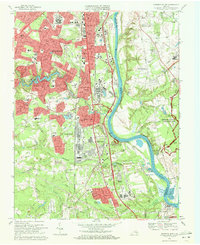 1969 Drewrys Bluff1971 Print · USGSChesterfield County and South Richmond undergo significant industrial and suburban expansion in the late sixties along the winding James River. Genealogists and historians can trace military history at Fort Darling or locate family landmarks like Branch Ch and St James Cem.5 unique versions available
 - 1973 Map of Richmond, 1974 Print
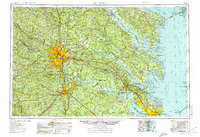 1973 Richmond1974 Print · USGSThe Virginia Tidewater and Piedmont come alive in the early seventies, showcasing a region defined by its great rivers and massive military installations. Researchers can trace the mid-century growth of Richmond or locate family sites near Amelia Court House and Highland Springs.2 unique versions available
 - 1974 Map of Bon Air, 1977 Print
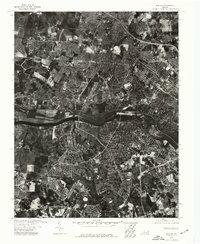 1974 Bon Air1977 Print · USGSThe suburbs of Richmond and Chesterfield County are captured during a mid-seventies growth boom along the James River. Genealogists and local historians can trace the 1970s footprint of Bon Air and the western reaches of Richmond.
Showing maps 1-25 of 49
Top cities of Richmond
Frequently asked questions
- What are the different types of historical maps available for Richmond?
- What is the oldest map of Richmond?
- Where can I purchase historical maps of Richmond for my home or office?
- Where can I download high-res historical maps of Richmond?
- Are there historical topographic maps available for Richmond?
- Is there historical aerial imagery available for Richmond?
- Where are historical maps of Richmond sourced from?