Old Maps of Russell County, Virginia for Genealogy
Trace your family roots with 168 historic maps of Russell County. These high-res maps reveal old neighborhoods, homesites, landmarks, and streets — helping you uncover where your ancestors lived and how the area evolved over time.
- Explore historic neighborhoods: Identify where your relatives may have lived in the 1800s or 1900s.
- Compare maps over time: Trace the changes in streets, buildings, and landmarks for multi-generational research.
- Perfect for genealogy & ancestry research: Used by family historians and researchers to map out lineage and migration.
These maps are an incredible resource for exploring your personal connection to Russell County's past.
Russell County, VA maps
(168)- 1886 Map of Grundy
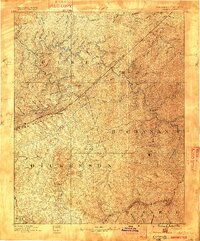 1886 Grundy1886 Print · USGSThe Central Appalachian borderlands come alive in the late nineteenth century as small settlements and family outposts take hold in the hollows. Genealogists and historians can locate early communities like Clintwood and Grundy, or trace ancestral lands near Card P.O. and Sand Lick.
 - 1890 Map of Grundy
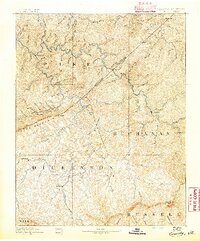 1890 Grundy1890 Print · USGSThe Central Appalachian borderlands of Virginia and Kentucky are captured here in the late nineteenth century, showing a landscape of isolated mountain hollows. Genealogists and researchers can trace early settlements and river fords including Grundy, Clintwood, and the crossing at Fish Trap.
 - 1891 Map of Tazewell
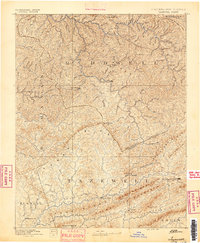 1891 Tazewell1891 Print · USGSThe Clinch Valley highlands are shown here in the late nineteenth century, capturing the early settlement of the Virginia and West Virginia borderlands. Local historians can trace the foundations of Jeffersonville and rural outposts like Baptist Valley and Cedar Bluff.
 - 1891 Map of Abingdon
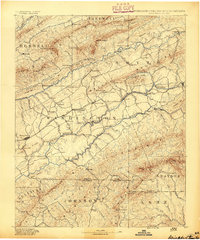 1891 Abingdon1891 Print · USGSSouthwest Virginia in the 1890s reveals a landscape of mountain ridges and thriving valley settlements along the Norfolk and Western R. R. Lineages can be traced through sites like Emory and Henry College, Saltville, and numerous family-named landmarks like Vance's Mill.
 - 1892 Map of Grundy
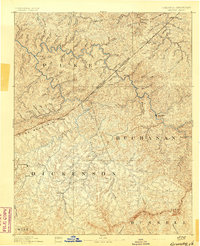 1892 Grundy1892 Print · USGSThe Appalachian borderlands of Virginia and Kentucky appear here in the late nineteenth century, mapping the deep hollows and ridges of the coalfield region. Genealogists and historians can locate early settlement nodes like Ervinton, Sand Lick, and Grundy amidst landmarks like Pine Mountain.4 unique versions available
 - 1894 Map of Abingdon, 1896 Print
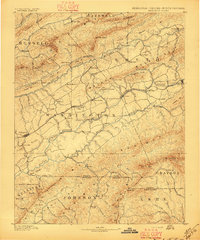 1894 Abingdon1896 Print · USGSSouthwest Virginia's valley and ridge country is captured here during the peak of the rail era, centered on the Abingdon and Marion corridors. Local historians can trace the foundations of Emory and Henry College and numerous rural mill sites like Belfast Mills or Vance's Mill.5 unique versions available
 - 1895 Map of Tazewell
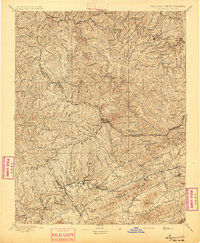 1895 Tazewell1895 Print · USGSSouthwest Virginia and the West Virginia coalfields are captured in the 1890s as the rail network transformed these mountain valleys. Researchers can trace early settlements and stores along the Norfolk and Western RR, from Tazewell to the mines near Welch and Vivian.
 - 1897 Map of Tazewell
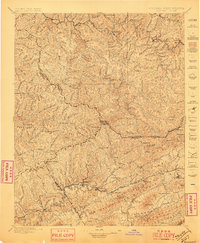 1897 Tazewell1897 Print · USGSThe rugged coal and timber lands of the border country appear here in the 1890s as the rail network expands. Genealogists can trace family roots at Mc Neil Store, follow the early growth of Welch, and locate homesteads near Shack Mills.8 unique versions available
 - 1897 Map of Bristol
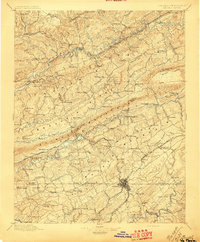 1897 Bristol1897 Print · USGSThe Tennessee-Virginia borderlands in the late nineteenth century were a landscape of steep ridges and river-dependent commerce. Genealogists can trace family homesteads near Bickley Mill, locate river crossings like Childress Ferry, or find early rail stops along the Norfolk and Western RR.
 - 1902 Map of Bristol
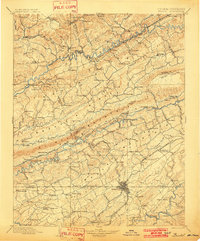 1902 Bristol1902 Print · USGSThe interstate border region around Bristol appears here at the start of the twentieth century, defined by its deep mountain ridges and river valleys. Researchers can trace the early industrial footprint of the area through numerous landmarks like Bickley Mill, Kings Mill, and the Norfolk and Western RR.6 unique versions available
 - 1909 Map of Abingdon
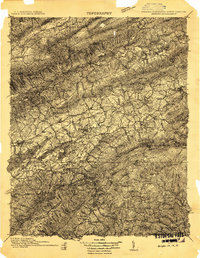 1909 Abingdon1909 Print · USGSSouthwest Virginia at the first decade's end shows a valley landscape defined by the iron rail and steep ridges. Genealogists and historians can trace the early layouts of Abingdon and Glade Spring, or locate landmarks like Dove Mills and the County Farm.2 unique versions available
 - 1911 Map of Abingdon
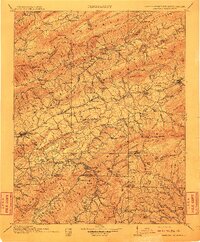 1911 Abingdon1911 Print · USGSSouthwest Virginia's rugged corridors are captured here during the height of the mountain rail era. Genealogists and historians can trace old homesteads and local landmarks such as Whites Mill, Valley Church, and the County Farm near Abingdon.5 unique versions available
 - 1913 Map of Clintwood, 1962 Print
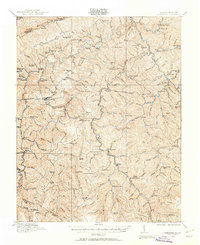 1913 Clintwood1962 Print · USGSVirginia's rugged coal country is captured here during the early twentieth century, showing a landscape of isolated ridge-top schools and river-valley settlements. Genealogists can trace family footprints across dozens of local sites like Hatchet Church, Smith Corners, and the Nichols Gap School.
 - 1914 Map of Bucu
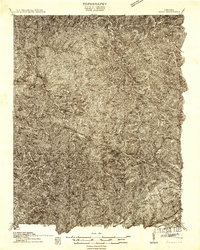 1914 Bucu1914 Print · USGSCovers Russell County, including Vansant, Council, and other nearby areas
 - 1915 Map of Richlands
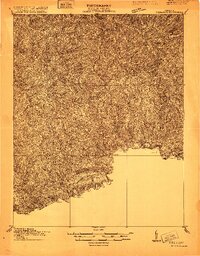 1915 Richlands1915 Print · USGSThe Clinch River valley in the years before the Great War is a network of coal-country settlements and mountain passes. Genealogists can locate family schoolhouses like Drill School or trace the early Norfolk and Western rail lines through Raven and Richlands.
 - 1915 Map of Clintwood
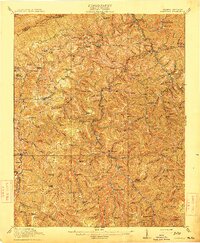 1915 Clintwood1915 Print · USGSThe northern Virginia coalfields are captured here in the mid-1910s, revealing a landscape of winding river valleys and ridge-top gaps. Genealogists can trace dozens of early schools and family settlements such as Clintwood, Haysi, and Rainy Flat School.3 unique versions available
 - 1916 Map of Bucu
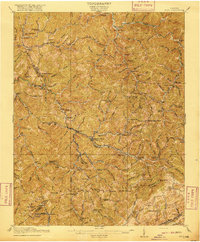 1916 Bucu1916 Print · USGSSouthwestern Virginia in the mid-1910s was a landscape of deep hollows and timber-driven commerce where three counties meet. Genealogists can trace family roots through an exceptional density of rural landmarks, from Bucu and Davenport to the Lumber RR and Hurricane School.3 unique versions available
 - 1916 Map of Richlands
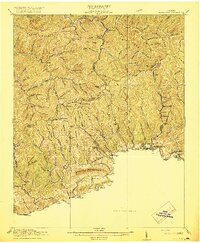 1916 Richlands1916 Print · USGSThe Clinch River valley was entering a period of industrial growth just before the First World War as rail lines followed the water. Genealogists can trace family roots through numerous mountain schools and hamlets like Antioch School, Red Ash, and Cedar Bluff.5 unique versions available
 - 1918 Map of Carterton
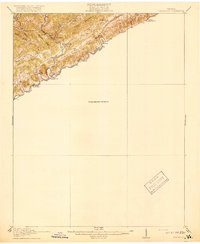 1918 Carterton1918 Print · USGSRussell County, Virginia, is defined by its steep coal-country ridges and the winding river corridor during the early twentieth century. Genealogists and researchers can trace the paths of the Norfolk and Western railway through Cleveland and locate vanished rural hubs like Musick School or Coulwood PO.3 unique versions available
 - 1920 Map of Coeburn
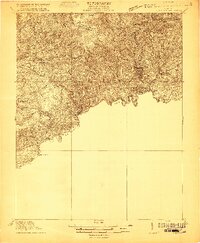 1920 Coeburn1920 Print · USGSSouthwest Virginia during the height of its rail and timber era reveals a complex network of company towns and mountain settlements. Genealogists can trace family footprints near Dante, St Paul, and Castlewood, or locate rural institutions like the Greenwood School and Carter School.5 unique versions available
 - 1934 Map of Lebanon
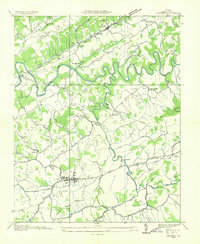 1934 Lebanon1934 Print · USGSCentered on Russell County during the mid-1930s, this survey captures the rural highland life before modern development. Genealogists can trace family homesteads near Coulwood P O, Slabtown, and local landmarks like Big Cedar Mill or Daughertys Cave.
 - 1934 Map of Brumley
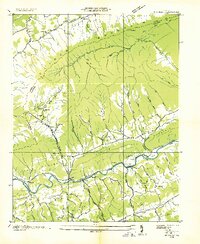 1934 Brumley1934 Print · USGSSouthwest Virginia during the mid-1930s is mapped here in detail as the TVA began its work in the Holston River watershed. Genealogists and local historians can trace rural family life through landmarks like Riverside Ch, Moccasin Gap Sch, and the river crossing at Scotts Ford.
 - 1934 Map of Hansonville
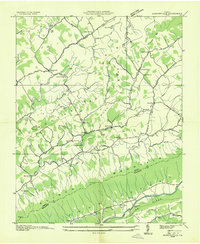 1934 Hansonville1934 Print · USGSThe rural communities of Russell County are shown during the mid-1930s as the Tennessee Valley Authority mapped the Appalachian valleys and ridges. Genealogists and historians can locate old schools and family-linked landmarks like Millers Mill, Hawkins Mill, and Adams Chapel.
 - 1934 Map of Carbo
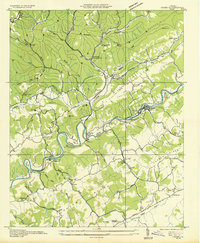 1934 Carbo1934 Print · USGSRussell County's coal and rail corridors are captured here in the mid-1930s as industrial development meets rural Appalachian life. Researchers can locate family landmarks like Jesses Mill, trace the depression-era Camp Dixie C C C, and find old stations at Carbo and Carterton.
 - 1935 Map of Wilder
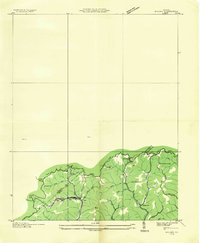 1935 Wilder1935 Print · USGSThe coal and timber country of Southwest Virginia is captured here in the mid-1930s as the rail lines reached into the deep hollows. Genealogists can locate family-named sites and rural institutions like Hammond Sch, Rasnake Sch, and the community of Wilder along the Clinchfield tracks.
Showing maps 1-25 of 168
Top cities of Russell County
- Lebanon historical maps
- Castlewood historical maps
- Honaker historical maps
- Dante historical maps
- Cleveland historical maps
Frequently asked questions
- What are the different types of historical maps available for Russell County?
- What is the oldest map of Russell County?
- Where can I purchase historical maps of Russell County for my home or office?
- Where can I download high-res historical maps of Russell County?
- Are there historical topographic maps available for Russell County?
- Is there historical aerial imagery available for Russell County?
- Where are historical maps of Russell County sourced from?