Old Maps of Erica, Virginia for Academic Research
Study the evolution of Erica with 18 high-resolution historic maps. Whether you're teaching, researching, or modeling changes in land use, these maps provide essential visual documentation of urban, environmental, and geographic change.
- Analyze long-term change: Track patterns in development, transportation, and natural features.
- Ideal for environmental or urban studies: Support academic projects with primary historical map data.
- Use in the classroom or lab: Educators and researchers rely on these maps to bring historical context to life.
These maps are a powerful tool for teaching, research, and visualizing how Erica has changed over the decades.
Erica, VA maps
(18)- 1892 Map of Piney Point
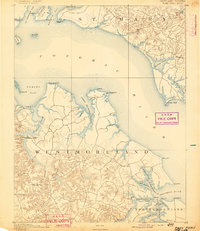 1892 Piney Point1892 Print · USGSThe Potomac River tidewater is captured in the early 1890s, bridging the maritime communities of Maryland and Virginia. Genealogists can trace family lands near Kinsale, Nomini Grove, and the historic crossing at Mount Holly (Nomini Ferry).
 - 1894 Map of Piney Point
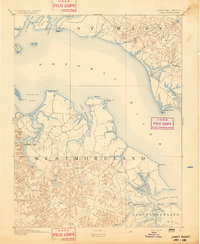 1894 Piney Point1894 Print · USGSThe Lower Potomac during the late nineteenth century was a world of landings, ferries, and river-dependent villages. Genealogists and historians can trace old homesteads and crossings near Mount Holly (Nomini Ferry), Kinsale, and Valley Lee.
 - 1895 Map of Nomini
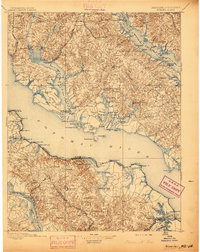 1895 Nomini1895 Print · USGSSouthern Maryland and the Virginia tidewater shores meet along the Potomac in this late nineteenth-century survey. Genealogists can trace family holdings and river landings from Charlotte Hall down to Sotterly and the Nomini Ferry.
 - 1895 Map of Piney Point
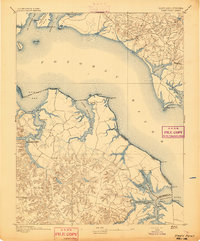 1895 Piney Point1895 Print · USGSThe Potomac River and its intricate Virginia and Maryland shorelines are revealed here in the late nineteenth century. Genealogists can trace family roots through landings and settlements like Kinsale, Hague, and Mount Holly (Nomini Ferry).
 - 1898 Map of Nomini
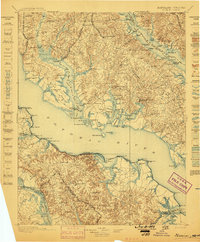 1898 Nomini1898 Print · USGSMaryland and Virginia's Tidewater region comes alive in the late nineteenth century as a world of river landings, rail terminals, and rural crossroads. Researchers can trace the maritime economy through Nomini Ferry and Stone Wharf, or locate ancestral homesteads near Charlotte Hall and Potomac Mills.5 unique versions available
 - 1901 Map of Piney Point
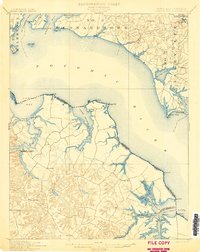 1901 Piney Point1901 Print · USGSThe Potomac River tidewater at the opening of the twentieth century was a landscape of remote landings and river-bound commerce. Researchers can trace historic ferry crossings at Mount Holly, find the L.H. at Piney Point, or locate old mill sites like Clifton Mills.5 unique versions available
 - 1943 Map of Machodoc
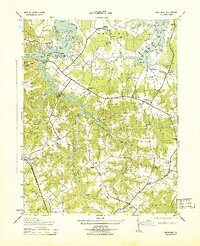 1943 Machodoc1943 Print · USGSWestmoreland County’s tidal necks and rural crossroads are captured here during the mid-1940s. Local researchers can trace family lands near Nomini Hall, identify the Lee Burial Plot, or locate vanished school sites like Tidwells Sch.2 unique versions available
 - 1948 Map of Washington
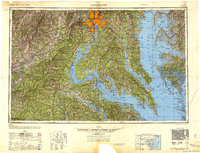 1948 Washington1948 Print · USGSThe Potomac and Chesapeake regions in the late 1940s reveal a landscape of expanding military reach and deep-rooted Tidewater settlements. Trace old rail corridors like the Richmond Fredericksburg & Potomac RR or locate landmarks like the Wakefield Washington Monument and St. Marys College.2 unique versions available
 - 1957 Map of Washington, 1966 Print
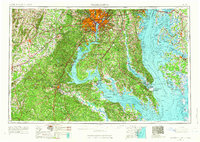 1957 Washington1966 Print · USGSThe mid-Atlantic region during the mid-fifties and early sixties reveals a landscape of growing suburbs and vital military outposts. Researchers can trace historic river towns and shorelines from Alexandria to the Hooper Islands and St Clements Island.5 unique versions available
 - 1961 Map of Washington
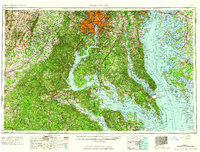 1961 Washington1961 Print · USGSThe mid-Atlantic region in the late fifties is presented in remarkable detail, from the Blue Ridge foothills to the Chesapeake Eastern Shore. Researchers can trace historic river landings and military sites like Mount Vernon, Fort Belvoir, and Point Lookout.2 unique versions available
 - 1968 Map of Machodoc, 1971 Print
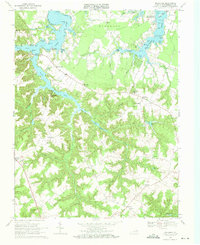 1968 Machodoc1971 Print · USGSThe Northern Neck’s tidal reaches and rural crossroads are captured in the late sixties as old water-bound settlements began to modernize. Researchers can locate family landmarks from Coles Point to Nomini Grove, including historic sites like Beales Wharf and Salem Ch.2 unique versions available
 - 1983 Map of Leonardtown, 1984 Print
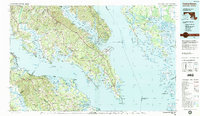 1983 Leonardtown1984 Print · USGSSouthern Maryland and the Northern Neck of Virginia are shown in the early eighties as a mosaic of historic tidewater settlements and modern installations. Trace family roots and shoreline changes near St Marys City, Leonardtown, and Colonial Beach.2 unique versions available
 - 1989 Map of Washington
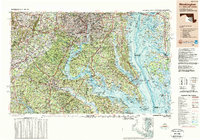 1989 Washington1989 Print · USGSThe Potomac River valley and Chesapeake Bay are shown in comprehensive detail during the late 1980s. Genealogists and historians can trace the transition from urban Alexandria to the rural Northern Neck, locating landmarks like Mount Vernon and Stratford Hall.
 - 2010 Map of Machodoc, 2010 Print
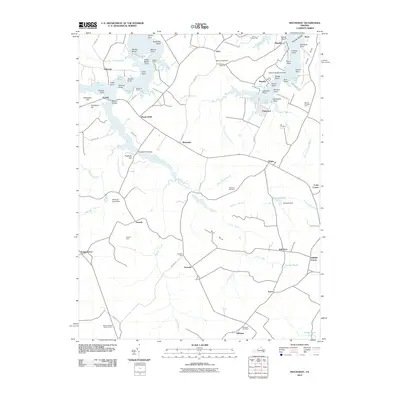 2010 Machodoc2010 Print · USGSThe Northern Neck of Virginia in 2010 shows a landscape shaped by tidal creeks and longstanding family farms. Researchers can trace land tracts and community roots near Hague, Mount Holly, and McGuires Wharf, or locate family sites like Antioch Farm.
 - 2013 Map of Machodoc, 2013 Print
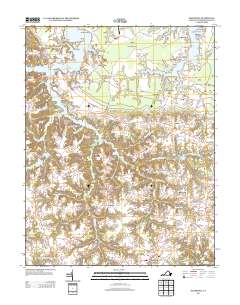 2013 Machodoc2013 Print · USGSWestmoreland County’s tidal inlets and rural crossroads are captured here in the early twenty-first century, showing a landscape shaped by water and wood. Researchers can trace maritime heritage at Beales Wharf or locate family history near Antioch Farm, Oldhams, and Hinnom.
 - 2016 Map of Machodoc, 2016 Print
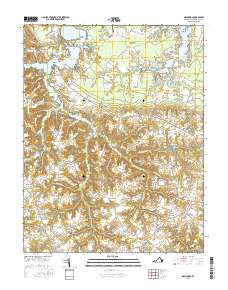 2016 Machodoc2016 Print · USGSThe Northern Neck of Virginia in the mid-2010s remains a landscape of tidal creeks and crossroads hamlets. Genealogists and local historians can trace family locations near Oldfield Swamp, Nomini Grove, and Ebenezer Church.
 - 2019 Map of Machodoc, 2019 Print
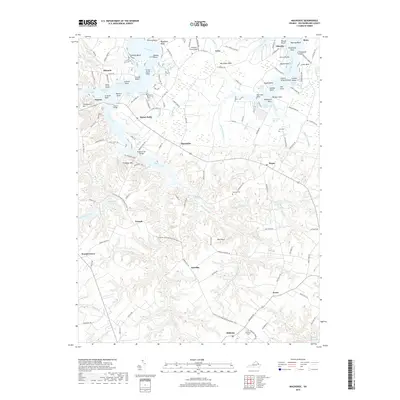 2019 Machodoc2019 Print · USGSThe Westmoreland County waterfront comes alive in this survey of the Northern Neck peninsulas and their intricate tidal coves. Researchers can trace landownership and community history through numerous family-named points and landings, from Greenpoint Lndg to Lee Cem and the village of Hague.
 - 2022 Map of Machodoc, 2022 Print
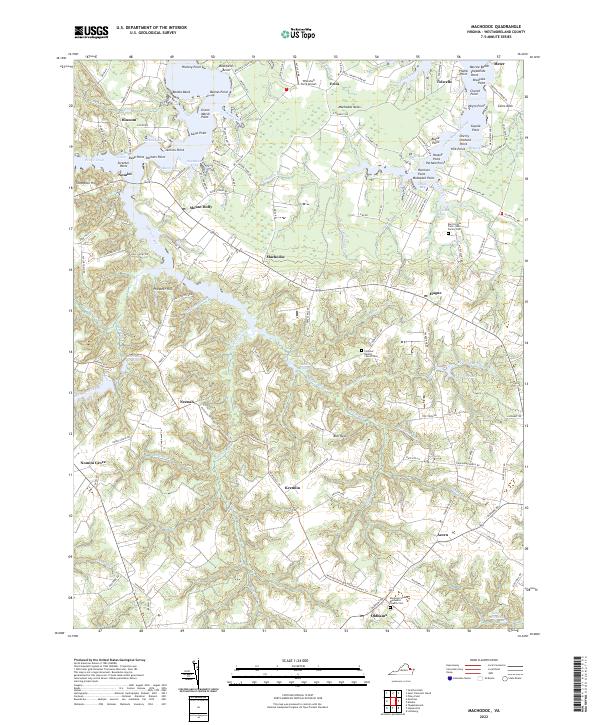 2022 Machodoc2022 Print · USGSWestmoreland County’s historic Northern Neck is revealed here as a network of tidal creeks and family lands in the early 2020s. Researchers can locate significant sites like the Burnt House Field - Lee Family Cem and trace old water-powered sites such as Beales Millpond near Machodoc.
End of results
Showing maps 1-18 of 18
Top cities near Erica
- Lexington Park historical maps
- California historical maps
- Wildewood historical maps
- Solomons historical maps
- Leonardtown historical maps
- Tappahannock historical maps
See more
Frequently asked questions
- What are the different types of historical maps available for Erica?
- What is the oldest map of Erica?
- Where can I purchase historical maps of Erica for my home or office?
- Where can I download high-res historical maps of Erica?
- Are there historical topographic maps available for Erica?
- Is there historical aerial imagery available for Erica?
- Where are historical maps of Erica sourced from?