Old Maps of Pikeside, West Virginia for Metal Detecting
Plan your next treasure hunt with 22 historic maps of Pikeside. Find old homesites, ghost towns, trails, and gathering spots that may be lost to time — perfect for identifying promising metal detecting locations.
- Locate forgotten sites: Uncover places like long-lost settlements, abandoned rail lines, or gathering spots.
- Plan better hunts: Use map overlays combined with LiDAR or satellite views to narrow in on historically rich areas.
- Made for detectorists: Thousands of hobbyists use these maps to discover relics, coins, and hidden history.
Use these historic maps to boost your research and find new opportunities beneath the surface of Pikeside.
Pikeside, WV maps
(22)- 1884 Map of Harpers Ferry
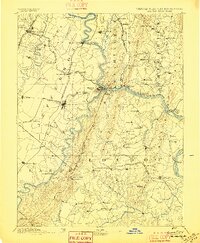 1884 Harpers Ferry1884 Print · USGSThe confluence of the Potomac and Shenandoah rivers is captured in the mid-1880s, documenting a landscape of strategic gaps and vital transit corridors. Researchers can trace the path of the Chesapeake and Ohio Canal and locate historic river crossings like Conrad Ferry and Castleman Ferry.
 - 1891 Map of Harpers Ferry
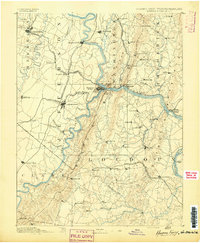 1891 Harpers Ferry1891 Print · USGSThe tri-state borderlands of the Potomac and Shenandoah valleys were a vital hub of transport and trade in the late 1800s. Researchers can trace historic river crossings like Castlemans Ferry, follow the route of the Chesapeake and Ohio Canal, or locate family-named settlements like Oatlands and Taylorstown.
 - 1893 Map of Harpers Ferry, 1898 Print
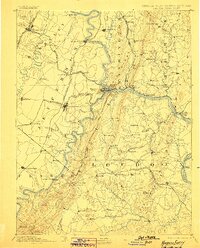 1893 Harpers Ferry1898 Print · USGSThe tri-state region of the Potomac and Shenandoah valleys is captured here in the late nineteenth century, showing a landscape defined by water and rail. Trace the historic Chesapeake and Ohio Canal or locate local landmarks like Snyder Mills and Harpers Ferry.7 unique versions available
 - 1914 Map of Martinsburg
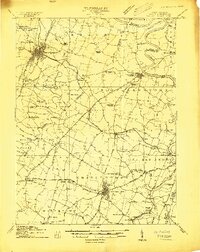 1914 Martinsburg1914 Print · USGSThe eastern panhandle of West Virginia comes alive in this survey, showing a landscape defined by the Potomac River and burgeoning rail hubs. Genealogists can trace family footprints through dozens of schools and churches, from Shepherdstown to the Snyder Hill Riverside School and John Browns Cave.3 unique versions available
 - 1916 Map of Martinsburg
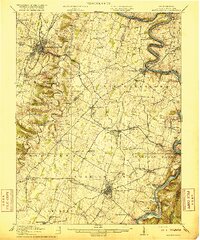 1916 Martinsburg1916 Print · USGSThe Eastern Panhandle of West Virginia comes to life in the years before the Great War, showing a bustling hub of rail activity and river commerce. Genealogists and historians can trace family roots through schoolhouses like Sutton School and old settlements such as Middleway and Summit Point.4 unique versions available
 - 1944 Map of Martinsburg
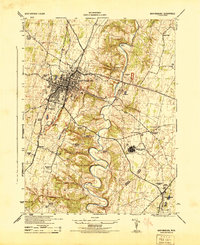 1944 Martinsburg1944 Print · USGSBerkeley County during the mid-forties reveals a landscape transitioning from traditional farming to wartime industrial and military activity. Researchers can trace family roots through the Dry Run Sunday School, locate the Newton D Baker General Hospital U S Army, and see the rail-side growth of Martinsburg.
 - 1944 Map of Martinsburg, 1964 Print
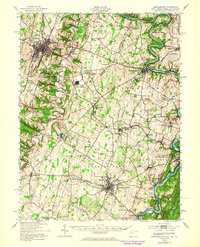 1944 Martinsburg1964 Print · USGSThe West Virginia Panhandle is captured during the mid-1940s, revealing a landscape of vital rail junctions and Potomac River crossings. Genealogists and historians can trace the foundations of Shepherdstown and Martinsburg, alongside landmarks like Martin Chapel and the Newton D Baker General Hospital.
 - 1948 Map of Baltimore
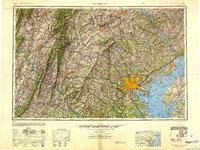 1948 Baltimore1948 Print · USGSMaryland and Pennsylvania crossroads are captured in the late 1940s, showing a landscape defined by historic rail lines and major military installations. Genealogists can trace family connections in Gettysburg, Westminster, and near the U.S. Naval Academy in Annapolis.2 unique versions available
 - 1954 Map of Baltimore
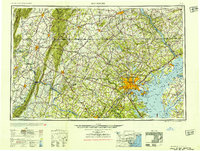 1954 Baltimore1954 Print · USGSThe Mid-Atlantic region in the early fifties shows a landscape of growing suburban centers and heavy rail corridors. Trace mid-century transit networks and military landmarks from the Aberdeen Proving Ground to the Gettysburg National Military Park.
 - 1955 Map of Martinsburg, 1957 Print
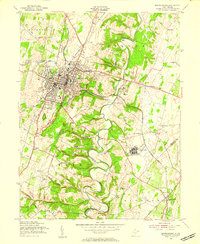 1955 Martinsburg1957 Print · USGSMid-century Martinsburg serves as a bustling hub of rail transport and medical infrastructure during this post-war period. Genealogists and local historians can trace family locations near Rosedale Cemetery, Eagle Chapel, or the U of W Va Experimental Farm.2 unique versions available
 - 1956 Map of Baltimore
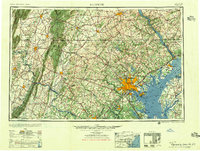 1956 Baltimore1956 Print · USGSMid-century Maryland and Pennsylvania are captured here during a period of massive suburban and military growth across the Chesapeake region. Genealogists and historians can trace the rail corridors of the Baltimore & Ohio RR and locate landmarks like Fort McHenry or the Aberdeen Proving Ground.
 - 1957 Map of Baltimore, 1964 Print
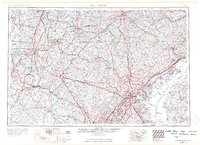 1957 Baltimore1964 Print · USGSMaryland and Southern Pennsylvania are shown during the mid-century expansion of the Baltimore-Washington corridor. Researchers can trace the extensive rail lines of the Baltimore & Ohio RR and locate sites like Fort Detrick and Gettysburg National Military Park.5 unique versions available
 - 1961 Map of Baltimore
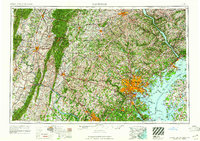 1961 Baltimore1961 Print · USGSMaryland and Pennsylvania are captured at a mid-century peak of industrial and military expansion. Genealogists and historians can trace rail corridors like the Western Maryland Ry or locate regional landmarks such as Camp Detrick and Kent Island.
 - 1979 Map of Martinsburg
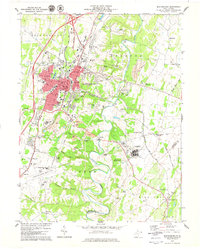 1979 Martinsburg1979 Print · USGSMartinsburg and the Opequon Creek valley are shown here in the late seventies during a period of rapid suburban and industrial growth. Researchers can find well-defined residential neighborhoods, old crossroads like Files Crossroad, and significant landmarks such as the U.S. Veterans Hospital and War Mem Park.
 - 1984 Map of Frederick, 1985 Print
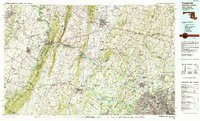 1984 Frederick1985 Print · USGSMaryland's Piedmont and the Potomac River valley are shown here in the mid-eighties as suburban growth began to meet historic rural landscapes. Genealogists and historians can trace the paths of the Baltimore and Ohio RR or locate the boundaries of Antietam National Battlefield and Fort Detrick.
 - 1989 Map of Baltimore
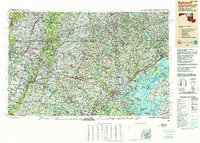 1989 Baltimore1989 Print · USGSThe Mid-Atlantic corridor in the late eighties is captured here, from the Baltimore harbor to the Blue Ridge foothills. Researchers can trace the sprawling footprints of Aberdeen Proving Ground, the historic grounds of Gettysburg National Military Park, and the winding Susquehanna River.
 - 1997 Map of Martinsburg, 2000 Print
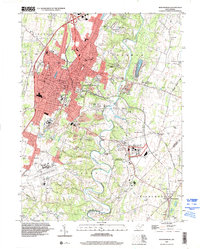 1997 Martinsburg2000 Print · USGSMartinsburg and its surrounding hamlets show a landscape of steady growth and deep roots in the late nineties. Local researchers can find family-named landmarks and historic junctions like Giles Crossroads, Grubbs Corner, and the Norborne Cem.
 - 2010 Map of Martinsburg, 2010 Print
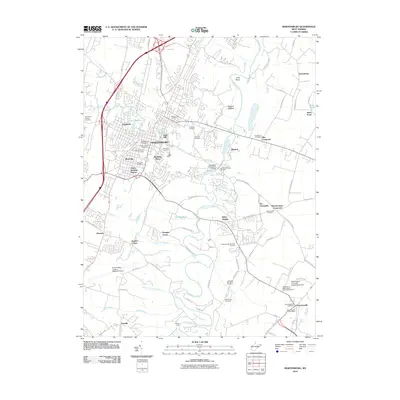 2010 Martinsburg2010 Print · USGSMartinsburg and its surrounding Berkeley County communities are captured here in the early twenty-first century as the city expanded southward. Genealogists and local historians can locate many burial sites like Old Norbourne Cemetery or trace the area's development near Boydville and Baker Heights.
 - 2014 Map of Martinsburg, 2014 Print
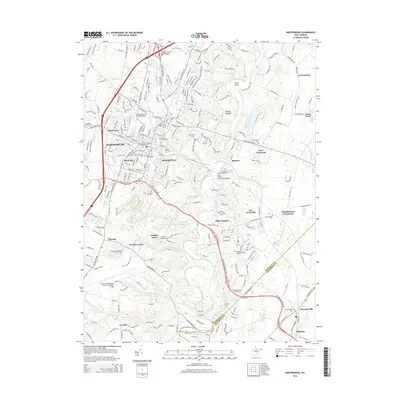 2014 Martinsburg2014 Print · USGSMartinsburg and its surrounding Berkeley County hamlets are captured here during a period of modern expansion balanced with deep-seated heritage. Researchers can locate numerous ancestral sites like Old Norbourne Cem and the Old Stone Bridge Cem near Blairton.
 - 2016 Map of Martinsburg, 2016 Print
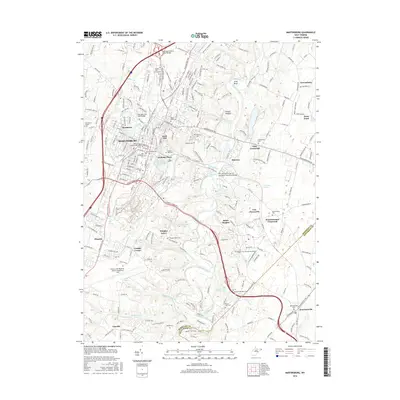 2016 Martinsburg2016 Print · USGSThe Martinsburg area during the mid-2010s shows a landscape of growing suburban centers and preserved rural crossroads. Genealogists can find numerous historic burial sites, including the Providence Quaker Cem and Saint Josephs Cem.
 - 2019 Map of Martinsburg, 2019 Print
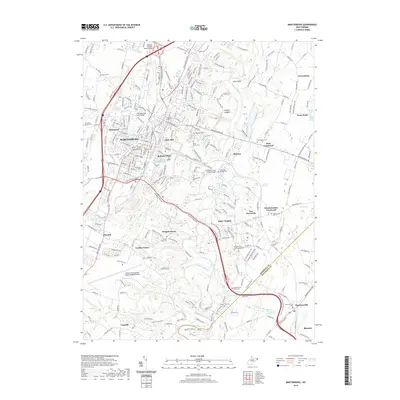 2019 Martinsburg2019 Print · USGSMartinsburg and the eastern panhandle are shown here at a period of modern growth that respects its 18th-century roots. Genealogists can trace family names at Providence Quaker Cem, Mount Zion Cem, and the historic Files Crossroad settlement.
 - 2023 Map of Martinsburg, 2023 Print
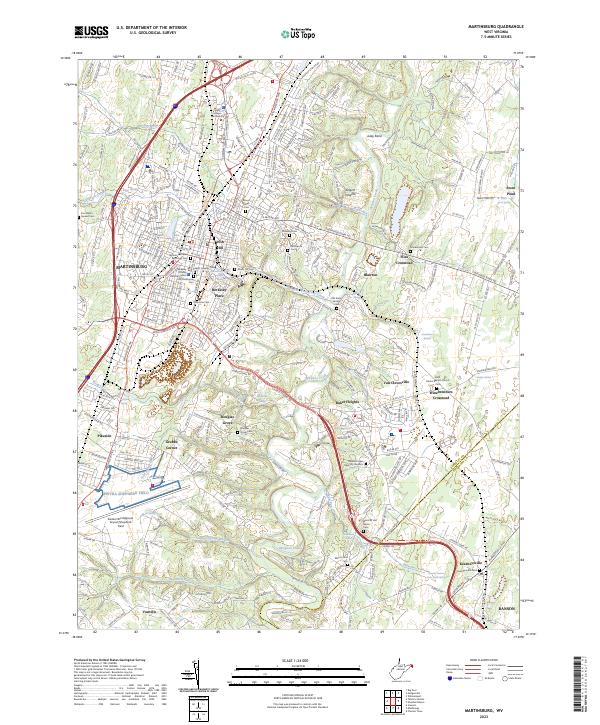 2023 Martinsburg2023 Print · USGSMartinsburg and its eastern fringes are shown here in the 2020s, highlighting the area's growth and its preserved historic sites. Researchers can trace family sites at Green Hill Cem or locate local landmarks like Old Stone Bridge and Grubbs Corner.
End of results
Showing maps 1-22 of 22
Top cities near Pikeside
- Hagerstown historical maps
- Martinsburg historical maps
- Charles Town historical maps
- Ranson historical maps
- Shannondale historical maps
- Inwood historical maps
See more
Frequently asked questions
- What are the different types of historical maps available for Pikeside?
- What is the oldest map of Pikeside?
- Where can I purchase historical maps of Pikeside for my home or office?
- Where can I download high-res historical maps of Pikeside?
- Are there historical topographic maps available for Pikeside?
- Is there historical aerial imagery available for Pikeside?
- Where are historical maps of Pikeside sourced from?