Old Maps of Jamestown, West Virginia for Academic Research
Study the evolution of Jamestown with 23 high-resolution historic maps. Whether you're teaching, researching, or modeling changes in land use, these maps provide essential visual documentation of urban, environmental, and geographic change.
- Analyze long-term change: Track patterns in development, transportation, and natural features.
- Ideal for environmental or urban studies: Support academic projects with primary historical map data.
- Use in the classroom or lab: Educators and researchers rely on these maps to bring historical context to life.
These maps are a powerful tool for teaching, research, and visualizing how Jamestown has changed over the decades.
Jamestown, WV maps
(23)- 1884 Map of Harpers Ferry
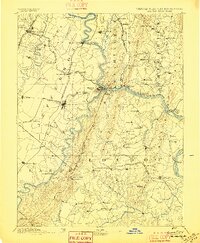 1884 Harpers Ferry1884 Print · USGSThe confluence of the Potomac and Shenandoah rivers is captured in the mid-1880s, documenting a landscape of strategic gaps and vital transit corridors. Researchers can trace the path of the Chesapeake and Ohio Canal and locate historic river crossings like Conrad Ferry and Castleman Ferry.
 - 1891 Map of Harpers Ferry
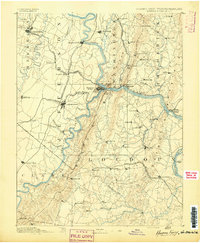 1891 Harpers Ferry1891 Print · USGSThe tri-state borderlands of the Potomac and Shenandoah valleys were a vital hub of transport and trade in the late 1800s. Researchers can trace historic river crossings like Castlemans Ferry, follow the route of the Chesapeake and Ohio Canal, or locate family-named settlements like Oatlands and Taylorstown.
 - 1893 Map of Harpers Ferry, 1898 Print
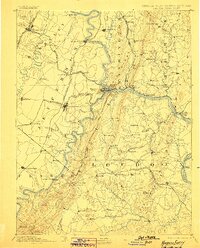 1893 Harpers Ferry1898 Print · USGSThe tri-state region of the Potomac and Shenandoah valleys is captured here in the late nineteenth century, showing a landscape defined by water and rail. Trace the historic Chesapeake and Ohio Canal or locate local landmarks like Snyder Mills and Harpers Ferry.7 unique versions available
 - 1916 Map of Berryville, 1920 Print
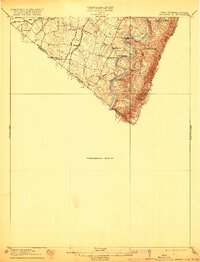 1916 Berryville1920 Print · USGSThe lower Shenandoah Valley at the onset of the Great War was a landscape defined by its river ferries and growing rail lines. Genealogists and historians can trace the foundations of local life through rural landmarks like Mountain Mission, Furnace School, and the river crossing at Shannondale Ferry.2 unique versions available
 - 1939 Map of Berryville
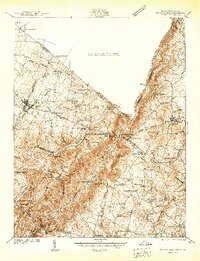 1939 Berryville1939 Print · USGSNorthern Virginia and the West Virginia borderlands appear here in the late thirties as a landscape of river fords and mountain gaps. Genealogists can trace family names at Locke Mill, Shepherd Ford, and the Mt Olive Cem.
 - 1944 Map of Berryville
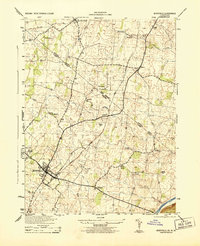 1944 Berryville1944 Print · USGSBerryville and the fertile Clarke County farmlands are captured in the 1940s as the rail lines of the Norfolk and Western and Baltimore and Ohio shaped local trade. Genealogists and historians can trace family locations near Beulah Church, Peagans Mill, and Rippon.
 - 1944 Map of Berryville
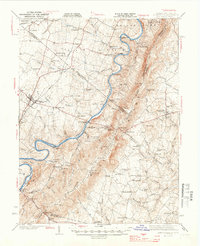 1944 Berryville1944 Print · USGSThe Virginia and West Virginia borderlands are captured here in the mid-1940s, showing the agricultural valley around Berryville meeting the steep Blue Ridge. Researchers can trace the path of the Appalachian Trail or locate vanished landmarks like Boyds Ferry and the Yellow Schoolhouse.
 - 1948 Map of Baltimore
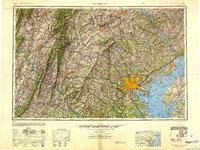 1948 Baltimore1948 Print · USGSMaryland and Pennsylvania crossroads are captured in the late 1940s, showing a landscape defined by historic rail lines and major military installations. Genealogists can trace family connections in Gettysburg, Westminster, and near the U.S. Naval Academy in Annapolis.2 unique versions available
 - 1953 Map of Berryville
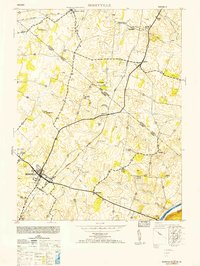 1953 Berryville1953 Print · USGSBerryville and the surrounding Shenandoah Valley come alive in this mid-century survey, capturing a cross-border community linked by major railroads. Genealogists can trace family connections through markers like Beulah Church, Feagans Mill, and small settlements like Rippon.
 - 1954 Map of Baltimore
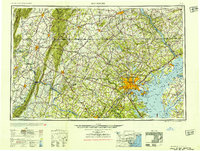 1954 Baltimore1954 Print · USGSThe Mid-Atlantic region in the early fifties shows a landscape of growing suburban centers and heavy rail corridors. Trace mid-century transit networks and military landmarks from the Aberdeen Proving Ground to the Gettysburg National Military Park.
 - 1955 Map of Berryville, 1956 Print
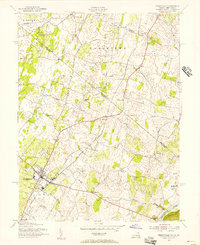 1955 Berryville1956 Print · USGSThe Shenandoah Valley during the mid-fifties remains an agricultural and spiritual landscape defined by its classic rail-and-river network. Genealogists and historians can trace family roots through Audley Farm, the Cistercian Monastery, and rural hamlets like Wickliffe or Rippon.
 - 1956 Map of Baltimore
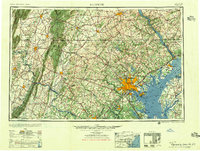 1956 Baltimore1956 Print · USGSMid-century Maryland and Pennsylvania are captured here during a period of massive suburban and military growth across the Chesapeake region. Genealogists and historians can trace the rail corridors of the Baltimore & Ohio RR and locate landmarks like Fort McHenry or the Aberdeen Proving Ground.
 - 1957 Map of Baltimore, 1964 Print
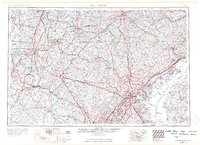 1957 Baltimore1964 Print · USGSMaryland and Southern Pennsylvania are shown during the mid-century expansion of the Baltimore-Washington corridor. Researchers can trace the extensive rail lines of the Baltimore & Ohio RR and locate sites like Fort Detrick and Gettysburg National Military Park.5 unique versions available
 - 1961 Map of Baltimore
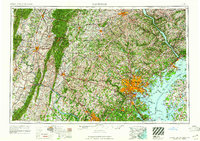 1961 Baltimore1961 Print · USGSMaryland and Pennsylvania are captured at a mid-century peak of industrial and military expansion. Genealogists and historians can trace rail corridors like the Western Maryland Ry or locate regional landmarks such as Camp Detrick and Kent Island.
 - 1968 Map of Berryville, 1969 Print
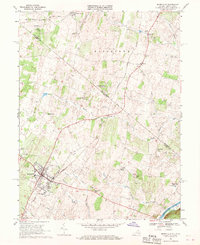 1968 Berryville1969 Print · USGSBerryville and its surrounding valley were thriving rail and farming hubs in the late sixties as West Virginia and Virginia converged. Genealogists can trace family footprints at Holy Cross Monastery, Prosperity Ch, and local schools like Grafton Sch.4 unique versions available
 - 1984 Map of Frederick, 1985 Print
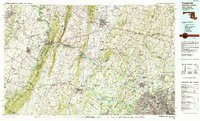 1984 Frederick1985 Print · USGSMaryland's Piedmont and the Potomac River valley are shown here in the mid-eighties as suburban growth began to meet historic rural landscapes. Genealogists and historians can trace the paths of the Baltimore and Ohio RR or locate the boundaries of Antietam National Battlefield and Fort Detrick.
 - 1989 Map of Baltimore
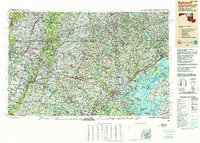 1989 Baltimore1989 Print · USGSThe Mid-Atlantic corridor in the late eighties is captured here, from the Baltimore harbor to the Blue Ridge foothills. Researchers can trace the sprawling footprints of Aberdeen Proving Ground, the historic grounds of Gettysburg National Military Park, and the winding Susquehanna River.
 - 1997 Map of Berryville, 2001 Print
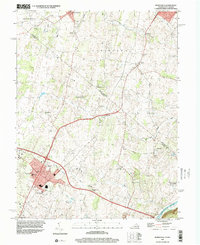 1997 Berryville2001 Print · USGSThe Virginia and West Virginia state line cuts through the Shenandoah Valley in the late nineties, documenting a landscape of rural hamlets and deep-rooted institutions. Genealogists can trace family names across Green Hill Cemetery, locate the Holy Cross Monastery, and explore small settlements like Rippon and Gaylord.
 - 2010 Map of Berryville, 2010 Print
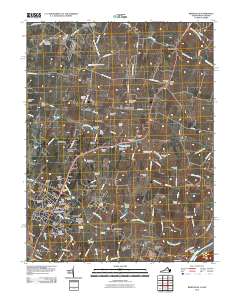 2010 Berryville2010 Print · USGSBerryville and the Virginia-West Virginia borderlands are shown here in the early twenty-first century, characterized by a unique pattern of historic named estates. Genealogists and local historians can trace family locations at Frosts Mill Estate, Soldiers Rest, and numerous burial grounds like Franklintown Cemetery.
 - 2013 Map of Berryville, 2013 Print
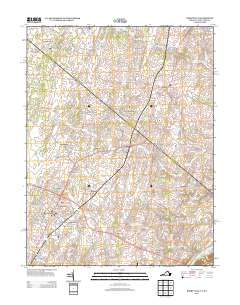 2013 Berryville2013 Print · USGSThe Virginia and West Virginia borderlands are documented here in the early twenty-first century, highlighting an area of historic estates and spring-fed farms. Researchers can trace land ownership through labels like Lang Syne Estate, Fairfax Grant Farm Springs, and the settlement at Battletown.
 - 2016 Map of Berryville, 2016 Print
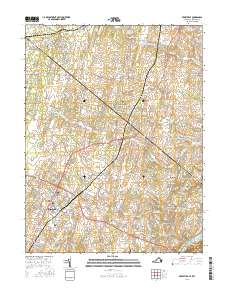 2016 Berryville2016 Print · USGSThe Virginia and West Virginia borderlands south of the Potomac show a landscape of historic family farms and established towns in the mid-2010s. Genealogists can locate numerous burial grounds like Milton Valley Cem and Franklintown Cem alongside settlements at Berryville and Wickliffe.
 - 2019 Map of Berryville, 2019 Print
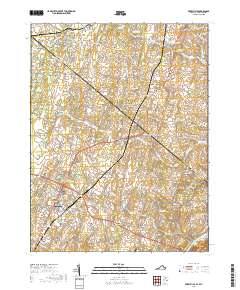 2019 Berryville2019 Print · USGSBerryville and the Shenandoah Valley are shown in detail here just before the end of the twenty-tens. Researchers can trace family history at Berryville Cemetery or locate landmarks like the Clarke County Courthouse and Pickles Airport.
 - 2022 Map of Berryville, 2022 Print
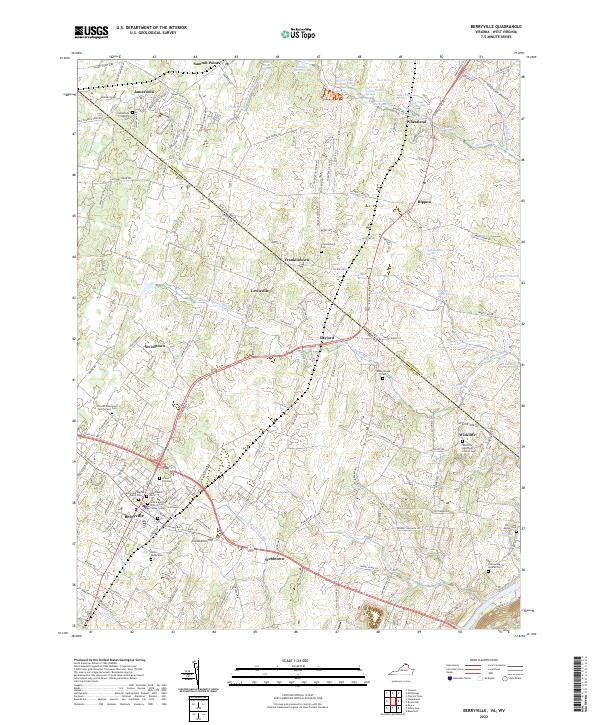 2022 Berryville2022 Print · USGSBerryville and the surrounding Blue Ridge foothills are captured here just after the turn of the millennium. Researchers can trace family history through a wealth of sites like the Thomas Blakemore Family Farm Cem, Wickliffe, and the Clarke County Courthouse.
End of results
Showing maps 1-23 of 23
Top cities near Jamestown
- Winchester historical maps
- Martinsburg historical maps
- Charles Town historical maps
- Ranson historical maps
- Berryville historical maps
- Shenandoah Farms historical maps
See more
Frequently asked questions
- What are the different types of historical maps available for Jamestown?
- What is the oldest map of Jamestown?
- Where can I purchase historical maps of Jamestown for my home or office?
- Where can I download high-res historical maps of Jamestown?
- Are there historical topographic maps available for Jamestown?
- Is there historical aerial imagery available for Jamestown?
- Where are historical maps of Jamestown sourced from?