Old Maps of Squire, West Virginia for Genealogy
Trace your family roots with 18 historic maps of Squire. These high-res maps reveal old neighborhoods, homesites, landmarks, and streets — helping you uncover where your ancestors lived and how the area evolved over time.
- Explore historic neighborhoods: Identify where your relatives may have lived in the 1800s or 1900s.
- Compare maps over time: Trace the changes in streets, buildings, and landmarks for multi-generational research.
- Perfect for genealogy & ancestry research: Used by family historians and researchers to map out lineage and migration.
These maps are an incredible resource for exploring your personal connection to Squire's past.
Squire, WV maps
(18)- 1891 Map of Tazewell
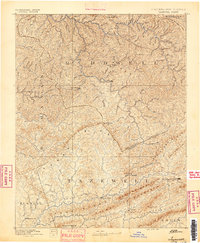 1891 Tazewell1891 Print · USGSThe Clinch Valley highlands are shown here in the late nineteenth century, capturing the early settlement of the Virginia and West Virginia borderlands. Local historians can trace the foundations of Jeffersonville and rural outposts like Baptist Valley and Cedar Bluff.
 - 1895 Map of Tazewell
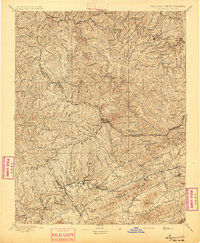 1895 Tazewell1895 Print · USGSSouthwest Virginia and the West Virginia coalfields are captured in the 1890s as the rail network transformed these mountain valleys. Researchers can trace early settlements and stores along the Norfolk and Western RR, from Tazewell to the mines near Welch and Vivian.
 - 1897 Map of Tazewell
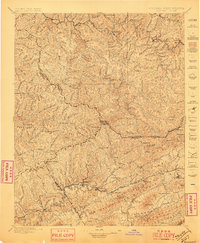 1897 Tazewell1897 Print · USGSThe rugged coal and timber lands of the border country appear here in the 1890s as the rail network expands. Genealogists can trace family roots at Mc Neil Store, follow the early growth of Welch, and locate homesteads near Shack Mills.8 unique versions available
 - 1912 Map of Pounding Mill
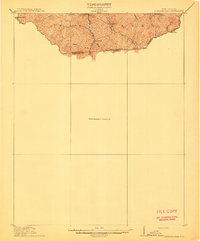 1912 Pounding Mill1912 Print · USGSThe McDowell and Tazewell borderlands appear here in the decade before the First World War, showing the early infrastructure of this mountainous region. Researchers can trace the path of Squire Jim Road and locate the settlement of Horsepen among the headwaters of Big Creek.
 - 1916 Map of Pounding Mill
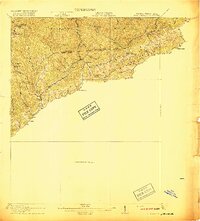 1916 Pounding Mill1916 Print · USGSThe Virginia and West Virginia state line was a rugged landscape of isolated mountain hollows and ridge-top knobs during the early twentieth century. Genealogists can trace family footprints near Greasy Creek School, the NORFOLK AND WESTERN RR, and the settlement of Sayersville.
 - 1926 Map of Pounding Mill
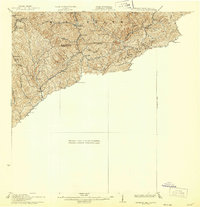 1926 Pounding Mill1926 Print · USGSAppalachian mountain life near the state line in the mid-twenties centers on remote hollows and high ridges. Researchers can trace the Norfolk and Western RR through Bandy or find family landmarks like the George Camp School and Sayersville.2 unique versions available
 - 1941 Map of Pounding Mill
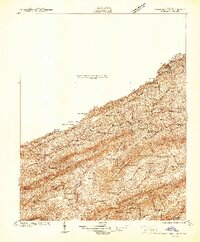 1941 Pounding Mill1941 Print · USGSThe Clinch River valley in the early 1940s shows a landscape organized by rail and ridge. Genealogists can trace family names at Maiden Spr, locate rural landmarks like Wittens Mill, or find old school sites like Linkous Sch.
 - 1947 Map of Pounding Mill
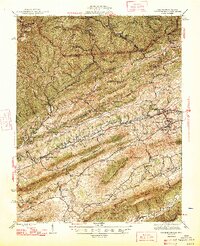 1947 Pounding Mill1947 Print · USGSTazewell County's coal and rail corridor is captured here in the mid-1940s, showing a landscape of tight mountain valleys and rural settlements. Genealogists can locate family landmarks like Witten Fort, Litz Chapel, and dozens of named schools from Bearwallow Sch to Mitchell Sch.2 unique versions available
 - 1955 Map of Bluefield
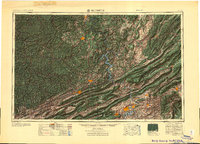 1955 Bluefield1955 Print · USGSThe Central Appalachian borderlands come alive in the mid-fifties, showing the coal and rail networks connecting Bluefield to Beckley. Researchers can trace the industrial landscape of the New River Ordnance Plant and the terrain of Burkes Garden.
 - 1957 Map of Bluefield, 1967 Print
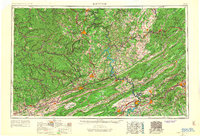 1957 Bluefield1967 Print · USGSThe heart of Central Appalachia in the mid-fifties is defined by the winding rail lines and river valleys of the coalfields. Researchers can trace the industrial footprints of towns like Welch and Princeton or locate landmarks such as the Bluestone Reservoir and Claytor Lake.2 unique versions available
 - 1961 Map of Bluefield
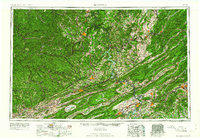 1961 Bluefield1961 Print · USGSThe coalfields and mountain ridges of southern West Virginia and southwest Virginia are captured in the early sixties. Genealogists can trace family ties through rail-linked towns like Princeton and Richlands or along the shores of Bluestone Reservoir.
 - 1968 Map of Tazewell North, 1971 Print
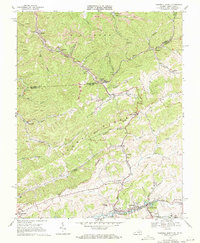 1968 Tazewell North1971 Print · USGSThe Clinch River valley and the West Virginia border come alive in the late 1960s, showing a landscape shaped by coal and rail. Genealogists and historians can trace the foundations of Tazewell, the community at Bishop, and landmarks like Lila Chapel and Maplewood Cem.2 unique versions available
 - 1981 Map of Bluefield
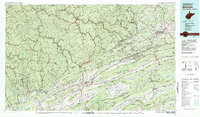 1981 Bluefield1981 Print · USGSThe coalfields and mountain ridges of the Virginia-West Virginia border are captured here during the early eighties. Genealogists and historians can trace the rail lines of the Norfolk and Western RR connecting Coalwood, Welch, and the unique geological basin of Burkes Garden.2 unique versions available
 - 2011 Map of Tazewell North, 2011 Print
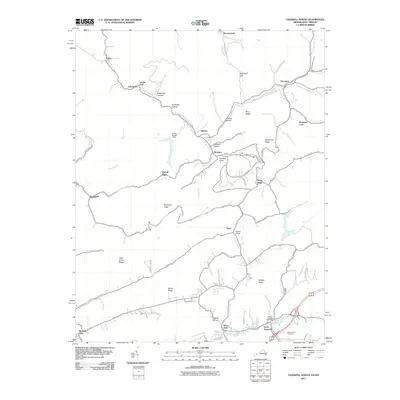 2011 Tazewell North2011 Print · USGSTazewell County at the start of the 2010s reveals a landscape defined by its deep Appalachian valleys and small coal-country settlements. Genealogists and local historians can trace the foundations of North Tazewell or explore family sites at Brewsterdale, Squire, and Maplewood Cemetery.
 - 2013 Map of Tazewell North, 2013 Print
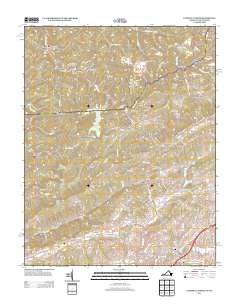 2013 Tazewell North2013 Print · USGSThe Clinch River headwaters and the coal-country borderlands of Virginia and West Virginia are captured in this recent survey. Genealogists and local historians can trace family locations through Crockett Cove, Squire, and the numerous named hollows like Brewster Hollow.
 - 2016 Map of Tazewell North, 2016 Print
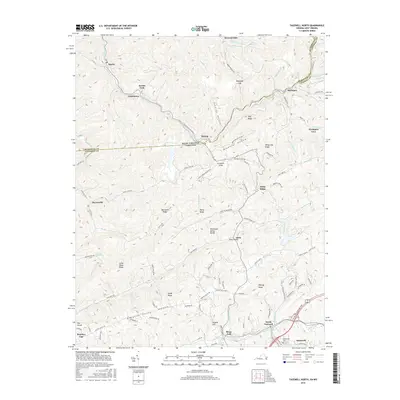 2016 Tazewell North2016 Print · USGSThe Appalachian borderlands between Virginia and West Virginia are detailed here in the mid-2010s. Genealogists and historians can trace the communities of Bishop and Squire, or locate family sites near Maplewood Cemetery and Willow Bridge.
 - 2019 Map of Tazewell North, 2019 Print
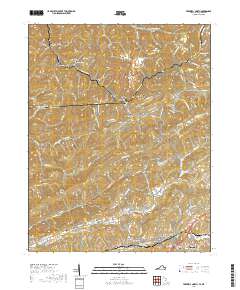 2019 Tazewell North2019 Print · USGSThe Virginia and West Virginia borderlands are documented here in the late twenty-teens, showing the mountainous region around Tazewell. Local historians can trace the paths of the Clinch River, locate Maplewood Cem, and find old mountain communities like Bishop and Horsepen.
 - 2023 Map of Tazewell North, 2023 Print
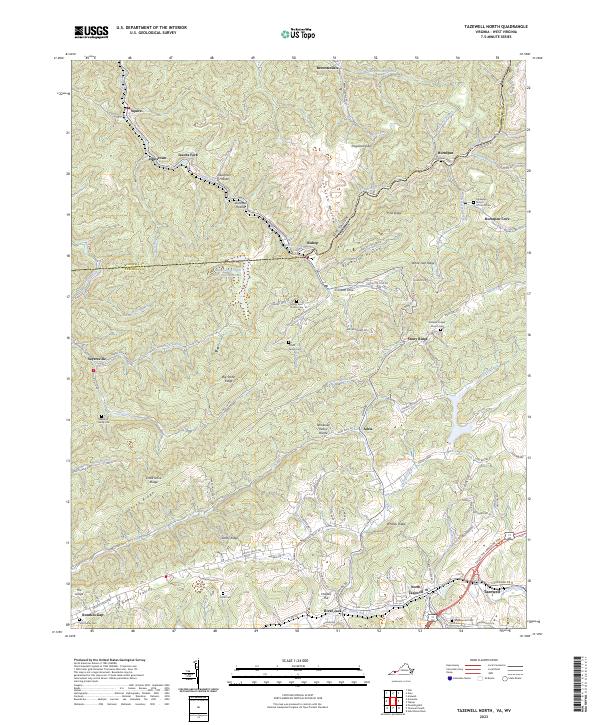 2023 Tazewell North2023 Print · USGSThe borderlands of Virginia and West Virginia are detailed here, centered on the historic communities of Tazewell and North Tazewell. Genealogists can trace family names through the Pruett Family Cem, Yost Family Cem, and the settlement at Sayersville.
End of results
Showing maps 1-18 of 18
Top cities near Squire
- Richlands historical maps
- Tazewell historical maps
- Welch historical maps
- Claypool Hill historical maps
- Cedar Bluff historical maps
- Springville historical maps
See more
Frequently asked questions
- What are the different types of historical maps available for Squire?
- What is the oldest map of Squire?
- Where can I purchase historical maps of Squire for my home or office?
- Where can I download high-res historical maps of Squire?
- Are there historical topographic maps available for Squire?
- Is there historical aerial imagery available for Squire?
- Where are historical maps of Squire sourced from?