1960s Maps of Blue Mounds, Wisconsin
Explore 10 historic maps of Blue Mounds from the 1960s. These maps offer a rare glimpse into what life looked like during the 1960s — showing old roads, neighborhoods, homes, and landmarks that have changed or disappeared over time.
Whether you're researching your family's past, planning a metal detecting trip, or studying how Blue Mounds's landscape evolved across the 1960s, these high-resolution maps are a powerful tool for exploring the history of this region.
- Focus on a specific era: All maps on this page are from the 1960s, giving you a focused view of this time period.
- See what’s changed: Compare century-old streets, trails, and buildings to today's modern landscape using overlays and satellite layers.
- Research with precision: Use these maps for genealogy, historical research, land use analysis, or educational projects.
- View, download, or print: Maps are fully viewable online in high resolution, and can be downloaded or printed for your own records.
Start exploring Blue Mounds's history through authentic maps from the 1960s. This is your window into the past.
Blue Mounds, WI maps
(10)- 1960 Map of Madison
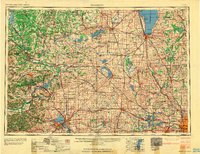 1960 Madison1960 Print · USGSCentral and Southern Wisconsin are captured in the late fifties, showing the region as its rail-and-river network matured. Trace the paths of the Soo Line RR or locate family roots near Lake Mendota and Horicon National Wildlife Refuge.2 unique versions available
 - 1962 Map of Cross Plains, 1964 Print
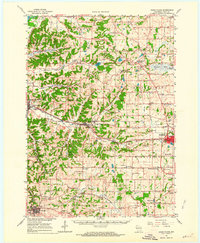 1962 Cross Plains1964 Print · USGSWestern Dane County in the early sixties shows a landscape of deep valleys and rising ridges between Cross Plains and Mt Horeb. Genealogists and historians can trace family locations through numerous rural sites like St Marys Cem, Richardson Cave, and the Pine Bluff Observatory.2 unique versions available
 - 1962 Map of New Glarus, 1964 Print
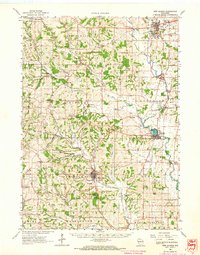 1962 New Glarus1964 Print · USGSSouthern Wisconsin's driftless terrain and Swiss-settled valleys are captured here in the early sixties, showing the rural character of Green and Dane Counties. Researchers can trace family history through sites like East Blue Mounds Church, Oak Hill Cem, and the Andrew Henry School.2 unique versions available
 - 1962 Map of Blanchardville, 1964 Print
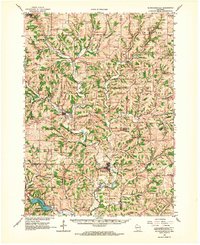 1962 Blanchardville1964 Print · USGSSouthern Wisconsin's rolling uplands and river valleys are captured here in the early sixties, showing the vital rail-and-river connection at Blanchardville. Researchers can trace rural life through dozens of local landmarks like the Moscow Center School, Yellowstone Church, and the newly created Yellowstone Lake.
 - 1962 Map of Mt. Vernon, 1964 Print
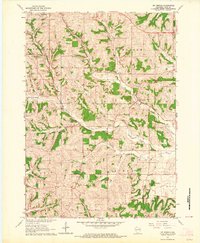 1962 Mt. Vernon1964 Print · USGSDane County's rolling driftless terrain is captured here in the early sixties as a network of small dairy-farming communities. Researchers can trace rural school locations like Britt Valley Sch or find family history at Primrose Ch and Mt Vernon Cem.2 unique versions available
 - 1962 Map of Daleyville, 1964 Print
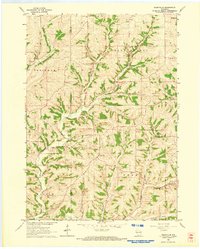 1962 Daleyville1964 Print · USGSWisconsin's rural dairy country in the early sixties is captured here along the border of Iowa and Dane counties. Genealogists can trace family footprints through a dense network of country schools and churches, including Ruste Sch, Hauge Ch, and Forward Sch.
 - 1962 Map of Blue Mounds, 1964 Print
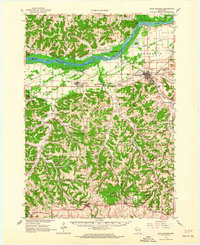 1962 Blue Mounds1964 Print · USGSThe Wisconsin River valley and the driftless hills of Dane County are captured here in the early sixties. Genealogists and hikers can trace old ridge roads to Little Norway, the White Church Cem, and the underground wonders of Cave of the Mounds.3 unique versions available
 - 1962 Map of Blue Mounds, 1964 Print
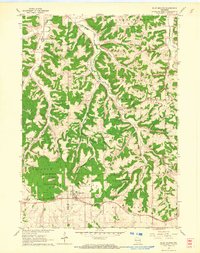 1962 Blue Mounds1964 Print · USGSThe high driftless peaks of western Dane County stood at a crossroads of heritage and tourism in the early sixties. Researchers can trace the legacy of early settlements and family landmarks from Little Norway and Deneen Sch to the depths of Cave of the Mounds.3 unique versions available
 - 1962 Map of Cross Plains, 1964 Print
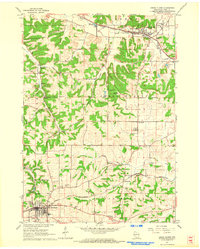 1962 Cross Plains1964 Print · USGSThe Driftless Area of Dane County comes alive in the early sixties, showing the rail-connected growth of the villages and the surrounding dairy country. Genealogists can trace family names through landmarks like St Martins Ch, Union Cem, and the small settlement of Pine Bluff.3 unique versions available
 - 1963 Map of Rockford
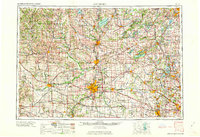 1963 Rockford1963 Print · USGSThe mid-century industrial corridor along the Rock River is shown here during a period of rapid post-war growth. Researchers can trace the extensive rail lines of the Chicago and North Western or locate local landmarks like the Rockford Ordnance Depot and Holy Hill.
End of results
Showing maps 1-10 of 10
Top cities near Blue Mounds
- Madison historical maps
- Middleton historical maps
- Verona historical maps
- Mount Horeb historical maps
- Cross Plains historical maps
- Town of Springfield historical maps
See more
Frequently asked questions
- What are the different types of historical maps available for Blue Mounds?
- What is the oldest map of Blue Mounds?
- Where can I purchase historical maps of Blue Mounds for my home or office?
- Where can I download high-res historical maps of Blue Mounds?
- Are there historical topographic maps available for Blue Mounds?
- Is there historical aerial imagery available for Blue Mounds?
- Where are historical maps of Blue Mounds sourced from?