1900s (20th Century) Maps of Willow Springs, Wisconsin
Explore 10 historic maps of Willow Springs from the 1900s (20th Century). These maps offer a rare glimpse into what life looked like during the 1900s — showing old roads, neighborhoods, homes, and landmarks that have changed or disappeared over time.
Whether you're researching your family's past, planning a metal detecting trip, or studying how Willow Springs's landscape evolved across the 1900s, these high-resolution maps are a powerful tool for exploring the history of this region.
- Focus on a specific era: All maps on this page are from the 1900s, giving you a focused view of this time period.
- See what’s changed: Compare century-old streets, trails, and buildings to today's modern landscape using overlays and satellite layers.
- Research with precision: Use these maps for genealogy, historical research, land use analysis, or educational projects.
- View, download, or print: Maps are fully viewable online in high resolution, and can be downloaded or printed for your own records.
Start exploring Willow Springs's history through authentic maps from the 1900s. This is your window into the past.
Willow Springs, WI maps
(10)- 1902 Map of Mineral Point
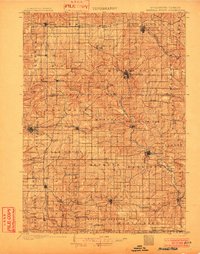 1902 Mineral Point1902 Print · USGSSouthwest Wisconsin and Northern Illinois are mapped here at the height of the regional mining era. Genealogists and historians can trace the rail lines of the Illinois Central to vanished junctions and local landmarks like Meekers Grove, Calamine, and Elk Grove.4 unique versions available
 - 1952 Map of Calamine, 1954 Print
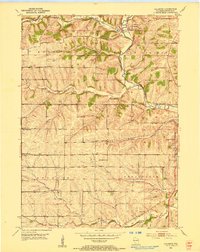 1952 Calamine1954 Print · USGSLafayette County in the early fifties shows a rural landscape defined by the winding Pecatonica River and the local rail line. Genealogists can locate numerous country schools and cemeteries like Hamestreet Sch, Truman, and Union Grove Cemetery.
 - 1952 Map of Mineral Point, 1954 Print
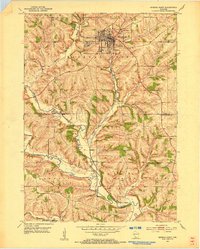 1952 Mineral Point1954 Print · USGSMineral Point and its surrounding lead-mining country are shown here in the early fifties, just as the rural school system remained intact. Genealogists can locate family sites near Willow Springs Church, St. Marys Cemetery, or small districts like Slateford and Seven Oaks School.3 unique versions available
 - 1959 Map of Dubuque, 1982 Print
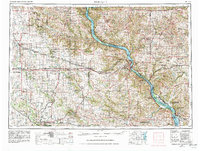 1959 Dubuque1982 Print · USGSThe Tri-State region comes alive in the mid-twentieth century as a hub of river commerce and rail transit. Genealogists and historians can trace the paths of the Illinois Central Gulf through Dubuque or locate the Savanna Ordnance Depot and Lock and Dam No 11.
 - 1961 Map of Dubuque
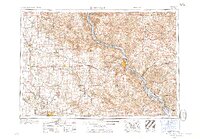 1961 Dubuque1961 Print · USGSThe Tri-State region's river-and-rail landscape is captured here during the early sixties, showing the convergence of Iowa, Illinois, and Wisconsin. Trace mid-century rail lines like the Chicago Great Western Ry and explore sites like the Savanna Ordnance Depot and Backbone State Park.
 - 1962 Map of Dubuque
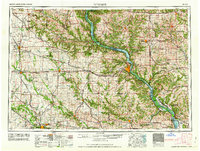 1962 Dubuque1962 Print · USGSThe Tri-State region's river-and-rail economy is captured here in the early sixties, centered on the Mississippi River bluffs. Genealogists and historians can locate Numerous lead and zinc mines, the New Melleray Abbey Monastery, and rural hubs like Saint Olaf.2 unique versions available
 - 1962 Map of Darlington, 1964 Print
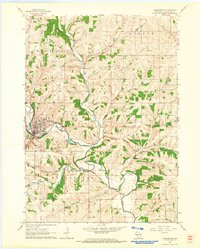 1962 Darlington1964 Print · USGSLafayette County was a hub of river commerce and rural education in the early sixties. Genealogists can locate family sites near Holy Rosary Cem or trace the old rail lines of the Chicago Milwaukee St Paul and Pacific through Darlington.
 - 1962 Map of Waldwick, 1964 Print
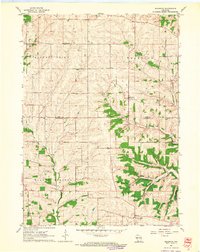 1962 Waldwick1964 Print · USGSThe rural borders of Iowa and Lafayette Counties come alive in this early 1960s survey of the Wisconsin driftless landscape. Researchers can trace the heritage of Waldwick and Fayette, locating historic sites like Jackson Cem and the Broad View Sch.2 unique versions available
 - 1976 Map of Dubuque
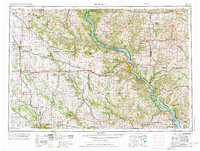 1976 Dubuque1976 Print · USGSThe tri-state borderlands of Iowa, Wisconsin, and Illinois come alive during the mid-seventies, showing a region built on river commerce and mining. Genealogists and historians can trace the paths of the Illinois Central railroad or locate heritage sites like the New Melleray Abbey Monastery and Backbone State Park.
 - 1984 Map of Dubuque North, 1985 Print
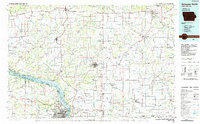 1984 Dubuque North1985 Print · USGSThis Tri-State region was a hub of Midwestern mining and river commerce in the mid-eighties. Researchers can trace the legacy of the Lead District through specific sites like Annie Mine or locate early civic centers such as First Capitol State Park.2 unique versions available
End of results
Showing maps 1-10 of 10
Top cities near Willow Springs
- Dodgeville historical maps
- Mineral Point historical maps
- Darlington historical maps
- Shullsburg historical maps
- Belmont historical maps
- Wiota historical maps
See more
Top neighborhoods of Willow Springs
Frequently asked questions
- What are the different types of historical maps available for Willow Springs?
- What is the oldest map of Willow Springs?
- Where can I purchase historical maps of Willow Springs for my home or office?
- Where can I download high-res historical maps of Willow Springs?
- Are there historical topographic maps available for Willow Springs?
- Is there historical aerial imagery available for Willow Springs?
- Where are historical maps of Willow Springs sourced from?