Old Maps of Fredonia, Wisconsin for Academic Research
Study the evolution of Fredonia with 40 high-resolution historic maps. Whether you're teaching, researching, or modeling changes in land use, these maps provide essential visual documentation of urban, environmental, and geographic change.
- Analyze long-term change: Track patterns in development, transportation, and natural features.
- Ideal for environmental or urban studies: Support academic projects with primary historical map data.
- Use in the classroom or lab: Educators and researchers rely on these maps to bring historical context to life.
These maps are a powerful tool for teaching, research, and visualizing how Fredonia has changed over the decades.
Fredonia, WI maps
(40)- 1892 Map of Port Washington
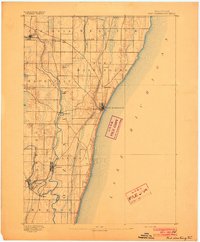 1892 Port Washington1892 Print · USGSOzaukee County’s lakefront and river valleys are captured here during the 1890s as the railroad era transformed the Wisconsin coast. Researchers can trace historic property locations and vanished stops like Ulao Station, Deekers, and Hamilton along the banks of the Milwaukee River.
 - 1904 Map of West Bend
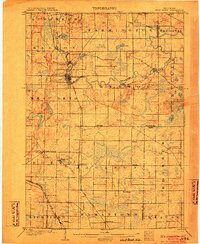 1904 West Bend1904 Print · USGSWashington County at the turn of the century was a landscape of thriving river towns and vital rail corridors. Genealogists and local historians can trace the early footprints of West Bend and Barton, or locate smaller rural junctions like Kirchhayn and Rockfield.3 unique versions available
 - 1904 Map of Port Washington
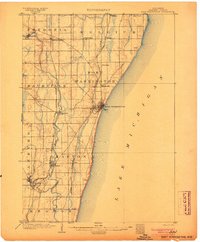 1904 Port Washington1904 Print · USGSOzaukee County’s lakefront and river valleys are captured here at the dawn of the twentieth century, showing a bustling landscape of rail-connected towns. Researchers can trace family roots in early settlements like Holy Cross, Belgium, and Ulao, or locate the specific rail depots and harbor works at Port Washington.2 unique versions available
 - 1954 Map of Sheboygan Falls, 1956 Print
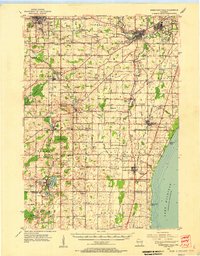 1954 Sheboygan Falls1956 Print · USGSCoastal Sheboygan and Ozaukee counties appear here in the mid-1950s, showing a landscape of dairy farms, mill ponds, and emerging industrial centers. Genealogists can trace family names at St Patrick Ch, find rural schoolhouses like Hoard Sch, or locate the lakefront Sauk Trail Beach.2 unique versions available
 - 1954 Map of Milwaukee, 1967 Print
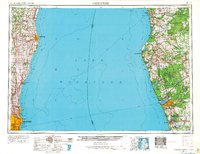 1954 Milwaukee1967 Print · USGSCoastal life and maritime commerce across Lake Michigan are seen here during the mid-fifties, bridging Wisconsin's industrial hubs and Michigan's timberlands. Genealogists and historians can trace the rail lines of the Grand Trunk Western and find long-established ports like Ludington, Port Washington, and Muskegon.3 unique versions available
 - 1955 Map of Kewaskum, 1957 Print
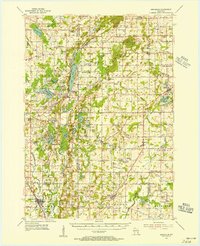 1955 Kewaskum1957 Print · USGSMid-century eastern Wisconsin comes alive in this survey of the glacial Kettle Moraine region. Genealogists and historians can locate rural landmarks like Conners Mill, the Parnell Lookout Tower, and old schools including Mitchell Sch and Hillside Sch.4 unique versions available
 - 1957 Map of Madison, 1967 Print
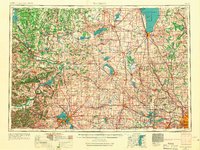 1957 Madison1967 Print · USGSSouth-central Wisconsin in the mid-fifties reveals a landscape of industrial hubs and glacial lakes linked by a dense rail and highway network. Genealogists and historians can trace the development of lakeside communities and find notable sites like Badger Ordnance Works and the Horicon National Wildlife Refuge.3 unique versions available
 - 1958 Map of Milwaukee
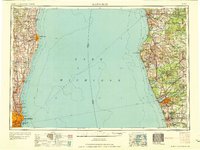 1958 Milwaukee1958 Print · USGSThe shorelines of Lake Michigan in the late fifties reveal a landscape of bustling ferry ports and growing industrial suburbs. Genealogists and historians can trace rail networks like the Chesapeake & Ohio and locate landmarks such as Little Sable Point and Holy Cross Church.
 - 1959 Map of Port Washington West, 1960 Print
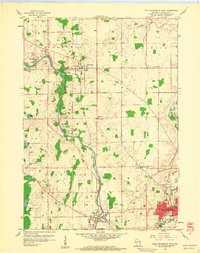 1959 Port Washington West1960 Print · USGSOzaukee County in the late fifties reveals a landscape of river-bend hamlets and busy rail corridors before the height of modern suburbanization. Trace local family roots at Holden Cem, locate the old Grandview Sch, or study the industrial footprint of Saukville and Fredonia.3 unique versions available
 - 1959 Map of West Bend, 1960 Print
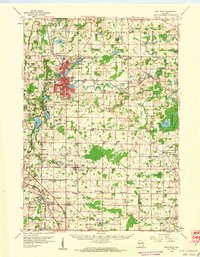 1959 West Bend1960 Print · USGSWashington and Ozaukee counties are shown here in the late fifties, as the Milwaukee River corridor supported both industry and recreation. Trace local history through family-named landmarks like Last Home Cem and rail hubs at Rugby Junction.
 - 1959 Map of Port Washington, 1960 Print
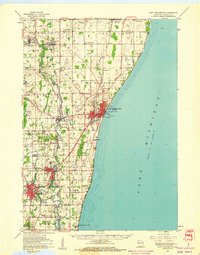 1959 Port Washington1960 Print · USGSOzaukee County’s shoreline and river valleys are captured here in the late fifties, showing the area just as suburban expansion began to reach northward from Milwaukee. Genealogists can trace family names through landmarks like Waubeka Union Cem, the Lighthouse at the harbor, and rural schools such as McKinley Sch.
 - 1959 Map of Newburg, 1964 Print
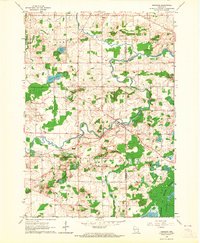 1959 Newburg1964 Print · USGSThe river valleys of Washington and Ozaukee counties are captured here in the late fifties, showing a rural landscape defined by parish life and the Milwaukee River. Genealogists can trace family roots through sites like St Finbars Ch, Myra, and the extensive Cedarburg Bog.4 unique versions available
 - 1960 Map of Madison
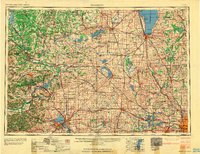 1960 Madison1960 Print · USGSCentral and Southern Wisconsin are captured in the late fifties, showing the region as its rail-and-river network matured. Trace the paths of the Soo Line RR or locate family roots near Lake Mendota and Horicon National Wildlife Refuge.2 unique versions available
 - 1974 Map of Random Lake, 1977 Print
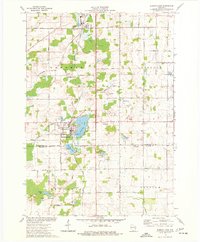 1974 Random Lake1977 Print · USGSSheboygan and Ozaukee counties are shown here in the 1970s, as traditional rail corridors and rural townships began to accommodate new parks and utilities. You can trace family roots at Emmanuel Cem, locate the Indian Mound, or follow the Milwaukee Road rail line.
 - 1974 Map of Batavia, 1977 Print
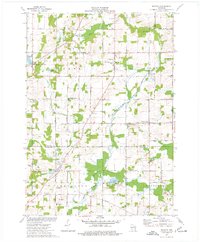 1974 Batavia1977 Print · USGSThe rural borderlands of Sheboygan, Washington, and Ozaukee counties are preserved here in the mid-seventies as agriculture and gravel mining shaped the land. Researchers can locate family landmarks like the Winfield Cem, St Johns Ch, and the small settlement of Boltonville.
 - 1980 Map of Fond Du Lac
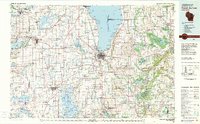 1980 Fond Du Lac1980 Print · USGSThe Fox River Valley and Horicon Marsh meet here during the late twentieth century, showing a transition from lakeside industry to glacial conservation. Genealogists can locate family sites at Estabrook Cem or trace the rail lines through Ripon and Waupun.
 - 1980 Map of Milwaukee, 1981 Print
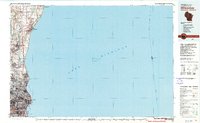 1980 Milwaukee1981 Print · USGSThe Lake Michigan shoreline and Milwaukee's urban sprawl are captured here at the start of the 1980s. Local researchers can trace family landmarks like Graceland Cemetery, educational sites like Milwaukee-Downer College, and the northern rail lines of the Chicago and North Western.
 - 1984 Map of Oconomowoc, 1985 Print
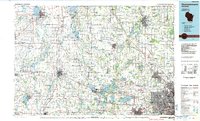 1984 Oconomowoc1985 Print · USGSSoutheast Wisconsin in the mid-eighties shows a landscape defined by its glacial heritage and expanding metropolitan corridors. Genealogists and historians can trace the development of lakeside communities like Oconomowoc and Pewaukee, or find established settlements such as Watertown and Beaver Dam.
 - 1989 Map of Sheboygan, 1990 Print
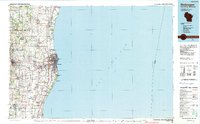 1989 Sheboygan1990 Print · USGSCoastal Wisconsin thrived in the late eighties as the industrial corridor between Sheboygan and Belgium expanded along the lake. Genealogists and local researchers can trace old township lines and small settlements like Howards Grove, Hingham, and Gibbsville.
 - 1991 Map of Oconomowoc
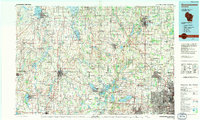 1991 Oconomowoc1991 Print · USGSSoutheastern Wisconsin in the early nineties shows a landscape of glacial lakes and growing suburbs. Trace local history through Aztalan State Park, Carroll College, and the sprawling Horicon Marsh State Wildlife Area.
 - 2010 Map of Random Lake, 2010 Print
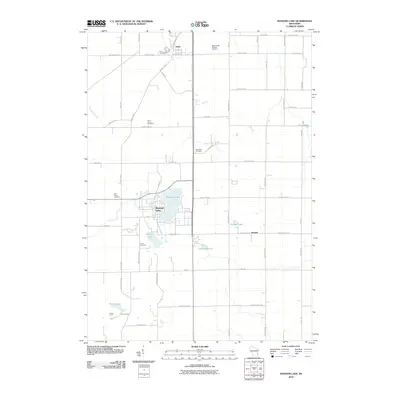 2010 Random Lake2010 Print · USGSSheboygan County's rural landscape is captured here in the early twenty-first century, showcasing a transition from small-town centers to working farmland. Researchers can locate several historic burial sites like Union Cemetery and Saint Marys Cemetery, alongside the village of Adell.
 - 2010 Map of Port Washington West, 2010 Print
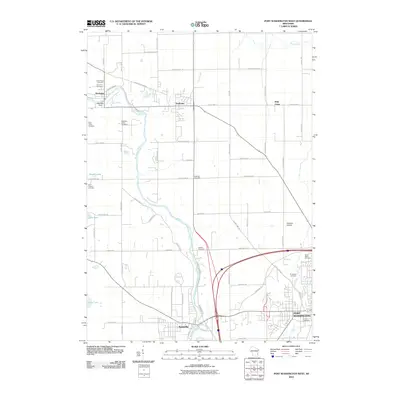 2010 Port Washington West2010 Print · USGSOzaukee County’s rural and residential landscape is captured here during a decade of growth west of Lake Michigan. Genealogists and local historians can trace family plots at Katarina Cemetery or Holden Cemetery and locate landmarks like the Waubeka Dam.
 - 2010 Map of Newburg, 2010 Print
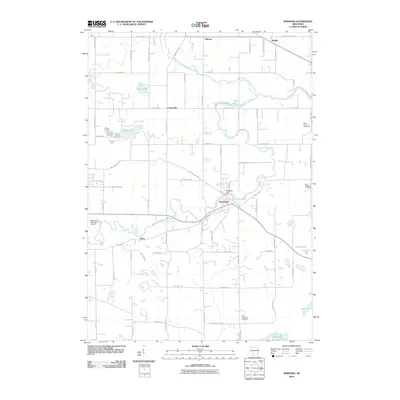 2010 Newburg2010 Print · USGSWisconsin's Washington County landscape appears here as a blend of rural hamlets and river-driven settlements in the early 2000s. Genealogists and local historians can locate Saint Finbars Cemetery, the historic crossroads of Cheeseville, and the Newburg Dam along the Milwaukee River.
 - 2010 Map of Batavia, 2010 Print
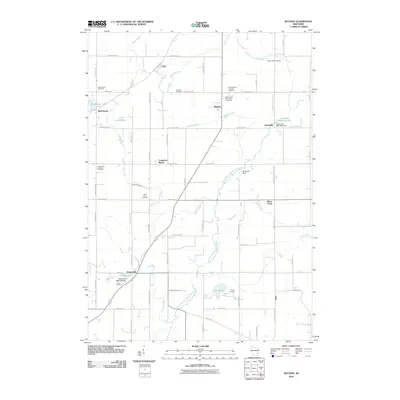 2010 Batavia2010 Print · USGSSheboygan County's agricultural and riverine landscape is captured here in the early twenty-first century. Genealogists and local historians can locate many historic burial sites, including Winfield Cemetery and Scott Union Cemetery, near the waters of Lake Twelve.
 - 2013 Map of Batavia, 2013 Print
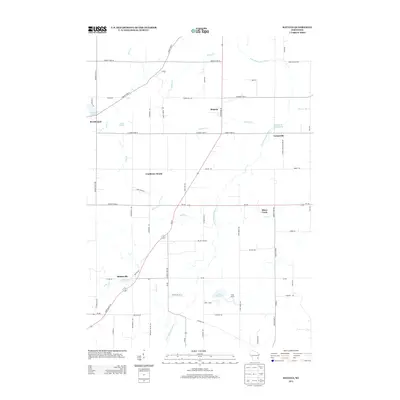 2013 Batavia2013 Print · USGSThe Sheboygan County countryside south of Cascade comes to life in this recent survey of rural Wisconsin. Genealogists and local historians can trace the landscape from Beechwood to Gooseville, finding landmarks like Cranberry Marsh and Camp Awana along the N Br Milwaukee River.
Showing maps 1-25 of 40
Top cities near Fredonia
- Sheboygan historical maps
- West Bend historical maps
- Mequon historical maps
- Germantown historical maps
- Grafton historical maps
- Cedarburg historical maps
See more
Top neighborhoods of Fredonia
Frequently asked questions
- What are the different types of historical maps available for Fredonia?
- What is the oldest map of Fredonia?
- Where can I purchase historical maps of Fredonia for my home or office?
- Where can I download high-res historical maps of Fredonia?
- Are there historical topographic maps available for Fredonia?
- Is there historical aerial imagery available for Fredonia?
- Where are historical maps of Fredonia sourced from?