1900s (20th Century) Maps of Seneca, Wisconsin
Explore 6 historic maps of Seneca from the 1900s (20th Century). These maps offer a rare glimpse into what life looked like during the 1900s — showing old roads, neighborhoods, homes, and landmarks that have changed or disappeared over time.
Whether you're researching your family's past, planning a metal detecting trip, or studying how Seneca's landscape evolved across the 1900s, these high-resolution maps are a powerful tool for exploring the history of this region.
- Focus on a specific era: All maps on this page are from the 1900s, giving you a focused view of this time period.
- See what’s changed: Compare century-old streets, trails, and buildings to today's modern landscape using overlays and satellite layers.
- Research with precision: Use these maps for genealogy, historical research, land use analysis, or educational projects.
- View, download, or print: Maps are fully viewable online in high resolution, and can be downloaded or printed for your own records.
Start exploring Seneca's history through authentic maps from the 1900s. This is your window into the past.
Seneca, WI maps
(6)- 1954 Map of Gresham, 1956 Print
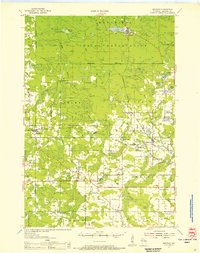 1954 Gresham1956 Print · USGSMid-century Shawano County is captured here at a time when the northern timberlands and southern farmsteads met. Genealogists and historians can trace local landmarks like Mohican Sch, the milling center at Neopit, and several rural churches including Immanuel Ch.
 - 1955 Map of Green Bay, 1968 Print
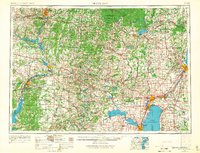 1955 Green Bay1968 Print · USGSCentral and Eastern Wisconsin are captured here in the mid-fifties, showing the industrial growth of the Fox Valley and Wisconsin River corridors. Genealogists and historians can trace rail lines like the Green Bay and Western through settlements like Weyauwega, Clintonville, and Pulaski.2 unique versions available
 - 1964 Map of Gresham, 1975 Print
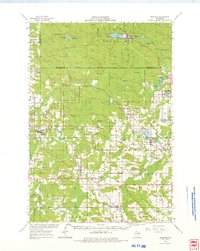 1964 Gresham1975 Print · USGSMid-century Shawano County is mapped here during a period of transition for its northern timberlands and southern farms. Genealogists and researchers can trace family names through rural landmarks like Hermanfort Sch, St Marys Cem, and Tilleda.
 - 1982 Map of Gresham
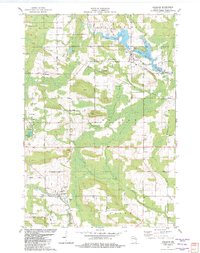 1982 Gresham1982 Print · USGSIn the early eighties, this Shawano County landscape shows the cultural intersection of the Stockbridge-Munsee Indian Reservation Boundary and rural Wisconsin life. Genealogists can trace family names at St Marys Cem and Riverview Cem or locate the old Chicago and North Western rail corridor.
 - 1982 Map of Bowler
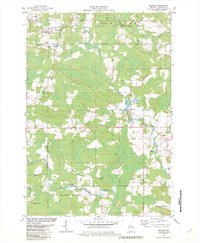 1982 Bowler1982 Print · USGSShawano County is shown in the early 1980s as a landscape of river branches and rural settlements. Genealogists and local historians can trace family-named routes like Logemann Lane and locate community anchors such as Peace Cem and Bethany Ch.
 - 1984 Map of Shawano, 1985 Print
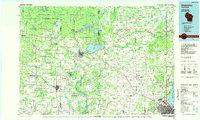 1984 Shawano1985 Print · USGSNortheast Wisconsin in the mid-1980s was a landscape defined by its indigenous heritage and the bustling trade centers of the Fox and Wolf River valleys. Genealogists and historians can trace rail corridors like the Chicago and North Western or locate family sites near Keshena, Cecil, and the Fort Howard Cem.2 unique versions available
End of results
Showing maps 1-6 of 6
Top cities near Seneca
- Clintonville historical maps
- Belle Plaine historical maps
- Marion historical maps
- Wittenberg historical maps
- Wittenberg historical maps
- Pella historical maps
See more
Top neighborhoods of Seneca
Frequently asked questions
- What are the different types of historical maps available for Seneca?
- What is the oldest map of Seneca?
- Where can I purchase historical maps of Seneca for my home or office?
- Where can I download high-res historical maps of Seneca?
- Are there historical topographic maps available for Seneca?
- Is there historical aerial imagery available for Seneca?
- Where are historical maps of Seneca sourced from?